

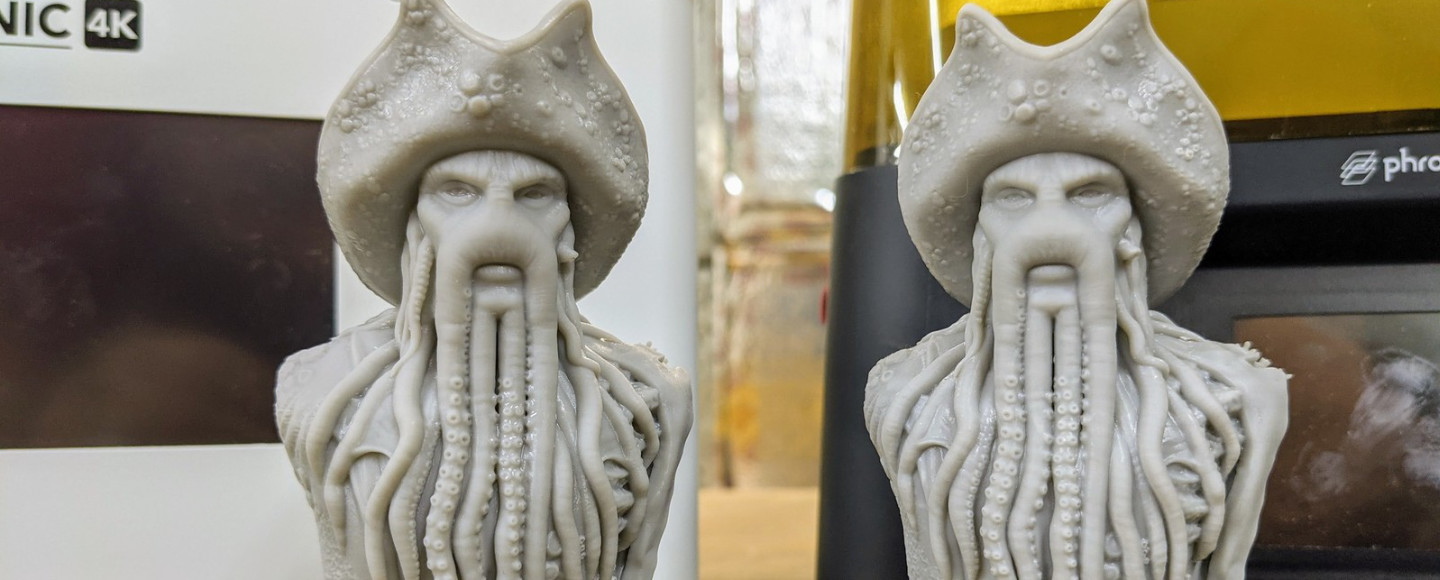
If you’ve been shopping for a high-resolution resin 3D printer in 2026, chances are the Phrozen Sonic Mighty Revo 16K has shown up on your radar more than once. And if you’re the type of person who cares about what actually comes off the build plate — not just what the spec sheet says — you’re in the right place.
This is a full, no-fluff review. I’ll walk you through everything: real-world print quality, how the 16K resolution actually performs, whether the Phrozen 16K LCD Upgrade Kit for Sonic Mighty Revo is worth it for existing owners, and the big head-to-head question everyone’s asking in 2026 — Phrozen Sonic Mighty Revo vs Elegoo Saturn 4 Ultra 16K: which one should you actually buy?
Let’s get into it.
Quick Verdict (TL;DR)
Best for: Miniature creators, precision-focused users, professionals, and long-term thinkers who want a printer that ages gracefully.
Skip if: You want the fastest possible print times, full plug-and-play automation, or you’re a complete beginner who doesn’t want to think about anything.
The Phrozen Sonic Mighty Revo 16K is not the flashiest printer of 2026. It’s not the fastest. But it might be the most reliable and future-proof mid-to-large format resin printer you can buy right now — and that counts for a lot more than people give it credit for.
Table of Contents
- Key Specs at a Glance
- What Makes the Revo 16K Different in 2026
- Unboxing and Build Quality
- The 16K LCD: What It Actually Means
- Print Quality: Real-World Results
- Print Speed and Workflow
- Smart Features and Protection
- Software and User Experience
- Upgrade Kit vs Buying New
- Maintenance and Running Costs
- Revo 16K vs Saturn 4 Ultra: Full Comparison
- The 2026 Resale Value Test
- Pros and Cons
- Who Should Buy This Printer?
- Final Verdict
- Frequently Asked Questions
Key Specs at a Glance (2026)
| Specification | Detail |
|---|---|
| Build Volume | ~223 × 126 × 235 mm |
| XY Resolution | 14 × 19 μm (non-square pixels — important!) |
| Screen | 10.1″ Phrozen Sonic Mighty Revo 16K LCD (Mono) |
| Screen Resolution | 15,120 × 6,230 pixels |
| Screen Lifespan | 2,000+ hours |
| Layer Height Range | 0.01 – 0.20 mm |
| Light Source | ParaLED Matrix 3.0 / 405nm COB |
| Z-Axis | Ball screw + dual linear rails |
| Frame | Aerospace-grade aluminum (6000 series) |
| Chamber Heater | Integrated, 30°C stable, 30-minute warm-up |
| Smart Features | Piezo sensors (residue detection), force sensors |
| Connectivity | USB, Wi-Fi, Ethernet |
| Software | Chitubox, Lychee Slicer, Formware Slicer |
| Print Speed | Up to 676 layers/hour |
| Weight | ~18 kg |
| Price | ~$750–$900 depending on retailer |
Important Spec Note
The 14 × 19 μm pixel size means this is a non-square pixel display. This is actually perfectly normal for large-format LCD printers — the pixel dimensions are still incredibly small — but it’s worth knowing so you’re not comparing apples to oranges when you see competitor specs listing “18 × 18 μm” square pixels. Real-world detail rendition is what matters, and at this resolution, the difference is virtually invisible to the naked eye.
What Makes the Sonic Mighty Revo 16K Different in 2026?
The “Revo Platform” Philosophy
Phrozen built the Revo series around a concept that’s genuinely rare in the consumer 3D printing world: longevity through upgradeability. Most 3D printer manufacturers want you to buy a new machine every 12–18 months as resolution numbers tick upward. Phrozen took a different approach with the Revo platform — they built a modular ecosystem where the chassis, rails, vat, and films stay compatible across generations, and you upgrade the screen rather than the whole machine.
That’s not marketing fluff. The fact that a Phrozen 16K LCD Upgrade Kit for Sonic Mighty Revo exists — one that takes an existing 8K, 12K, or 14K Revo unit all the way to 16K — is proof that Phrozen is genuinely invested in the platform’s longevity.
In a market full of “disposable” tech that becomes obsolete in a year, this is a pretty compelling differentiator.
14K vs 16K Revo: Is the Factory Upgrade Worth It?
This is a question a lot of existing Revo owners are wrestling with, so let’s be direct.
The factory-built Phrozen Sonic Mighty Revo 16K is not just a resolution bump over the 14K. Phrozen refers to this as the “perfected Revo,” and here’s why that framing is actually justified:
- Piezo sensors for residue detection come standard — not optional
- The integrated chamber heater is built in from the factory, not a retrofit
- The 16K panel itself has higher light transmission and better heat resistance than the previous-generation screens
- The overall system has been tuned together, so reliability is better than a manually retrofitted upgrade
Bottom Line on Upgrading
If you’re starting fresh and want the best experience out of the box, the factory 16K is the way to go. If you already own an 8K or 12K Revo and your chassis is still solid, the upgrade kit is a genuinely smart option — more on that in a dedicated section below.
Unboxing and Build Quality: This Thing Feels Like a Tool, Not a Toy
The first thing you’ll notice when the Phrozen Sonic Mighty Revo 16K arrives is the packaging — it’s thorough, protective, and clearly designed to arrive in perfect condition. Nothing rattling around, foam cut specifically for each component.
When you actually get the machine out and on your desk, the quality is immediately apparent. The aerospace-grade 6000 series aluminum frame isn’t marketing language — you can feel the difference compared to cheaper resin printers that use plastic or thin sheet metal. It’s dense, rigid, and satisfyingly solid.
The Z-axis mechanism — dual linear rails paired with a ball screw — delivers the kind of smooth, precise vertical motion that long prints depend on. There’s no wobble, no flex, and no surprises at the 200mm+ print heights where cheaper single-rail printers start to drift.
The vat system and PFA/ACF film are compatible across the entire Mighty series, which means if you’re upgrading from an older Mighty, your consumables carry over. That’s a small thing that saves real money over time.
The 5″ touchscreen interface is responsive and well-organized, the lift-up cover is genuinely space-saving on a crowded desk, and the built-in air purifier and exhaust vent option are thoughtful touches that make this feel like a complete, considered product rather than a printer thrown together to hit a price point.
“The build quality is immediately apparent. The aerospace-grade aluminum frame isn’t marketing language — you can feel the difference compared to cheaper resin printers.”
★★★★★
The Phrozen Sonic Mighty Revo 16K LCD: What 16K Actually Means
Let’s have an honest conversation about resolution marketing, because it gets confusing fast.
What “16K” Really Means
The Phrozen Sonic Mighty Revo 16K LCD screen has a resolution of 15,120 × 6,230 pixels across a 10.1″ panel. That works out to pixel dimensions of 14 × 19 micrometers — some of the smallest pixels you’ll find on a desktop resin printer at this build volume.
Here’s the thing though: 16K doesn’t automatically mean better prints. What matters is the actual pixel size, and at 14–19 μm, you’re already at the limit of what’s physically distinguishable in resin prints at normal viewing distances.
Is 16K Actually Noticeable in Real Life?
Yes — but only in specific use cases:
Where You’ll Clearly See the Difference
- 32mm miniatures and fine character sculpts — scales, feathers, facial micro-details, hair strands, cloth weave. The jump from 8K or 12K to 16K here is genuinely visible under magnification and often noticeable even to the naked eye.
- Jewelry and dental models — fine filigree, thin walls, precision-fit surfaces.
- Surface-smoothness obsessives — layer lines are nearly invisible off the build plate, meaning dramatically less sanding and post-processing.
Where You Probably Won’t Notice
- Functional parts, mechanical components, and structural prints where dimensional accuracy matters more than surface micro-texture.
- Anything you’re painting at arm’s length.
The honest answer: if you’re printing miniatures or high-detail artistic models, 16K is a real upgrade. If you’re printing brackets and enclosures, it’s largely irrelevant.
Screen Lifespan and Running Costs
The 16K panel is rated for 2,000+ hours of operation, with improved heat resistance and light transmission compared to earlier Revo screens. For context, if you’re running 8-hour print sessions, that’s 250+ sessions before you need a replacement. At the cost of a replacement panel (significantly cheaper than buying a new machine), this is a very reasonable running cost.
Print Quality: What Actually Comes Off the Plate
This is the section that matters most, so let’s be specific.
Miniatures and High-Detail Models
The Phrozen Sonic Mighty Revo 16K is genuinely excellent for miniature printing. The combination of the high-resolution LCD, stable Z-axis, and the integrated chamber heater creates conditions where layer lines effectively disappear into the surface. Textures that would require heavy post-processing on a lower-resolution printer — fine chainmail, hair, realistic skin pores — come through cleanly.
A user running 32mm scale miniatures noted the ability to pack more models per plate compared to previous Revo generations while maintaining better individual model quality. For small-batch miniature production, that’s a meaningful productivity improvement.
Large Prints and Consistency Across the Plate
One of the Revo 16K’s underrated strengths is consistency across the full build volume. The ParaLED Matrix 3.0 light source and Fresnel lens combination delivers light uniformity exceeding 75%, which means the corners and edges of large prints cure at the same rate as the center. On cheaper printers with uneven light distribution, large flat surfaces develop a “potato chip” warp. On the Revo 16K, large pieces come off flat.
The 235mm Z height is also genuinely useful. Tall prints — full figures, architectural models, large props — complete without the layer drift that undermines lesser Z-axis systems.
Dimensional Accuracy
Phrozen specifies XY dimensional tolerance at ±0.05mm and Z at ≤0.2mm. In practical testing, these hold up. Parts that need to fit together actually fit together. For anyone printing mechanical components, cosplay armor pieces that need to join, or dental/medical models where fit matters, this reliability is non-negotiable.
Surface Finish and Post-Processing
One of the Revo 16K’s most compelling real-world advantages is what happens after the print. With nearly invisible layer lines straight off the build plate, the amount of sanding, filling, and surface prep before painting drops dramatically. Phrozen claims up to 90% reduction in post-processing time — that’s an ambitious number, but the directional truth is accurate. You spend less time with sandpaper and more time with a paintbrush.
Post-Processing Time Comparison
Print Speed and Workflow: Where the Revo 16K is Honest About Its Limits
Let’s not sugarcoat this: the Revo 16K is not the fastest printer in its class.
The Traditional Vertical Lift System
The Revo uses a conventional vertical lift mechanism — the build plate pulls straight up after each layer, creating suction force against the vat film. The ball screw and dual linear rails make this process extremely stable and precise, but the physics of straight-up peel means it’s inherently slower than alternative approaches.
At up to 676 layers per hour, the speed is respectable — but it’s noticeably slower than tilt-release systems.
Why Tilt-Release Competitors Are Faster
Printers like the Elegoo Saturn 4 Ultra use a tilt-release mechanism — instead of pulling straight up, the vat tilts at an angle, gently peeling the cured layer off the film in a rolling motion. This reduces suction force significantly and allows faster lift speeds without risking delamination or print failure.
The trade-off? Tilt release can introduce very slight layer inconsistencies — sometimes called “layer shivers” — in certain geometries, especially large flat surfaces and heavy models where the peel force is asymmetric. For most prints, this is negligible. For precision-critical or dimensionally exacting prints, it can matter.
Where the Revo 16K’s Slower Speed Is Actually the Right Call
Think about it this way: the Revo 16K’s vertical lift approach delivers predictable, consistent peel forces every single layer. For prints that are:
- Large and heavy (lots of cross-sectional area per layer = high suction force)
- Tall and narrow (where any lateral force from tilt-release could cause layer shift)
- Precision-critical (dental, jewelry, engineering parts)
- Long-duration (overnight or multi-day prints where failure is expensive)
Speed vs. Reliability Trade-Off
…the Revo’s approach is the correct engineering choice. You trade some speed for stability. If you’re running a print that takes 14 hours and failure means wasted resin and resin tank cleanup, the extra reliability is worth it.
Smart Features: Protection Over Convenience
Residue Detection via Piezo Sensors
Here’s a feature that sounds boring until the first time it saves you. The Revo 16K’s piezo sensors monitor peeling force during every layer. If a print fails and leaves hardened resin stuck to the vat film, the sensors detect the absence of normal peel resistance and stop the print automatically.
Why does this matter? Failed prints left undetected will keep printing into a growing mess of cured resin, eventually damaging the FEP/ACF film and potentially scratching the LCD screen itself. A damaged LCD screen costs real money to replace. The piezo sensor system pays for itself the first time it prevents that scenario.
The system detects objects 4mm and larger, and triggers a notification (via the Phrozen GO app) once sensors detect the complete absence of peeling force for 15 continuous layers after the build plate clears the resin.
Force Sensors and Assisted Leveling
Bed leveling is one of those things that breaks people’s will to continue with resin printing. The Revo 16K handles it with one-touch calibration — the force sensors detect plate contact and set the zero position automatically. It’s not quite the fully automated leveling of some competing systems, but it’s fast, repeatable, and removes the human error factor from one of the most failure-prone parts of resin printing setup.
The Phrozen GO App
Remote monitoring via the Phrozen GO app is genuinely useful for anyone running multiple printers or who simply doesn’t want to babysit a 12-hour print. Real-time progress monitoring, instant failure alerts, and time-lapse video capture are all available from your phone. If you’re running a print farm or even just a home studio, the ability to check in from anywhere is a quality-of-life feature that quickly becomes indispensable.
The Chamber Heater: More Important Than You’d Think
Resin is temperature-sensitive in a way that catches a lot of people off guard. Drop the ambient temperature by 10°C and resin reaction speed decreases by 30–60% due to increased viscosity. In a cold garage workshop in winter, that means unpredictable exposure times, failed adhesion, and generally frustrating results.
The Revo 16K’s built-in chamber heater solves this by bringing the print chamber to a stable 30°C in about 30 minutes and maintaining it throughout the print. This is particularly valuable for anyone printing in an unheated workshop or basement where ambient temperatures vary significantly. Consistent resin temperature means consistent results — full stop.
Software and User Experience
The Phrozen Sonic Mighty Revo 16K works natively with Chitubox, which remains the most widely used resin slicing software, and also supports Lychee Slicer and Formware Slicer for users who prefer alternatives. All three are fully capable slicers with strong community support and regular updates.
The workflow feels slightly more “hands-on” than the most automated systems on the market — you’ll set your own exposure settings, manage your own resin profiles, and make judgment calls about supports. For experienced users, this level of control is a feature, not a bug. For complete beginners, the learning curve is real but manageable, especially with Phrozen’s documentation and the active community around the Revo platform.
Connectivity is solid — USB, Wi-Fi, and Ethernet are all supported, which means the Revo 16K fits cleanly into any studio or workshop network setup.
Pro Tip for Beginners
If you’re new to resin printing, the Revo 16K’s hands-on approach actually helps you learn the craft properly. You’ll understand why settings matter rather than blindly trusting automation. The active Phrozen community on Discord and forums provides excellent support for newcomers.
Phrozen 16K LCD Upgrade Kit for Sonic Mighty Revo: Upgrade vs Buy New
This section is specifically for existing Revo owners sitting on an 8K, 12K, or 14K machine and wondering whether to upgrade or replace.
What’s Included in the Upgrade Kit
The Phrozen 16K LCD Upgrade Kit for Sonic Mighty Revo is a comprehensive package that includes:
- The 16K LCD panel (14 × 19 μm resolution)
- New mainboard
- ADA module
- Connection cables and required hardware
- Step-by-step installation instructions and video tutorial
This is not a simple screen swap — it involves replacing several internal components. Phrozen has designed the process to be accessible to non-technical users with the help of their video tutorial, but budget about an hour and take your time.
Should You Upgrade or Buy the Full Revo 16K?
Upgrade with the Kit
~$290
- You own a Sonic Mighty Revo 8K, 12K, or 14K with chassis still in solid condition
- You want 16K resolution without full investment of new machine
- You’re committed to the Revo platform
- Reducing e-waste matters to you
- Lower long-term cost of ownership is a priority
Buy Full Revo 16K New
~$750–$900
- Factory-integrated heater and piezo sensors as cohesive system
- You’re coming from a different printer entirely
- Latest firmware optimizations baked in from day one
- Full warranty coverage on complete unit
- Best out-of-box experience
The upgrade kit sits at around $290 — roughly double the cost of a straightforward LCD replacement but a fraction of a new machine. For existing Revo owners, the value proposition is strong. The sustainability angle is real too: you’re extending the life of hardware you already own rather than adding another printer chassis to the e-waste pile.
Maintenance and Running Costs
Resin Efficiency
The Revo 16K’s enclosed chamber and built-in air purifier reduce resin waste from premature surface curing and extend the workable life of resin left in the vat. The sealed motor structure prevents resin contamination in the Z-axis mechanism — a common failure point on cheaper printers.
Film Replacement
The ACF film (included with upgrade kits) and the PFA/nFEP films offer good release characteristics and reasonable lifespan. The key advantage here is compatibility across the entire Mighty series — the same vat and films work across generations. You’re not locked into proprietary consumables priced at a premium, which keeps ongoing costs reasonable.
True Cost of Ownership
| Cost Item | Estimated Frequency/Cost |
|---|---|
| LCD Replacement | Every ~2,000 hours (~$150–200) |
| Vat Film Replacement | Every 4–8 weeks of heavy use (~$15–30) |
| Resin per liter | ~$25–60 depending on type |
| Electricity (heater + printer) | Modest; heater draws ~50W |
Over a 3-year lifespan, the Revo 16K’s modular, upgradeable design means your total cost of ownership is lower than a competitor printer that becomes “obsolete” in 18 months and requires full replacement. This is the platform-vs-product distinction that matters for anyone making a long-term investment.
Phrozen Sonic Mighty Revo vs Elegoo Saturn 4 Ultra 16K: The Full Comparison
This is the comparison question that gets asked constantly, and the honest answer is that they’re genuinely different printers designed for different priorities. Let’s lay it out.
| Feature | Phrozen Sonic Mighty Revo 16K | Elegoo Saturn 4 Ultra 16K |
|---|---|---|
| Peel Mechanism | Vertical lift (ball screw) | Tilt-release |
| Print Speed | Moderate (up to 676 layers/hr) | Faster |
| Automation Level | Moderate | High |
| XY Resolution | 14 × 19 μm | 14 × 19 μm (comparable) |
| Precision/Consistency | Very high, especially large prints | High, with slight edge on speed |
| Upgradeability | Yes — modular Revo platform | No |
| Chamber Heater | Integrated standard | Optional/varies |
| Residue Detection | Piezo sensors standard | Basic |
| Build Volume | ~223 × 126 × 235 mm | Similar range |
| Price | ~$750–$900 | ~$500 |
| Long-term Value | High (upgradeable) | Lower (fixed hardware) |
The Tilt-Release Debate
The Saturn 4 Ultra’s tilt-release mechanism is genuinely clever engineering. By peeling layers at an angle rather than pulling straight up, it reduces the suction force that limits vertical lift speed and allows faster overall print times. For most users printing standard-sized models, the quality is excellent and the speed advantage is real.
However, tilt-release isn’t without trade-offs. The asymmetric peel force can introduce very subtle layer artifacts in certain geometries — particularly large, flat cross-sections and heavy models where the mechanical forces are highest. For a hobbyist printing medium-sized figures, this is rarely an issue. For someone printing engineering parts with tight tolerances or large resin sculptures where any surface artifact is unacceptable, the Revo 16K’s consistent straight-up lift produces more predictable results.
On Price: What the $300 Difference Actually Buys You
The Saturn 4 Ultra’s price advantage is real — it’s meaningfully cheaper. But consider what you get for the premium on the Revo 16K:
- An upgradeable, modular platform that won’t be obsolete in two years
- A factory-integrated chamber heater (critical for consistent prints in variable environments)
- Piezo-sensor residue detection that actively protects your LCD screen
- An aerospace-aluminum chassis that will outlive several generations of the competition
- A more mature software ecosystem and support community around the Revo platform
If you’re buying one printer and keeping it for 3–5 years, the Revo 16K is likely the lower total cost option when you factor in the avoidance of premature replacement.
Who Should Buy Which
Choose the Phrozen Sonic Mighty Revo 16K if:
- ✓ Print quality and consistency are your top priority
- ✓ You print large, heavy, or dimensionally precise models
- ✓ You want long-term upgradeability and platform longevity
- ✓ You work in variable temperature environments and need the integrated heater
- ✓ You’re investing in a workhorse printer for professional or semi-professional use
Choose the Elegoo Saturn 4 Ultra 16K if:
- ✓ Print speed is your top priority
- ✓ You want maximum automation and plug-and-play convenience
- ✓ You’re price-sensitive and the $300+ difference is a genuine constraint
- ✓ You print mostly medium-sized hobby models where tilt-release artifacts aren’t a concern
The Honest Truth
Neither is a bad choice. But they’re solving different problems, and being honest about which problem you actually have will lead you to the right answer.
The 2026 Resale Value Test
Here’s a perspective that doesn’t get enough attention in 3D printer reviews: what happens to your machine’s value over time?
Most consumer resin printers depreciate quickly. A 12K printer from 2023 is worth a fraction of its original price today because the market has moved on to 14K and 16K options. You can’t update the hardware — you buy a new machine.
The Phrozen Sonic Mighty Revo platform is different. Because the chassis is genuinely upgradeable — you can move an 8K machine to 16K — the underlying hardware retains more value. You’re not buying a disposable resolution spec; you’re buying a platform. The aluminum frame, the precision Z-axis, the vat system: these don’t become obsolete when a new LCD generation arrives.
Investment Perspective
In practical terms, a Revo chassis in good condition holds its value better than comparable single-generation printers, and can be upgraded rather than replaced when new screen technology arrives. That’s a meaningful consideration for anyone treating this as a business tool rather than a hobby expense.
Pros and Cons
✅ Pros
- True 16K resolution at 14 × 19 μm — genuinely excellent detail rendition
- Modular, upgradeable platform — extend the life of your investment
- Aerospace-grade aluminum chassis — built to last
- Integrated chamber heater — consistent results in any environment
- Piezo residue detection — actively protects your LCD from costly damage
- Exceptional consistency across large build volumes
- Remote monitoring via Phrozen GO app
- Compatible consumables across the Mighty series
❌ Cons
- Slower than tilt-release competitors — print time is a real trade-off
- Less automated than the most hands-off options on the market
- Higher upfront cost than competitors with similar XY resolution
- Upgrade process for older Revo models requires time and confidence — not quite plug-and-play
Who Should Buy the Phrozen Sonic Mighty Revo 16K?
This printer is ideal for:
- ✓ Miniature creators printing at 28–32mm scale or smaller who need every micron of detail
- ✓ Professional resin printers running print-on-demand or small batch production
- ✓ Existing Phrozen Revo owners looking to maximize their investment
- ✓ Engineers and product designers who need dimensional accuracy and repeatability
- ✓ Anyone printing in a cold workshop or garage where the integrated heater makes a real difference
- ✓ Long-term thinkers who want a platform they can grow with rather than replace
You might want to look elsewhere if:
- ✗ You’re a complete beginner who wants maximum automation and doesn’t want to think about exposure settings
- ✗ Speed is genuinely your primary concern and you’re willing to trade some consistency for it
- ✗ Your budget hard-caps around $500 and the price difference is a real constraint
🎁 Free Download: Resin Printer Buying Checklist
Not sure which printer is right for your specific needs? Download our comprehensive decision framework that helps you evaluate printers based on YOUR priorities — not marketing hype.
Final Verdict: Still Worth It in 2026?
Yes — unequivocally, for the right user.
The Phrozen Sonic Mighty Revo 16K is not trying to be the fastest printer or the most automated printer. It’s trying to be the most reliable, most consistent, and most future-proof printer in its class — and it succeeds at all three.
In a market where speed benchmarks and automation features dominate the marketing conversation, the Revo 16K quietly delivers something that matters more for serious users: prints that come out right, every time, with a machine that won’t need replacing in 18 months.
The integrated heater, the piezo sensor protection system, the aerospace aluminum build, the modular upgrade path — these aren’t gimmicks. They’re the features that distinguish a printer you use professionally from a printer you fiddle with as a hobby.
If you’re printing miniatures at scale, running a small print studio, or simply want a printer that works reliably without demanding constant attention, the Phrozen Sonic Mighty Revo 16K deserves serious consideration.
Frequently Asked Questions
Is the Phrozen Sonic Mighty Revo 16K good for miniatures?
Yes — it’s one of the best options on the market for miniature printing. The 14 × 19 μm pixel resolution captures fine textures like chainmail, hair, and facial detail at 28–32mm scale with exceptional clarity. Layer lines are nearly invisible off the build plate, which dramatically reduces post-processing before painting.
How long does the Phrozen Sonic Mighty Revo 16K LCD last?
The 16K mono LCD panel is rated for 2,000+ hours of operation, with improved heat resistance and light transmission compared to earlier Revo-generation screens. For context, that’s over 250 sessions of 8-hour prints. When it does need replacement, you’re buying a screen, not a new printer.
Is 16K better than 12K or 8K in real use?
Depends heavily on what you’re printing. For miniatures, character sculpts, jewelry, and dental models — yes, 16K is a meaningful upgrade, especially in fine texture and edge sharpness. For functional parts, mechanical prints, and anything that’s going to be painted at arm’s length, the practical difference between 8K and 16K is minimal.
Can you upgrade older Revo models to 16K?
Yes. Phrozen offers the 16K LCD Upgrade Kit for Sonic Mighty Revo, designed for owners of 8K, 12K, and 14K Revo machines. The kit includes a new 16K panel, mainboard, ADA module, cables, and installation guides. It’s a more involved process than a simple swap, but Phrozen provides comprehensive video support.
Is the Phrozen Sonic Mighty Revo 16K better than the Saturn 4 Ultra?
It depends on your priorities. The Revo 16K wins on precision consistency, long-term upgradeability, build quality, and suitability for large or heavy prints. The Saturn 4 Ultra wins on print speed, automation, and upfront price. For quality-first users who want a long-term investment, the Revo 16K is the stronger choice. For speed-focused users or those on a tighter budget, the Saturn 4 Ultra is genuinely compelling.
Last updated: 2026. Prices and availability subject to change. This article contains affiliate links — we may earn a commission at no extra cost to you if you make a purchase through our links.

