


Let’s be honest — the hardest part of getting into 3D printing isn’t buying the printer, loading the filament, or even figuring out bed leveling. For most people, the real wall is designing their own models from scratch.
You’ve got this brilliant idea in your head. You can picture exactly what you want to print. But then you open a design program, stare at a blank canvas, and suddenly… nothing. It’s overwhelming, and most beginners quit right there — before they’ve even printed a single thing.
That’s what this guide is here to fix.
CAD software (Computer-Aided Design) is the bridge between your idea and a real, physical, printable object. Without it, you’re limited to downloading other people’s models from sites like Thingiverse or Printables — and honestly, that gets old fast once you realize what’s possible.
Here’s what’s changed in 2026: CAD is no longer just about staring at grids and extruding shapes. The landscape has shifted dramatically. AI-powered tools can now generate rough 3D models from a photo or a text prompt, hybrid workflows are cutting design time in half, and cloud-based platforms have made it possible to do serious design work on a budget laptop from a coffee shop. The barrier to entry has never been lower.
This guide breaks down the best free CAD software for 3D printing available right now — from true beginner tools to professional-grade platforms — ranked honestly, reviewed practically, and organized around how real people actually use them. You’ll also get a clear learning path, a breakdown of common beginner mistakes, and a look at the AI tools reshaping how designers work in 2026.
📖 Download the Ultimate CAD Cheatsheet
Get a printable PDF guide comparing all top software features, system requirements, and workflow tips.
Table of Contents
Quick Answer — Best Free CAD Software for 3D Printing
If you’re in a hurry, here’s the short version of the top contenders:
| Best For | Software | Action |
|---|---|---|
| Beginners | Tinkercad | Try Tinkercad |
| Best Overall Free CAD | FreeCAD | Download FreeCAD |
| Professional Use (Free Tier) | Fusion 360 | Get Fusion 360 |
| Artistic & Organic Models | Blender | Download Blender |
| Cloud-Based / Low-Spec PCs | Onshape | Try Onshape |
| Precision & Code-Based Design | OpenSCAD | Download OpenSCAD |
Tinkercad is the most beginner-friendly design tool ever made — you’ll be modeling in under an hour. FreeCAD is the gold standard for open-source parametric modeling, perfect for functional parts. Fusion 360 offers genuine professional-grade tools on a free personal license. Blender is where artists go to sculpt incredible organic shapes. Onshape runs entirely in your browser, making it ideal for anyone on a low-powered machine. And OpenSCAD is built for programmers who want total, repeatable control over every dimension.
What Makes a Good Free CAD Software for 3D Printing?
Before jumping into the rankings, it helps to understand what actually matters when choosing a CAD tool — because not all “free” software is created equal, and the wrong choice can waste weeks of your time.
- STL and OBJ Export Compatibility: Your slicer software needs a compatible file format. STL is the universal standard for FDM printing, and any CAD software worth using should export it cleanly. OBJ support is a bonus for complex models.
- Parametric vs. Mesh Modeling: Parametric modeling means your design is built from defined dimensions — change one measurement and the whole model updates. This is essential for functional parts. Mesh modeling is for artistic work but makes engineering difficult.
- Learning Curve vs. Scalability: Some tools get you printing in 30 minutes but hit a ceiling fast. Others have a steep climb but reward the investment for years.
- Hardware Requirements: Tools like FreeCAD and Fusion 360 can be demanding on older hardware. If you’re on a budget laptop, cloud-based tools are game-changing.
- Slicer Compatibility: Your CAD software only handles the design. You need a separate slicer (like Cura or PrusaSlicer) to prepare the model for printing.
Key Distinction
Parametric modeling is essential for functional parts like brackets and enclosures. Mesh modeling is intuitive for artistic work but makes precise engineering nearly impossible. Most tools on this list are parametric; Blender is the exception.
Best Free CAD Software for 3D Printing (Ranked & Reviewed)
1. Tinkercad — Best Free CAD Software for Beginners
tinkercad.com
🏅 Best For: Absolute beginners, kids, educators, and anyone who wants to go from zero to first print as fast as humanly possible.
If there’s one tool that has introduced more people to 3D design than any other, it’s Tinkercad. Made by Autodesk and completely free with a browser-based interface, Tinkercad turns 3D modeling into something that actually feels approachable. You drag, drop, combine, and subtract basic shapes to build your designs — no tutorials required to get started.

There’s no installation. You open a browser, log in (free), and you’re modeling. Within an hour of your first session, most beginners have something worth printing. That’s not an exaggeration — the interface is genuinely that intuitive.
What makes Tinkercad special:
- Completely browser-based — works on Windows, Mac, Linux, even Chromebooks
- Drag-and-drop shape library that makes basic modeling feel like digital LEGO
- Built-in lesson plans and guided projects — great for teaching kids or absolute newbies
- Direct STL export for seamless slicer compatibility
- Free, no catch, no credit card
Where it hits its limits
The honest truth? Tinkercad is the perfect starting tool, not the only tool. There’s no true parametric modeling — if you want to change a dimension later, you’re often rebuilding from scratch. Complex curved surfaces are tricky. Assembly management doesn’t exist. You’ll eventually feel the ceiling, but that means you’ve leveled up.
3DT Insight
Think of Tinkercad as your 3D printing driver’s license. It won’t get you on a racetrack, but you absolutely need it before you try. The fastest path from zero to first successful print runs straight through here.
2. FreeCAD — Best Free CAD Software for Functional Parts
freecad.org
🏅 Best For: Makers, engineers, and hobbyists designing real-world functional parts with precision and repeatability.
FreeCAD is the most powerful truly free CAD software available — full stop. It’s open-source, actively maintained, runs entirely offline, and offers genuine parametric modeling that rivals paid software. For designing brackets, enclosures, replacement parts, mechanical components, or anything that needs to fit and function, FreeCAD is your best free option by a significant margin.
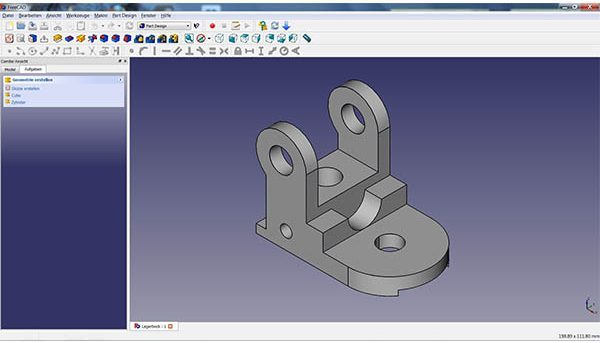
The parametric workflow is where FreeCAD really earns its stripes. You define your design through a series of operations — sketches, extrusions, pockets, fillets — each tied to actual dimensions. Want to change the hole diameter three steps back? Just edit the value. The whole model updates. This isn’t just convenient — for iterative design (which is how nearly all serious 3D printing work actually happens), it’s essential.
What makes FreeCAD compelling:
- True parametric modeling — dimension changes propagate through the entire design
- Completely free and open-source, forever, with no licensing restrictions
- Fully offline — no internet connection required, no cloud dependency
- Active community with thousands of tutorials, add-ons, and forums
- Compatible with STEP, IGES, and other professional interchange formats
The Learning Curve
The user interface is functional but not pretty. There’s a learning curve that will frustrate you early on — especially the workflow of sketching, constraining, and then extruding. But the community is helpful and the documentation has improved dramatically.
3DT Insight
FreeCAD rewards patience. The first week feels clunky; by month two, you’re designing things you couldn’t imagine when you started. If you’re serious about functional 3D printing for the long term, this is the free tool worth investing your learning time in.
3. Fusion 360 — Best Free Professional CAD (With Limits)
autodesk.com/products/fusion-360/personal
🏅 Best For: Advanced hobbyists, small business owners, and anyone planning to eventually monetize their 3D printing.
Let’s be clear about what Fusion 360 is: it’s professional-grade software with a free personal use license. Autodesk offers this tier for non-commercial hobby use, and it’s genuinely powerful. The same underlying tool used by engineering firms and product designers is available to you for free — with some restrictions.
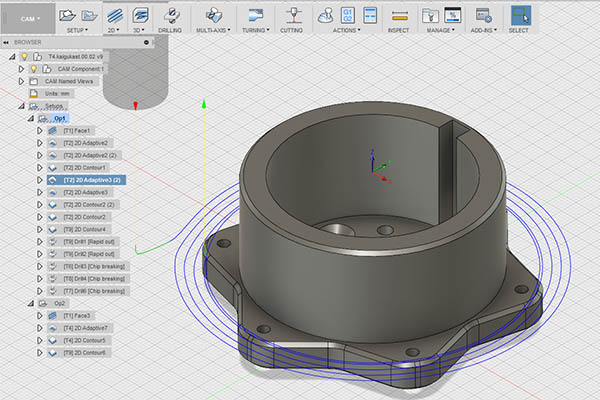
Fusion 360 combines parametric solid modeling, freeform sculpting, simulation, generative design, and CAM (computer-aided manufacturing) in one integrated platform. The UI is polished, the workflow is industry-standard, and the learning resources are extensive. YouTube has thousands of hours of Fusion 360 tutorials covering every possible design scenario.
Why Fusion 360 stands out:
- Industry-standard workflow that directly maps to professional engineering practice
- Integrated sculpting tools for organic shapes alongside parametric precision
- Strong ecosystem of online tutorials, communities, and resources
- Regular updates and a development roadmap backed by Autodesk
- Excellent slicer plugin support for Cura and PrusaSlicer
The Real Limitations
The free license restricts commercial use, limits active document storage, and occasionally changes as Autodesk adjusts its licensing terms. It requires an internet connection for activation and periodic license verification. If you go commercial, pricing jumps to a full subscription.
3DT Insight
If you’re thinking about turning 3D printing into a side business — selling prints, offering design services, creating products — Fusion 360 is the perfect stepping stone. Start free, learn the professional workflow, and you’ll be ready when the business makes the paid plan worth it.
4. Blender — Best Free CAD Software for Artistic & Organic Models
blender.org
🏅 Best For: Creators designing figurines, miniatures, cosplay props, artistic sculptures, and organic forms.
Blender is not a CAD program in the traditional sense — and that’s exactly why it belongs on this list. For anyone designing artistic or organic 3D models for printing, Blender is in a completely different league from every other free tool available.

Developed by the Blender Foundation and fully open-source, Blender is a professional 3D creation suite used by game studios, VFX houses, and animation teams worldwide. Its sculpting tools — which let you push, pull, pinch, and smooth geometry like digital clay — are exceptional for creating the kind of organic, complex shapes that look incredible when printed: dragons, character busts, custom helmets, jewelry, terrain pieces for tabletop games.
What Blender does brilliantly:
- Sculpting tools that feel natural for organic, complex shapes
- Massive asset library and community-made resources
- Animation and rigging tools (useful if you’re designing articulated prints)
- Fully free and open-source with no commercial restrictions
- Strong integration with STL export for 3D printing workflows
Where Blender is not the right tool
If you need precise dimensions — “this bracket needs to be exactly 42.5mm wide with M3 thread holes” — Blender will drive you crazy. It’s mesh-based, not parametric. Making fine-tuned engineering adjustments is genuinely painful. Blender is for artists; FreeCAD and Fusion 360 are for engineers.
3DT Insight
If you’ve ever looked at a beautifully printed miniature or a custom figurine and thought “I want to make that,” Blender is where you start. Just don’t try to use it for a bracket or a mechanical component — that’s not what it’s for.
5. Onshape — Best Free Cloud-Based CAD
onshape.com/en/products/free
🏅 Best For: Students, collaborators, and anyone on a low-spec laptop who needs serious parametric CAD without hardware limitations.
Onshape is what happens when professional CAD moves entirely to the cloud. Developed by the team that originally created SolidWorks (one of the most widely used engineering CAD tools in the world), Onshape runs completely in your browser with no installation required. Open a tab, start designing.
The free tier is genuinely capable — it offers real parametric modeling, assembly tools, drawing creation, and version control. Where it gets interesting is on lower-end hardware: because all processing happens on Onshape’s servers, not your machine, you can run complex assemblies on a five-year-old budget laptop that would choke on FreeCAD or Fusion 360.
Why Onshape deserves serious consideration:
- Zero hardware requirements — if your browser runs, Onshape runs
- Professional-grade parametric modeling with a surprisingly clean learning curve
- Real-time collaboration with teammates or classmates
- Built-in version history — every change is saved automatically
- Active educational community with structured learning resources
The Trade-off
On the free plan, all your designs are public. Anyone can browse Onshape’s public document library and find your work. If you’re working on a commercial project or something you want to keep private, you’ll need a paid plan. For students and hobbyists designing decorative projects, this is a non-issue — but understand this upfront.
3DT Insight
If you’re a student, working on a shared maker project, or designing on a laptop that barely runs Chrome — Onshape is the answer. The public document limitation is a real constraint for commercial work, but for learning and collaborative making, it’s hard to beat.
6. OpenSCAD — Best Free CAD for Precision & Repeatability
openscad.org
🏅 Best For: Programmers, engineers, and makers who need highly repeatable, parametric designs driven by code.
OpenSCAD is unlike anything else on this list. Instead of using a visual editor to create geometry, you write code. Seriously — OpenSCAD uses a scripting language where you define shapes, dimensions, and operations programmatically. To a software developer, this feels completely natural. To someone who’s never coded, it will feel alien.

But here’s why OpenSCAD earns its place: for automation, repeatability, and parametric control, it’s unmatched in the free space. Want a box that automatically adjusts its lid thickness, wall width, and corner rounding based on a single length variable? Write it once in OpenSCAD, change one number, and it all updates perfectly.
What makes OpenSCAD worth learning:
- Fully code-based — designs are 100% reproducible and version-controllable with Git
- Highly parametric by nature — variables propagate through the entire design automatically
- Lightweight and fast — runs on nearly any hardware
- Completely free and open-source, forever
- Great for automated generation of part variants
Who should skip it
If you’re not comfortable with code, OpenSCAD will be a frustrating experience. There’s no visual feedback as you type — you write code, hit render, and see what you’ve made. For anyone who isn’t a programmer, the other tools on this list will serve you much better.
3DT Insight
If you’re a developer who’s just gotten into 3D printing, OpenSCAD might actually be your fastest path to productive designing. The learning curve for non-programmers is steep, but for automation-driven workflows, nothing free touches it.
New in 2026 — The Modern CAD + AI Workflow
Here’s something the “best CAD software” listicles from 2022 completely missed: CAD is no longer the only starting point for a 3D printed design.
The tools below don’t replace CAD — but they’re fundamentally changing how experienced designers approach the early stages of a project. Understanding this emerging workflow could save you hours on every design.
Plasticity
Emerging Contender
Built on NURBS geometry, Plasticity feels more like sculpting than engineering. It fills the gap between Blender’s artistic freedom and FreeCAD’s engineering precision.
Meshy AI
AI Generation
Type a text description or upload an image, and Meshy AI generates a 3D model. Great for rapid concept modeling and early-stage prototyping.
Hitem3D
2D to 3D
Specializes in converting 2D images into 3D models. Useful for makers wanting to recreate objects or create relief-style prints from reference images.
The New CAD Workflow in 2026
Here’s the honest strategic picture: CAD design no longer has to start from a blank canvas. The emerging workflow for efficient 3D printing design looks like this:
- AI Generation: Use a tool like Meshy AI or Hitem3D to generate a rough model from a prompt or image.
- CAD Refinement: Import into FreeCAD, Fusion 360, or Blender to clean up geometry, add precision, and ensure printability.
- Slicing: Run the finished model through your slicer of choice.
- Print: Execute the final print with confidence.
Hybrid Approach
This hybrid approach doesn’t make CAD skills obsolete — if anything, it makes them more valuable, because you still need the expertise to recognize and fix what the AI gets wrong. But it dramatically reduces the time from idea to first test print.
Best Free CAD Software for 3D Printing for Beginners — Your Clear Learning Path
One of the most common mistakes beginners make is choosing the wrong tool for their current skill level. Here’s the path that actually works:
- Stage 1: Start with TinkercadDon’t skip this. Even if you’re technically capable of jumping straight to FreeCAD, Tinkercad teaches you the language of 3D design — how to think in three dimensions, how to combine and subtract shapes, how designs relate to print orientation. Give it a few weeks.
- Stage 2: Move to Onshape or FreeCADOnce you’ve hit the Tinkercad ceiling — when you find yourself thinking “I wish I could just change one number and have this update” — it’s time to level up. If you’re on a low-spec machine or like clean interfaces, go Onshape. If you want the most powerful free tool available and don’t mind a learning curve, go FreeCAD.
- Stage 3: Consider Fusion 360 (Optional Upgrade)If you start thinking about selling designs, printing for clients, or working toward professional design work, Fusion 360‘s free personal tier is the natural next step.
What to avoid early on
- Don’t start with Blender — the interface is overwhelming and not optimized for the click-and-dimension workflow beginners need to learn first.
- Don’t start with OpenSCAD unless you’re already a programmer — the lack of visual feedback will frustrate anyone new to 3D design.
- Don’t try to learn two programs simultaneously — pick one, get good at it, then expand.
Free CAD Software vs. 3D Printing Slicer Software — A Critical Distinction
This is the single most common source of confusion for new 3D printing enthusiasts, and it causes more failed prints than almost any technical issue. Let’s clear it up once and for all.
CAD vs. Slicer
CAD software (the tools covered in this guide) is where you design your model. The output is a digital 3D file — typically an STL or OBJ.
Slicer software takes your finished 3D model and converts it into the machine instructions (G-code) that your specific printer understands. You need both.
Essential Free Slicers for 3D Printing
| Slicer | Best For |
|---|---|
| UltiMaker Cura | The most widely used slicer globally, with an enormous plugin ecosystem. Free and excellent for beginners. |
| PrusaSlicer | Technically exceptional, works beautifully with any FDM printer. Highly recommended. |
| Bambu Studio | Built for Bambu Lab printers, featuring AI-assisted support generation and a clean interface. |
| OrcaSlicer | A community fork of Bambu Studio with expanded printer support. A favorite in the enthusiast community. |
Your workflow, put simply: Design in CAD → Export STL → Open in Slicer → Print.
How to Choose the Right Free CAD Software for 3D Printing
Not sure which tool is right for you? Use this decision guide:
- You’re brand new to 3D design → Tinkercad. No debate, no exceptions. Start here.
- You want to design functional parts (brackets, enclosures, mechanical components, replacement parts) → FreeCAD for the long game, Fusion 360 if you want a polished UI.
- You want to design artistic models (figurines, miniatures, cosplay props, sculptures) → Blender. It’s the only free tool that handles organic geometry well.
- You’re on a low-spec or shared computer (Chromebook, old laptop, library PC) → Onshape. It runs in a browser and processes in the cloud.
- You’re a programmer who thinks in code and values repeatability → OpenSCAD. You’ll get it immediately.
- You’re exploring AI-assisted design → Start with any of the above for fundamentals, then experiment with Meshy AI or Hitem3D for concept generation.
Common Mistakes Beginners Make with CAD for 3D Printing
Learning CAD is one thing. Learning CAD for 3D printing is another. Here are the mistakes that show up again and again:
1. Choosing Advanced CAD Software Too Early
Jumping straight to FreeCAD or Fusion 360 without any design experience is like learning to drive in a manual transmission race car. The tool isn’t wrong — you’re just not ready for it yet. Tinkercad exists for a reason. Use it.
2. Ignoring Tolerances
When two parts need to fit together — a lid on a box, a pin in a hole, a clip on a rail — you need to account for print tolerances. FDM printers aren’t perfect, and a hole that measures exactly 10mm in your CAD software will often print slightly undersized. Experienced designers add 0.1–0.3mm of clearance for mating parts.
3. Designing Without Thinking About Print Orientation
The orientation your model sits on the print bed dramatically affects its strength, surface quality, support requirements, and print time. A CAD design that looks perfect on screen can be a support structure nightmare in the slicer. Always think about “which direction is gravity?” while you’re designing.
4. Not Using Parametric Workflows
Even in tools that support parametric design, many beginners just model everything with hardcoded numbers. Then they need to change one dimension and end up rebuilding from scratch. Learning to use variables, constraints, and parameters from the beginning makes iteration vastly faster.
Frequently Asked Questions
What is the best free CAD software for 3D printing in 2026?
For absolute beginners: Tinkercad — fast, intuitive, and completely free with no installation needed. For functional parts and long-term use: FreeCAD — the most powerful truly free parametric CAD tool available. For professional-quality work: Fusion 360 (free personal license) — industry-standard tools without the price tag.
Is FreeCAD really free?
Yes — completely, permanently, and without restrictions. FreeCAD is open-source software released under the LGPL license. You can use it for personal projects, commercial work, or anything else without paying a cent or dealing with license expiration.
Can I design 3D models without using CAD software?
Sort of. You can download pre-made models from platforms like Thingiverse, Printables, or MyMiniFactory and print those without touching any design software. But you’re locked into what other people have created. You can’t customize dimensions, create original objects, or solve specific design problems. CAD is what unlocks the full potential of 3D printing.
What CAD software do professional 3D designers use?
At the professional level: Fusion 360 and SolidWorks dominate engineering and product design. Blender is widely used in creative industries and game development. Rhino 3D and the emerging Plasticity are popular with industrial designers and artists. The free tools on this list are often the same ones — or direct stepping stones to them.
Do I need an internet connection to use these CAD tools?
It depends on the tool. FreeCAD and Blender are fully offline. Fusion 360 requires periodic internet check-ins for license verification but works offline between those checks. Tinkercad and Onshape are cloud-based and require a connection to function.
What’s the difference between CAD software and slicer software?
CAD software is for designing your 3D model. Slicer software (like Cura, PrusaSlicer, or OrcaSlicer) prepares the finished model for printing by converting it into machine instructions. You need both — they do completely different jobs at different stages of the process.
Final Verdict
After all of that — the breakdowns, the comparisons, the learning curves and limitations — here’s where it lands:
Best Overall Free CAD
FreeCAD. No other free tool gives you this much parametric power, this much flexibility, and this much long-term growth potential without costing anything.
Best for Beginners
Tinkercad. If you haven’t designed in 3D before, start here. It’s the fastest, most effective on-ramp in the industry.
Best Upgrade Path
Fusion 360. When you’re ready to take your skills to the next level or work commercially, the free personal license is the natural progression.
And for 2026…
Don’t sleep on the AI tools. Meshy AI and Hitem3D won’t replace your CAD skills — but they’ll make you faster, especially in the early stages of a project. The designers who learn to combine AI concept generation with solid CAD refinement skills are going to have a real edge.
The most important thing? Just pick something and start.
The best CAD software for 3D printing isn’t the one with the most features, the biggest community, or the most impressive spec sheet. It’s the one you’ll actually open, actually use, and actually stick with long enough to get good at. Every single tool on this list will get you to your first successful print — and most of them will take you much further than that.
Start simple. Stay curious. And keep printing.
Ready to Start Your Journey?
Pick the #1 tool for beginners and create your first design today.
“I started with Tinkercad like the guide suggested, and within a month I moved to FreeCAD. The progression path made perfect sense. Now I’m designing custom parts for my workshop!”
Looking for the right printer to pair with your new CAD skills? Check out our guide to the best beginner 3D printers — covering everything from budget FDM machines to the best options for high-detail resin printing. Already printing and looking to level up your materials? Our best 3D printing filaments guide has you covered.


Dear Charles,
Thank you for this article. Until about a year or two ago, I had been loving Fusion 360 since it came out, but as a hobbyist (semi-retired since 2016), I believe they are giving me READ ONLY access to my files unless I pay. This is a major bummer. I don’t know if there is a work-around for me. I will give the products you mention a try. If you choose to look into Fusion 360 again and find something different from what I’m saying, please reach out to me and let me know. Thank you!