

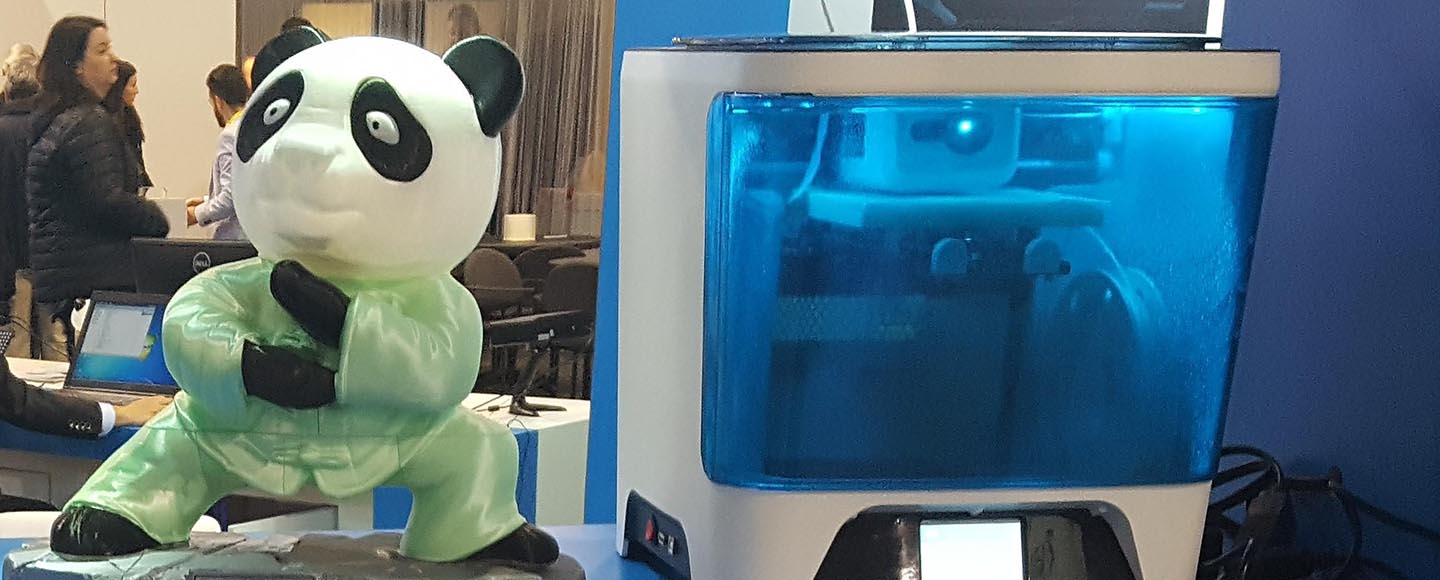
PETG has quietly become the go-to filament for makers who need stronger, more durable prints without the headaches of ABS. It sits in the sweet spot between PLA’s ease of use and ABS’s toughness — and in 2026, with modern high-speed printers like the Bambu Lab X1 series, the Creality K2, and Voron machines now common in home workshops, PETG has become even more practical. These machines handle PETG beautifully, making it accessible to beginners and experienced makers alike.
In this guide, you will learn exactly what PETG is made of, what PETG filament is good for, how PETG compares to PLA and ABS across the specs that actually matter, what PETG HF and PETG CF mean, whether PETG is food safe, and which version of PETG you should buy for your next project. Let’s get into it.
Quick Answer: What Is PETG?
- PETG stands for Polyethylene Terephthalate Glycol.
- PETG is a modified version of PET plastic — the same plastic used in water bottles — with glycol added.
- The glycol makes PETG easier to print, less brittle, and more resistant to cracking.
- PETG is stronger and more heat-resistant than PLA, but much easier to print than ABS.
- PETG is commonly used for brackets, outdoor parts, enclosures, tools, and functional prints.
Need a spool to start with? See our picks for the Best PETG Filament for Beginners — tested across popular printers and ranked by print quality, consistency, and value.
What Is PETG Filament?
PETG filament is one of the most widely used materials in FDM (Fused Deposition Modeling) 3D printing. It is available from dozens of brands, works on nearly every modern 3D printer, and produces parts that are genuinely useful — not just decorative. If PLA is the training wheels of 3D printing and ABS is the stubborn expert-mode material, PETG is the reliable middle child that gets the job done without drama.
What makes PETG so popular is the combination of properties it delivers: the ease of printing you get with PLA, the toughness and impact resistance you normally associate with ABS, and better flexibility and outdoor durability than either material in many real-world situations.
What Does PETG Stand For?
PETG is an acronym that breaks down like this:
- Polyethylene — the broad family of thermoplastic polymers the material belongs to
- Terephthalate — indicating the PET-based chemistry at the core of the material
- Glycol — the key additive that separates PETG from standard PET
That last part — the glycol — is really the defining difference. Without glycol, you have regular PET, which is harder to print and more brittle. Add glycol into the chemistry, and you get a material that extrudes smoothly, bonds layers well, and does not shatter when you drop it.
What Is PETG Made Of?
PETG is created by modifying standard PET (Polyethylene Terephthalate) plastic with glycol during the polymerization process. PET is the exact same base plastic used in most clear water bottles, soft drink containers, and food packaging — so PETG is built on a foundation that the world already trusts for everyday use.
The glycol modification changes the molecular structure of the plastic in several important ways. It makes the material less brittle, easier to extrude at consistent temperatures, less prone to shrinkage as it cools, clearer when printed at lower temperatures, and far better at bonding between layers during the printing process. All of these changes make PETG dramatically more practical to print at home compared to raw PET.
Is PETG a Polyester?
Yes — PETG is technically a thermoplastic polyester. If that surprises you, it is because most people associate the word ‘polyester’ exclusively with clothing fabric. But polyester is actually a broad chemical family that includes a wide range of plastics. PETG belongs to this family because of its ester linkages in the polymer chain, the same chemical structure that defines polyester materials in general.
What Is PETG Plastic Used for Outside of 3D Printing?
PETG is not just a 3D printing material — it is an industrial workhorse used in a wide range of applications:
- Food packaging (clear trays, blister packs, containers)
- Medical device trays and sterile packaging
- Retail display stands and point-of-sale fixtures
- Machine guards and protective shields in industrial environments
- Transparent covers for electronics and machinery
- Face shields and personal protective equipment
This industrial track record is part of why PETG is trusted in functional 3D printing applications. It is not a material created just for printers — it is a proven industrial plastic that has been adapted into filament form.
What Is PETG in 3D Printing?
PETG filament is what you reach for when your print needs to actually do something. Decorative vase on a shelf? PLA is fine. A bracket holding weight under your desk, a camera mount in your car, a waterproof enclosure for a Raspberry Pi sitting on your back porch? That is where PETG earns its reputation.
Why PETG Became So Popular in 2026
PETG has always been popular, but 2026 has cemented its status as one of the default filament choices for serious makers. The main reason is the rise of high-speed CoreXY printers. Machines like the Bambu Lab X1 Carbon, Creality K2 Plus, and custom Voron builds can print at 300–600 mm/s — and at those speeds, ABS becomes nearly unmanageable due to warping and fume production. PLA, while easy, simply cannot survive the heat cycles and mechanical stresses that functional parts experience.
PETG hits the sweet spot. It is stronger than PLA, produces minimal fumes, does not warp aggressively like ABS, and prints successfully at high speeds when dialed in correctly. For most real-world functional prints in 2026, PETG is the first material experienced makers reach for.
Typical PETG Print Settings
These ranges are starting points. Every printer and every brand of PETG filament behaves slightly differently. Expect to spend a few test prints dialing in your specific setup — but once you find the right settings, PETG tends to be very consistent.
| Setting | Typical Range |
|---|---|
| Nozzle Temperature | 230–260°C |
| Bed Temperature | 70–90°C |
| Fan Speed | 20–50% |
| Enclosure | Optional (recommended for large parts) |
| Drying Temperature | 60–65°C for 4–6 hours |
Why Drying PETG Is No Longer Optional in 2026
Important: Dry Your PETG Before PrintingPETG is hygroscopic — it absorbs moisture from the air. Even a fresh spool can arrive with enough moisture to cause print quality issues, especially on modern high-speed printers. Always dry PETG at 60–65°C for 4–6 hours before printing and store it in sealed bags or dry boxes with desiccant.
Here is the thing most beginners do not hear about until they have already wasted a spool: PETG absorbs moisture from the air, and moisture absolutely destroys print quality. This is called being hygroscopic. PETG is not the worst offender (that title goes to Nylon), but it absorbs significantly more moisture than PLA.
On older, slower printers, slightly damp PETG was sometimes manageable. On modern high-speed machines running at 300 mm/s and beyond, even a small amount of moisture in the filament creates internal steam that causes what can only be described as tiny explosions inside your nozzle — audible popping, micro-bubbles in the plastic, and severely compromised layer bonding.
Symptoms of wet PETG are easy to recognize once you know what to look for: excessive stringing, popping or crackling sounds during printing, visible bubbles on the surface, weak and brittle layer adhesion, rough or textured surfaces where you expected smooth walls, and a cloudy or hazy finish instead of PETG’s characteristic slight sheen.
The solution is straightforward: dry your filament. 60–65°C for 4–6 hours in a filament dryer or a low oven does the job. Store open spools in sealed bags or purpose-built dry boxes with silica gel desiccant. Even if the spool is brand new and sealed from the factory, it can still arrive wet — especially if it was stored in a warm or humid warehouse before shipping.
Struggling with stringy or bubbly PETG prints? A good filament dryer makes an enormous difference. See our roundup of the Best Filament Dryers — ranked by drying performance, ease of use, and whether they can handle large spools.
What Is PETG Good For?
The honest answer: almost anything that needs to hold up in the real world. Let’s break down the specific use cases where PETG filament genuinely shines.
What Is PETG Filament Used For?
- Functional mounting brackets (shelf supports, monitor arms, wall mounts)
- Tool holders and workshop organizers
- Electronics enclosures (Raspberry Pi cases, Arduino project boxes)
- Outdoor signs and labels
- Garden accessories (plant pot holders, stake labels, hose guides)
- RC vehicle parts (durable body panels, mounts, axle covers)
- Camera and tripod mounts
- Cable clips, clips, and management systems
- Water-resistant parts (outdoor sensor housings, garden tools)
- Storage bins and organizers
- 3D printer upgrades and replacement parts
Indoor Functional Parts: The Creep Advantage
This is one of the most underappreciated advantages of PETG over PLA, and it deserves a proper explanation.
PLA is stiff — impressively so, right out of the printer. But PLA is also prone to a phenomenon called creep. Creep is the slow, gradual deformation of a material under constant load, even when that load is well below what would cause immediate failure. Think of it like this: a PLA shelf bracket may look perfectly fine on day one. After six months of holding a modest weight, it starts to sag. Not because it broke — because the plastic slowly gave way under the continuous stress.
PETG is much better at resisting creep. A PETG bracket that holds weight today will still hold it a year from now without visibly deforming. This is the reason experienced makers almost always choose PETG over PLA for anything that will bear weight, hold tension, or stay under mechanical stress for extended periods.
Practical indoor applications that benefit most from PETG’s creep resistance include shelf brackets, drawer pull organizers, hooks, pegboard accessories, and desk organizer components.
Outdoor Prints: Built to Last
PETG is one of the best common filament options for outdoor use. PLA degrades rapidly in sunlight due to poor UV resistance, and it can soften on warm summer days in direct sun. PETG holds up significantly better on both fronts.
- Garden bed accessories and plant markers
- Solar light mounts and brackets
- Bird feeder and bath components
- Outdoor security camera brackets and mounts
- Mailbox accessories and weather-exposed fixtures
PETG’s better UV resistance and natural moisture resistance make it the obvious choice whenever your print will spend time outdoors. It is not completely immune to UV degradation over long time periods (for that, ASA is worth considering), but for seasonal or medium-term outdoor use, PETG is reliable and easy to print.
Parts Exposed to Heat
PLA has a heat deflection temperature in the range of 55–60°C. That sounds fine until you realize a car interior on a hot summer day can reach 80°C or more. PLA parts inside a car, near a heat vent, or on a warm workshop surface regularly warp and deform.
PETG handles temperatures up to around 70–80°C, which makes it suitable for:
- Car interior accessories (phone holders, cable organizers, vent clips)
- Fan shrouds and airflow components near motors
- Workshop tools and jigs near heat sources
- 3D printer upgrades that experience print-chamber heat
PETG vs PLA: The Comparison That Actually Matters
If you have been 3D printing for any amount of time, you have almost certainly printed with PLA. It is the default for good reason — easy to print, no enclosure needed, minimal odor, and forgiving of beginner mistakes. But there comes a point for almost every maker when PLA stops being enough. That is usually when you discover PETG.
Here is a clear, honest comparison of PETG vs PLA across the specs that matter for real-world printing decisions:
| Feature | PLA | PETG | ABS |
|---|---|---|---|
| Ease of Use | ⭐⭐⭐⭐⭐ | ⭐⭐⭐⭐ | ⭐⭐ |
| Tensile Strength | Moderate | High | High |
| Heat Resistance | ~55°C | ~75°C | ~100°C |
| UV Resistance | Poor | Good | Moderate |
| Outdoor Durability | Poor | Excellent | Good |
| Flexibility / Impact Resistance | Low (brittle) | Moderate (tough) | Moderate |
| Fumes / Odor | Minimal | Minimal | Strong (styrene) |
| Warping Risk | Very Low | Low | High |
| Moisture Sensitivity | Low | Moderate | Low |
| Best For | Decorative prints | Functional & outdoor parts | High-heat mechanical parts |
PETG vs PLA: Which Is Stronger?
PETG is tougher and more impact-resistant than PLA. If you drop a PLA part on a hard floor, there is a real chance it cracks or shatters — especially if the layer lines align with the impact. PETG absorbs impact better and flexes slightly before failing.
PLA can be stiffer in some measures — higher Young’s modulus, if you want the technical term — but stiffness and toughness are different properties. PLA is rigid and relatively brittle. PETG is tough and somewhat flexible. For most functional parts, toughness wins.
PETG vs PLA: Which Handles Heat Better?
There is no contest here. PLA softens noticeably around 55–60°C. PETG holds its shape up to around 70–80°C. That difference matters enormously in real-world applications: summer car interiors, workshop environments, parts near motors, and anything exposed to direct sunlight.
But the more important distinction for long-term functional parts is creep resistance, not just softening temperature. As explained in the indoor parts section above, PLA slowly deforms under continuous load even at normal room temperatures. PETG resists this slow deformation much more effectively. A PETG bracket will still look the same after a year. A PLA bracket may have quietly sagged.
PETG vs PLA: Which Is Easier to Print?
PLA wins on ease — full stop. PETG requires more attention to settings, particularly around retraction (to manage stringing) and bed adhesion (because PETG can stick almost too well to some surfaces). PETG also benefits significantly from dried filament, while PLA is more forgiving of moisture.
Pro Tip for PETG StringingPETG loves two things: being durable and leaving behind strings that make your print look like it spent the night in a haunted house. Thankfully, a few retraction tweaks in your slicer usually solve it completely.
The learning curve for PETG is real but modest. Most makers get good results within a few test prints. Once you have your settings dialed in, PETG is actually very consistent and reliable.
When to Choose PLA Instead
- Detailed miniatures and models where dimensional accuracy at fine scales matters most
- Display pieces and decorative prints that will never bear load or heat
- Fast, throwaway prototypes where material cost and speed matter more than durability
- You want the absolute easiest, most forgiving print experience
When to Choose PETG Instead
- Any functional part that will bear weight, stress, or repeated mechanical loads
- Anything used outdoors, even seasonally
- Parts that will experience temperatures above 55°C
- Brackets, holders, mounts, enclosures, or tools
- Anything that needs to stay intact when dropped
Ready to make the switch? See our picks for the Best PETG Filament and our complete PETG vs PLA deep-dive guide with real-world print test results across a range of popular printers.
PETG vs ABS: Why PETG Usually Wins
ABS used to be the go-to engineering filament before PETG became widely available and well-understood. Today, for most makers, ABS has a much narrower use case — and that use case is specifically when you need heat resistance above 80°C.
| Feature | PETG | ABS |
|---|---|---|
| Heat Resistance | ~75°C | ~100°C |
| Printing Difficulty | Low-Moderate | High |
| Enclosure Required | Optional | Strongly Recommended |
| Warping Risk | Low | High |
| Fumes / Odor | Minimal | Strong (styrene — ventilate!) |
| Impact Resistance | High | High |
| UV / Outdoor Performance | Good | Moderate |
| Post-Processing (sanding, acetone) | Limited | Excellent |
| Best For | Most functional prints | High-heat parts, acetone smoothing |
ABS requires an enclosure to manage the warping that occurs as it cools, produces strong styrene fumes that require proper ventilation, and needs careful temperature management throughout the print. For many hobbyist setups — particularly in shared spaces or without a dedicated enclosed printer — ABS is genuinely impractical.
PETG prints without an enclosure in most cases, produces minimal odor, and delivers comparable mechanical performance for the vast majority of functional print applications. Unless you specifically need heat resistance above 75°C or want to acetone-smooth your parts, PETG is the better choice for beginners and most experienced makers.
PETG vs PET: What Is the Difference?
Standard PET (Polyethylene Terephthalate) and PETG share the same base chemistry, but they are meaningfully different materials in practice. PET has higher tensile strength and slightly better heat resistance, but it is significantly more difficult to print — it tends to be more brittle in 3D-printed form and does not bond between layers as effectively as PETG.
The glycol modification in PETG solves PET’s printability problems at the cost of some raw strength. For 3D printing applications, PETG almost always makes more sense than trying to print straight PET. The trade-off in absolute strength is minor, while the improvement in ease of use and layer adhesion is significant.
What Is PETG HF? High Flow PETG Explained
If you have been shopping for PETG recently and noticed a version labeled ‘HF,’ you are looking at one of the most important developments in filament technology for high-speed printing.
What Does PETG HF Mean?
PETG HF stands for PETG High Flow. It is a formulation of PETG specifically engineered to perform at the extreme print speeds that modern CoreXY printers are capable of — machines like the Bambu Lab X1 Carbon, P1S, Creality K2 Plus, and high-speed Voron builds.
Standard PETG is optimized for print speeds in the range of 60–150 mm/s. PETG HF filament is formulated to flow correctly at 300–500+ mm/s. At those speeds, standard PETG simply cannot melt and extrude fast enough to produce clean, properly bonded layers. PETG HF has a lower viscosity when melted, which allows it to move through the nozzle cleanly at much higher flow rates.
PETG HF vs Regular PETG: How Are They Different?
Important Note for 2026 MakersPETG HF is becoming the new default for fast CoreXY printers. However, it is not automatically ‘better’ than standard PETG. Use standard PETG when maximum layer bonding strength matters most. Use PETG HF when print speed, reduced stringing, and a cleaner matte finish are your priorities.
| Feature | Standard PETG | PETG HF |
|---|---|---|
| Optimal Print Speed | 60–150 mm/s | 300–500+ mm/s |
| Layer Adhesion Strength | Higher | Slightly Lower |
| Surface Finish | Glossy / Slightly ‘Greasy’ | Matte / Cleaner |
| Stringing Tendency | More | Significantly Less |
| Best For | Maximum Strength Parts | Speed, Appearance, Fast Printers |
| Typical Cost | Lower | Higher |
One underappreciated benefit of PETG HF is its surface finish. Standard PETG can look somewhat glossy or even slightly sticky to the eye — some makers describe it as ‘greasy looking.’ PETG HF typically produces a matte, cleaner finish that many people find more visually appealing, especially for parts that will be seen up close.
The trade-off is a small reduction in layer-to-layer adhesion strength. For most applications, this difference is negligible. For parts under extreme mechanical stress or impact, standard PETG’s stronger inter-layer bonding gives it an edge.
Running a Bambu Lab, Creality K2, or fast Voron? Check out our picks for the Best PETG HF Filaments — tested at real high-speed print profiles across multiple machines.
What Is PETG CF? Carbon Fiber Reinforced PETG
PETG CF is PETG filament that has been reinforced with chopped carbon fiber strands embedded in the plastic matrix. The carbon fiber does not dramatically change the base chemical properties of PETG, but it significantly alters the mechanical behavior of the printed part.
Benefits of PETG CF
- Significantly stiffer than standard PETG (higher stiffness-to-weight ratio)
- Better dimensional stability — parts are more accurate and less prone to warping
- Premium matte black finish that looks noticeably more professional
- Reduced shrinkage during printing
Downsides of PETG CF
- More expensive per kilogram than standard PETG
- More brittle than standard PETG — less impact resistance
- Aggressively abrasive: will destroy a standard brass nozzle in hours
Do You Need a Hardened Nozzle for PETG CF?
Critical WarningYes — and this is non-negotiable. The chopped carbon fiber in PETG CF is extremely abrasive. A standard brass nozzle will wear out within a few prints, leading to an increasingly oversized nozzle diameter, poor print quality, and eventually complete nozzle failure. You MUST upgrade your nozzle before printing any carbon fiber filament.
The most common options are:
- Hardened steel nozzles — offer a good balance of durability and cost
- Ruby-tipped nozzles — offer exceptional wear resistance at a premium price
- Tungsten carbide nozzles — represent the current top-tier option for exotic abrasive filaments
Printing PETG CF? Don’t ruin your nozzle. See our guide to the Best Hardened Nozzles for Carbon Fiber Filament — covering hardened steel, ruby, and tungsten carbide options across popular hotend formats.
Is PETG Food Safe?
Important WarningEven if your PETG filament is labeled ‘food safe,’ the finished 3D-printed part is usually NOT truly food safe. Tiny layer lines between printed layers can trap bacteria that is impossible to fully clean. Brass nozzles may also introduce trace lead contamination into the plastic during printing.
This is a question that comes up constantly, and it deserves a nuanced answer rather than a simple yes or no.
The raw PETG plastic itself can be food safe. Some PETG resins are FDA-approved for food contact, and PET (PETG’s base material) is the same plastic used in food and beverage packaging worldwide. So on a material chemistry level, PETG has a legitimate track record in food contact applications.
However — and this is a significant however — a 3D-printed PETG part is not the same as an industrially manufactured PETG container. Here is why:
- Layer lines: FDM 3D printing creates microscopic gaps between layers. These gaps trap food particles and bacteria that cannot be removed with normal washing, even in a dishwasher.
- Nozzle contamination: Most standard printer nozzles contain brass, which includes trace amounts of lead. Lead can migrate into the filament during printing and end up in the finished part.
- Surface roughness: Even smooth-looking PETG prints have surface micro-texture that harbors bacteria.
If you want to use 3D-printed PETG parts for food contact, the practical path is to apply a food-safe epoxy coating to seal the surface completely, use a stainless steel nozzle during printing (confirmed lead-free), and limit use to non-critical, occasional food contact rather than regular meal preparation or food storage.
For anything involving repeated food contact or storage, it is worth investing in purpose-made food-safe containers rather than relying on 3D-printed parts.
Is PETG Waterproof?
PETG is water-resistant, not fully waterproof at the printed-part level. The material itself does not absorb water and does not degrade when exposed to moisture — so PETG parts will not swell, warp, or weaken from rain or humidity the way some materials might.
However, because FDM 3D printing creates layer lines, printed PETG parts are not pressure-watertight straight from the printer in most cases. Water can seep through layer interfaces under pressure. For applications that need to genuinely hold water (like a planter pot without drainage holes or a waterproof enclosure under submersion), you will need to apply a waterproof coating, print at very high infill with extra perimeters, or use a post-processing step to seal the surface.
For outdoor exposure, rain contact, and general moisture resistance, PETG performs very well without any additional treatment.
Common PETG Problems and How to Fix Them
PETG is reliable once dialed in, but it does have a few characteristic quirks. Here are the ones you are most likely to encounter and what to do about them.
Why Does PETG String So Much?
Stringing — those thin threads of plastic left between features — is PETG’s most infamous characteristic. PETG can leave behind enough strings to make your printer look like it spent the night in a haunted house. The good news is that stringing is almost always fixable.
The most common causes are wet filament (moisture causes excess oozing), nozzle temperature too high, and retraction settings that are not aggressive enough for your specific printer and setup. Start by drying your filament if you have not already, then work through retraction distance and speed adjustments in your slicer. Most PETG stringing problems resolve within a few test prints.
Why Does PETG Stick Too Well to the Bed?
This might sound like a good problem to have, but PETG bonding too aggressively to a PEI build plate can actually damage the surface — you may pull chunks of the PEI coating off when removing your print.
The solution is counterintuitive: use a glue stick on your build plate. The glue acts as a release layer, not an adhesion promoter. PETG bonds well to the glue, and the glue releases cleanly from the PEI surface when the bed cools.
Pro TipPETG sticks to PEI like it is trying to merge permanently with your build plate. A glue stick is not there to help it stick better — it is there to help you actually get your print off.
Why Is PETG Brittle?
If your PETG prints are shattering or snapping instead of bending, moisture is almost always the cause. Wet PETG creates weak layer adhesion and internal voids that make the part fragile. Dry your filament thoroughly before printing. If brittleness persists after drying, try increasing your nozzle temperature by 5°C to improve layer bonding.
Why Does PETG Look Cloudy or Hazy?
Cloudy or hazy prints are typically caused by moisture in the filament, excessive part cooling (too much fan), or printing too fast for the material to properly crystallize. Try drying the filament first, reducing fan speed to 20–30%, and slowing down slightly if you have recently increased print speed.
Is PETG Right for You? The Honest Decision Guide
Here is the straightforward version. Think about the last few prints you made or the ones you are planning:
Choose ABS or ASA If:
- You specifically need heat resistance above 80°C for automotive or industrial applications
- You want to acetone-smooth your parts (ABS only)
- You need maximum UV resistance for long-term outdoor use (ASA)
The reality is that for most real-world 3D printing beyond purely decorative work, PETG is the material you will end up using once you try it. It prints cleanly on modern machines, produces parts that actually hold up, handles outdoor exposure, resists the slow sagging that plagues PLA functional prints, and is available from many quality brands at reasonable prices.
The small added effort of drying your filament, tuning retraction, and learning the bed adhesion quirks pays off quickly. Once you have a PETG profile dialed in on your printer, it becomes one of your most-reached-for spools.
Still weighing your options? Our complete PETG vs PLA guide walks through real-world examples, print test results, and specific filament recommendations by use case. And when you are ready to buy, our Best PETG Filament roundup covers the top options tested across popular FDM printers in 2026.
FAQ: What Is PETG? Common Questions Answered
What is PETG filament?
PETG filament is a 3D printing material made from Polyethylene Terephthalate modified with glycol. It combines the ease of printing associated with PLA with the strength and durability of ABS, making it one of the most popular materials for functional FDM 3D printing.
What is PETG made of?
PETG is made from PET plastic — the same base polymer used in water bottles and food packaging — with glycol added during polymerization. The glycol modification makes the material less brittle, easier to extrude, and significantly better at bonding between printed layers.
Is PETG stronger than PLA?
Yes. PETG is tougher and more impact-resistant than PLA. PLA can be slightly stiffer, but PETG absorbs impact better and resists the slow deformation (creep) that PLA experiences under sustained load. For functional parts, PETG’s toughness makes it the stronger practical choice.
Is PETG better than PLA?
For functional, structural, or outdoor parts — yes, PETG is generally better than PLA. For decorative or display-only prints, PLA is easier to work with and perfectly adequate. The right choice depends entirely on what the part needs to do.
Is PETG food safe?
The raw PETG material can be food safe, and some PETG resins are FDA-approved. However, 3D-printed PETG parts are generally not considered food safe due to bacteria-trapping layer lines and potential brass nozzle contamination. For reliable food-safe results, use a stainless steel nozzle and apply a food-grade epoxy coating to seal the print surface.
Is PETG waterproof?
PETG is water-resistant as a material and does not absorb or degrade in water. However, FDM-printed PETG parts are not inherently pressure-watertight due to layer interfaces. For full waterproofing, apply a sealant coating or design parts with very high perimeter counts and infill density.
Can PETG be used outdoors?
Yes. PETG has significantly better UV and moisture resistance than PLA, making it a reliable choice for outdoor prints. It will hold up well through seasonal temperature changes and rain exposure. For very long-term outdoor use in high-UV environments, ASA offers even better UV resistance.
Is PETG a polyester?
Yes. PETG is classified as a thermoplastic polyester. Polyester is a broad chemical family that includes many plastics beyond fabric — PETG belongs to this family due to its ester linkages in the polymer chain.
What temperature should PETG be printed at?
Typically 230–260°C for the nozzle and 70–90°C for the heated bed. Exact settings vary by brand and printer, so expect to dial in your specific setup through a few test prints.
Does PETG need an enclosure?
No — PETG does not require an enclosure for most prints. This is one of its major practical advantages over ABS. For very large parts, an enclosure can help reduce warping, but for typical functional prints, PETG works well in open-frame printers.
What is PETG HF filament?
PETG HF stands for PETG High Flow. It is a formulation of PETG engineered for modern high-speed printers, capable of printing cleanly at 300–500+ mm/s. It typically produces a cleaner matte finish with less stringing than standard PETG, at the cost of slightly reduced layer adhesion strength.
What is PETG CF?
PETG CF is carbon fiber reinforced PETG. Chopped carbon fiber is embedded in the PETG matrix to increase stiffness, dimensional accuracy, and surface finish. It requires a hardened steel, ruby, or tungsten carbide nozzle to avoid rapid wear.
Is PETG better than ABS?
For most applications, yes. PETG is easier to print, produces minimal fumes, does not require an enclosure, and delivers comparable mechanical performance to ABS. ABS is the better choice specifically when you need heat resistance above 75°C or want to acetone-smooth your finished parts.
Related Guides
- Best PETG Filament (2026 Tested Roundup)
- PETG vs PLA: Complete Comparison with Real Print Tests
- PETG vs ABS: Which Should You Choose?
- Best Filament Dryer for 2026
- How to Dry Filament the Right Way
- Best PETG HF Filament for High-Speed Printers
- Best Hardened Nozzles for Abrasive Filaments
- Best 3D Printer for PETG
Ready to Start Printing with PETG?
PETG is the sweet spot between PLA’s ease of use and ABS’s toughness — perfect for functional parts, outdoor projects, and anything that needs to hold up in the real world.

