

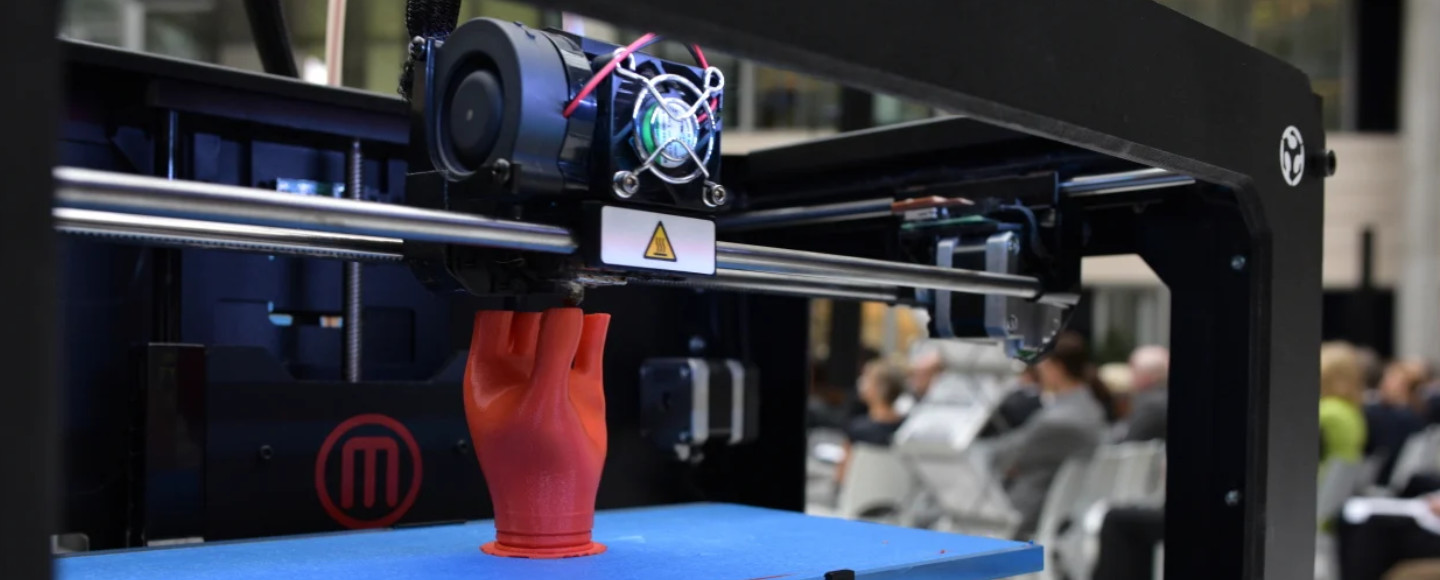
If you’ve spent more than five minutes in any 3D printing forum or community group, you’ve already seen the question — Should I use PLA or ABS? It’s one of the most common debates in the hobby, and honestly, it’s a fair one. PLA vs ABS is the great filament debate, and the answer depends a lot more on what you’re building than most quick-answer articles will tell you.
Here’s the short version: PLA is easier to print, more beginner-friendly, and the go-to for most indoor projects. ABS is tougher, more heat resistant, and better for functional parts that need to survive in demanding environments. But neither one is universally “better” — the right choice depends on your printer setup, the part’s purpose, and the environment it will live in.
In this guide, we’re going beyond the surface-level comparison. We’ll dig into PLA vs ABS strength, heat resistance, printing difficulty, price, density, and safety — and we’ll also bring PETG, ASA, and Nylon into the picture for those of you choosing between multiple materials. By the end, you’ll know exactly which filament to load up for your next print.
Jump to Any Section
- What’s the Difference?
- What Is PLA?
- What Is ABS?
- Strength Comparison
- Heat Resistance
- Printing Difficulty
- Price and Cost
- Density and Weight
- PLA vs ABS vs PETG
- PLA vs ABS vs ASA
- PLA vs ABS vs Nylon
- Environmental and Safety
- Common Mistakes
- Which Filament Should You Choose?
- Frequently Asked Questions
- Final Verdict
PLA vs ABS: What’s the Difference?
Before we go deep, here’s a quick snapshot of where these two materials stand:
- PLA (Polylactic Acid) is made from plant-based materials, prints at lower temperatures, warps very little, and is the default choice for beginners and decorative prints.
- ABS (Acrylonitrile Butadiene Styrene) is a petroleum-based engineering plastic that handles heat and impact much better than PLA, but requires more careful printing conditions.
- If you’re using an open-frame printer (like a basic Ender 3), PLA is almost always the safer, smarter choice.
- If you have an enclosed printer and need parts that can take heat, stress, or vibration, ABS is often worth the extra effort.
PLA vs ABS at a Glance
| Feature | PLA | ABS |
|---|---|---|
| Ease of Printing | Very Easy | Moderate to Difficult |
| Print Temperature | 190–220°C | 230–260°C |
| Bed Temperature | 0–60°C | 90–110°C |
| Enclosure Needed | No | Usually Yes |
| Warping | Very Low | High |
| Strength | High Stiffness | Better Impact Resistance |
| Heat Resistance | Poor | Good |
| Odor | Minimal | Strong |
| Outdoor Use | Limited | Better |
| Cost | Lower | Slightly Higher |
| Best For | Beginners, Display Models | Functional, Heat-Resistant Parts |
Ready to start printing? Check out our top-rated picks for every budget.
What Is PLA?
PLA stands for Polylactic Acid, and it’s the filament that started most people’s 3D printing journey — including probably yours. It’s derived from renewable plant-based materials like corn starch and sugarcane, which gives it a slightly more eco-friendly profile than petroleum-based plastics. It also happens to smell faintly sweet when printing, which is a nice bonus when you’re spending a few hours near your printer.
PLA became the default beginner filament for good reasons: it’s forgiving, inexpensive, and prints reliably on just about any printer without needing fancy accessories. No enclosure, no heated chamber, minimal babysitting.
Key PLA Characteristics
- Low printing temperature (190–220°C), which means most printers can handle it out of the box
- Minimal warping — you can often print PLA directly on a cold bed with just a little adhesive
- High stiffness — PLA is quite rigid, which makes it excellent for dimensionally accurate parts
- Biodegradable in theory — but only under industrial composting conditions; your backyard compost pile won’t cut it
- Brittle compared to ABS — PLA tends to snap rather than bend, which matters for parts under repeated stress
One thing worth knowing in 2026: most people aren’t printing with standard PLA anymore. The market has largely moved on to PLA+ and High-Speed PLA (HS-PLA) blends, which are genuinely better in almost every way. Modern HS-PLA blends have significantly better layer adhesion, higher flow rates, and improved impact resistance compared to the PLA you would have bought five years ago. If you’re on a modern CoreXY printer capable of 300–600 mm/s print speeds (think Bambu Lab, Creality K2 Plus, or Orca-tuned machines), High-Speed PLA is the filament you want.
PLA Pros
- Extremely easy to print — great for beginners
- Minimal warping, even without an enclosure
- High stiffness and dimensional accuracy
- Plant-based, more sustainable origin
- Wide color and specialty variety available
- Modern PLA+ and HS-PLA blends close the strength gap
- Low printing temperature saves energy
PLA Cons
- Poor heat resistance — deforms around 55–65°C
- Brittle under impact — snaps instead of bending
- Not suitable for outdoor or automotive use
- Can creep under sustained loads over time
- Not truly food-safe without a sealed coating
- Limited chemical resistance
Best Uses for PLA
- Decorative prints and figurines
- Miniatures and tabletop models
- Household organizers, trays, and holders
- Functional prototypes and proof-of-concept parts
- Indoor brackets and wall mounts that won’t be exposed to heat
Where PLA Falls Short
PLA has real limits, and knowing them saves you from wasted prints and failed parts:
- Car interiors — this is where PLA gets people in trouble most often
- Outdoor prints — UV light degrades surface quality, and summer heat warps it
- Parts near heat sources — anything near a lamp, radiator, or oven window
- Hinges and snap-fit parts — PLA’s brittleness means these tend to fail faster than you’d like
A PLA phone holder can deform in a hot car within a few hours on a sunny day. Don’t print anything mission-critical in PLA if it’s going anywhere near a car dashboard or a south-facing window. This is the single most common mistake new 3D printer users make — and it almost always ends with a warped, useless part.
What Is ABS?
ABS stands for Acrylonitrile Butadiene Styrene — a mouthful, but you’ve been handling this material your whole life. LEGO bricks are made of ABS. So are most automotive interior trim pieces, power tool housings, and appliance panels. It’s one of the most widely used engineering plastics in the world, and for good reason: it’s tough, heat-resistant, and can be machined, sanded, glued, and finished like a dream.
In the 3D printing world, ABS gets a bit of a reputation for being difficult. That reputation is partly earned and partly outdated — we’ll get to that.
Key ABS Characteristics
- Higher heat resistance — starts softening around 95–105°C vs PLA’s 55–65°C
- Better impact resistance — it bends and absorbs shock rather than cracking like PLA
- More flexible before breaking — useful for parts that take repeated stress
- Can be smoothed with acetone — this is ABS’s biggest party trick, and we’ll cover it in a moment
- Requires higher print temperatures (230–260°C nozzle, 90–110°C bed)
- Releases VOCs (Volatile Organic Compounds) and ultrafine particles during printing — more on safety later
- Works best in an enclosed printer with HEPA + activated carbon filtration
ABS Pros
- Excellent heat resistance — safe in hot cars and near electronics
- Superior impact resistance — absorbs shocks instead of cracking
- Acetone vapor smoothing for injection-molded-looking finishes
- Good long-term dimensional stability under load
- Can be sanded, machined, glued, and painted easily
- Lower density means more volume per kilogram
ABS Cons
- Significant warping without an enclosed printer
- Releases VOCs and styrene fumes during printing
- Requires higher temperatures and more energy
- More failed prints during the learning curve
- UV degradation outdoors without coating
- Hidden costs: enclosure, ventilation, filament drying
Best Uses for ABS
- Tool holders and workshop organizers
- Electronics enclosures and project boxes
- Automotive clips, trim pieces, and cable management
- Functional workshop parts that get handled and stressed
- Outdoor parts that need heat resistance (with UV coating, since raw ABS degrades in sunlight)
Acetone Vapor Smoothing: ABS’s Killer Feature
If there’s one reason experienced makers still reach for ABS over materials like PETG or ASA, it’s acetone vapor smoothing. The process is exactly what it sounds like: you expose a finished ABS print to acetone vapor in a controlled environment, and the outer layer of the print melts just slightly — enough to fuse the layer lines together into a smooth, glossy surface that looks almost injection-molded.
The results are genuinely impressive. ABS prints that would otherwise show obvious layer lines can be finished to look like professional product prototypes. This makes ABS especially popular for:
- Cosplay props and armor pieces that need a smooth, painted finish
- Product prototypes being shown to clients
- Display enclosures for electronics
- Custom project boxes that need a clean, professional look
Acetone is highly flammable and should only be used in a well-ventilated area, away from open flames or sparks. Don’t do acetone smoothing near your 3D printer. Use a dedicated container or build a purpose-made smoothing station, and always wear appropriate safety equipment including gloves and eye protection.
Where ABS Falls Short
- Small open-frame printers — without an enclosure, warping makes ABS very frustrating
- Poorly ventilated rooms — the VOC fumes are real; don’t print ABS in your bedroom with the door closed
- Large, flat prints — the larger the footprint, the more ABS wants to warp and lift off the bed
PLA vs ABS Strength: Which Is Actually Stronger?
This is one of the most searched questions in the filament world — and the answer is genuinely nuanced. PLA and ABS are strong in different ways, and choosing the wrong one for a structural application can be an expensive mistake.
Tensile Strength
On paper, PLA often wins the tensile strength battle:
| Material | Tensile Strength |
|---|---|
| PLA | 50–65 MPa |
| ABS | 35–50 MPa |
Tensile strength measures how hard you have to pull on a material before it breaks. So yes — if you’re pulling a rope made of PLA against a rope made of ABS, PLA holds on longer.
Impact Resistance
But here’s where ABS takes over: impact resistance. ABS is significantly harder to crack when you drop it, knock it, or subject it to sudden force. PLA is stiff and rigid, which is great for precision, but that rigidity also makes it brittle. If you’ve ever had a PLA print snap clean in half from a single drop, you’ve experienced this firsthand.
ABS absorbs that shock energy rather than transmitting it into a crack. For any part that’s going to take abuse in the real world, that matters a lot more than raw tensile numbers.
Layer Adhesion
Layer adhesion is where real-world print performance often diverges from lab specs. Modern High-Speed PLA blends in 2026 have made significant strides here — when printed correctly, they produce excellent layer bonding and are competitive with ABS for most everyday applications. But ABS, when printed at the right temperature in an enclosed environment, still tends to deliver better inter-layer strength for demanding applications like load-bearing brackets and mechanical parts under repeated stress.
Which Is Stronger in Real Life?
| Scenario | Better Material |
|---|---|
| Shelf bracket used indoors | PLA |
| Drone frame | ABS |
| Snap-fit enclosure | ABS |
| Decorative figurine | PLA |
| Tool hook in a garage | ABS |
| Miniature terrain piece | PLA |
| Automotive cable clip | ABS |
| Phone stand on a desk | PLA |
Bottom Line: PLA wins on stiffness for rigid, non-moving parts. ABS wins for anything that takes impacts, vibration, or repeated mechanical stress. If you’re printing functional parts, think about how they’ll be stressed, not just how strong they need to be.
Want the strongest possible parts? We tested the top filaments head-to-head. See which ones came out on top.
Best PLA+
Best for Strong Indoor Parts
Modern PLA+ blends deliver up to 30% better impact resistance than standard PLA while keeping the same easy printability. Ideal for functional indoor brackets, mounts, and prototypes.
Best ABS Filament
Best for Heat & Impact
Top-rated ABS with consistent diameter, minimal stringing, and excellent layer adhesion. Best suited for enclosed printers. Perfect for automotive and workshop parts.
Best PETG Filament
Best Middle-Ground Option
The sweet spot between PLA’s ease and ABS’s toughness. Prints on open-frame machines with near-zero warping while offering real-world durability for functional parts.
PLA vs ABS Heat Resistance
PLA vs ABS heat resistance is arguably the most important difference between these two materials for real-world use. If your parts are going anywhere near heat, this section is what you need to read.
Glass Transition Temperature Comparison
| Material | Glass Transition Temperature |
|---|---|
| PLA | 55–65°C |
| ABS | 95–105°C |
The glass transition temperature is the point at which a printed part starts to soften and deform under load. It’s not the point where it melts — it’s the point where it becomes pliable enough to start losing its shape, especially under sustained pressure.
To give you a sense of scale: a car parked in the sun on a warm summer day can reach 60–80°C inside. A part sitting near a computer’s rear exhaust port can easily hit 50–60°C. A kitchen or workshop in summer can regularly push past 35–40°C with localized hot spots near appliances.
Why PLA Deforms More Easily Than You’d Expect
Here’s something that catches a lot of people off guard: PLA can actually creep — slowly deform over time — even below its glass transition temperature when it’s under a constant load. A PLA shelf bracket supporting a stack of books may look fine today but show visible sag after a few months, even at normal room temperature.
ABS resists this long-term creep far better. For anything that needs to hold its shape under load over an extended period, ABS is simply the more trustworthy material.
Common Heat Scenarios: PLA vs ABS
| Environment | PLA | ABS |
|---|---|---|
| Inside a hot car | Likely to warp or deform | Usually safe |
| Near a computer exhaust fan | Risky at peak temperatures | Safer |
| Outdoor use in summer | Poor — will soften in direct sun | Better, with some UV caution |
| Kitchen or workshop environment | Limited — avoid near heat sources | Better suited for functional use |
Bottom Line: If temperature is even a remote concern for your part, ABS is the clear winner. PLA’s low heat resistance isn’t a flaw for display prints and desk organizers — but it’s a serious limitation the moment your print ends up anywhere warm.
PLA vs ABS Printing: Which Is Easier?
In terms of PLA vs ABS printing difficulty, there’s no competition — PLA wins easily. But if you’re in the ABS camp for good reason, there are ways to make it much more manageable.
PLA Printing Settings
| Setting | Recommended Value |
|---|---|
| Nozzle temperature | 190–220°C |
| Bed temperature | 0–60°C (many users print on a cold bed with PEI) |
| Cooling fan | 100% |
| Enclosure | Not needed |
| Bed adhesion | Easy — PEI, glass, or even blue painter’s tape |
PLA is genuinely one of the most forgiving materials you can load into a printer. You can get a great print on the first try with minimal tuning.
ABS Printing Settings
| Setting | Recommended Value |
|---|---|
| Nozzle temperature | 230–260°C |
| Bed temperature | 90–110°C (consistent heat is critical) |
| Cooling fan | Off or very low — cooling too fast causes warping |
| Enclosure | Strongly recommended for anything larger than a few centimeters |
| Bed adhesion | PEI, glue stick, or ABS slurry (dissolved ABS in acetone) |
Why ABS Is Harder to Print
The core challenge with ABS is thermal contraction. ABS shrinks as it cools, and if it cools unevenly — which happens easily on an open-frame printer in a room with any airflow — different layers contract at different rates. The result is warping, layer splitting (delamination), cracking, and parts that peel off the bed mid-print.
Key challenges:
- Warping — the most common ABS headache
- Layer cracking — delamination between layers due to rapid cooling
- Shrinkage — overall dimensional change that can affect fit
- Bed adhesion — getting ABS to stick and stay stuck through a whole print
Tips to Successfully Print ABS
If you’re committed to ABS, these practices make a real difference:
- Use an enclosed printer — this is the single biggest factor
- Add a brim or raft — more surface contact = less lifting
- Use PEI, glue stick, or ABS slurry as your bed surface
- Keep room temperature stable — drafts and air conditioning are ABS’s enemies
- Dry your filament before printing — moisture causes bubbles, weak layers, and surface defects
2026 Update: Modern Printers Make ABS Much Easier
This is worth calling out specifically because the landscape has changed a lot. If you’re still thinking about ABS through the lens of printing it on an open-frame machine a few years ago — the experience is genuinely different now.
Enclosed CoreXY machines like the Bambu Lab X1C, QIDI Q1 Pro, Creality K2 Plus, and similar enclosed printers have made ABS significantly more accessible than it was even two or three years ago. These printers maintain a stable, heated chamber throughout the print, have precise temperature control, and many include built-in air filtration. If you have one of these, ABS becomes a nearly stress-free material.
On open-frame printers, PLA still dominates — and that’s completely fine for most users.
Printing ABS? Here’s the gear that makes the difference between frustration and success.
Best Enclosed 3D Printers for ABS
Essential for Reliable ABS Prints
Enclosed CoreXY printers with heated chambers, precise temp control, and built-in filtration. These machines turn ABS from a frustrating experience into a near-push-button process.
Best Filament Dryers
Eliminate Bubbles & Weak Layers
Moisture is the silent killer of ABS prints. A good filament dryer restores your spools to optimal condition and keeps them dry during long multi-day prints.
HEPA + Carbon Filter Enclosures
Breathe Safe While Printing ABS
Styrene and ultrafine particles are real concerns with ABS. These filtration enclosures trap VOCs and particles so you can print ABS indoors with confidence.
PLA vs ABS Price and Cost: What Will It Actually Cost You?
Filament Price Comparison
| Material | Typical Price Per KG |
|---|---|
| PLA | $15–25 |
| ABS | $18–30 |
On the spool itself, PLA vs ABS price difference isn’t dramatic — you’re usually looking at a few dollars per kilogram. But the total cost of printing tells a different story.
The Hidden Costs of ABS
This is where the real cost comparison gets interesting:
- Enclosure: If you don’t already have one, adding or upgrading to an enclosed printer is the biggest cost consideration. Even a budget enclosure adds $30–100+.
- Better ventilation: ABS fumes are no joke. If you’re printing indoors regularly, an air purifier or dedicated exhaust setup is worth budgeting for.
- Higher electricity usage: ABS needs a higher and more consistent bed temperature for longer periods.
- Failed prints: Until you dial in your ABS settings, expect to waste some filament on warped, cracked, or delaminated prints. This adds up.
Which Offers Better Value?
PLA is cheaper overall for most hobbyists, full stop. For decorative prints, functional indoor parts, prototypes, and general hobby use, you’ll get more successful prints per dollar with PLA.
ABS offers better long-term value when the alternative is a part failing due to heat or stress. If a PLA automotive clip cracks in three months, the “cheaper” filament choice just became the expensive one.
Bottom Line: Choose based on the part’s requirements, not just the spool price. Paying a bit more for the right material almost always costs less than printing the wrong one twice.
PLA vs ABS Density, Weight, and Material Feel
Density Comparison
| Material | Density |
|---|---|
| PLA | ~1.24 g/cm³ |
| ABS | ~1.04 g/cm³ |
ABS is about 16% lighter than PLA at the same volume. For most desktop prints, this doesn’t matter — but for applications like drones, robotics, or wearable parts where every gram counts, ABS has a real advantage here.
This also means that a 1 kg spool of ABS will actually give you slightly more printed volume than a 1 kg spool of PLA — something worth keeping in mind if you’re printing a lot of large parts. Two identical prints will usually weigh around 15–20% more in PLA, which means you’re getting less total printed material per dollar when you factor in density. For high-volume printers, this is a hidden value advantage for ABS.
Surface Finish and Material Feel
Beyond the numbers, PLA and ABS feel noticeably different in your hand:
- PLA has a smoother, glossier, more polished surface straight off the printer. It feels hard and slightly brittle — it has a satisfying rigidity to it, but flex a piece hard enough and it snaps cleanly.
- ABS has a slightly more matte, industrial-looking surface finish. It feels a bit more flexible and resilient in your hand; it has more give before it gives up. If you’ve ever flexed a LEGO brick (as much as a LEGO brick can flex), that’s ABS doing what it does well.
Bottom Line: For most users, density and weight won’t be the deciding factor. But for weight-sensitive applications like drone frames and wearable cosplay parts, ABS’s lower density is a genuine advantage that shouldn’t be overlooked.
📋 Free Filament Comparison Cheat Sheet
Download our printable 1-page filament comparison chart — PLA, ABS, PETG, ASA, and Nylon side-by-side with temperature settings, strength specs, best uses, and cost. Keep it next to your printer for instant reference.
PLA vs ABS vs PETG: Bringing a Third Contender Into the Ring
No PLA vs ABS comparison in 2026 would be complete without talking about PETG, because honestly, PETG has quietly become the default middle-ground material for a huge number of users.
PETG (Polyethylene Terephthalate Glycol) sits right between PLA and ABS in almost every category:
| Feature | PLA | PETG | ABS |
|---|---|---|---|
| Ease of Printing | Very Easy | Easy | Moderate/Difficult |
| Heat Resistance | Low | Medium | High |
| Impact Resistance | Medium | High | High |
| Flexibility | Low | Medium | Medium |
| Outdoor Durability | Poor | Moderate | Better |
| Warping | Minimal | Low | High |
| Typical Cost | Low | Medium | Medium |
Why So Many People Choose PETG Over ABS
PETG has better impact resistance than PLA and better chemical resistance than both. It prints without the warping drama of ABS and doesn’t require an enclosure. It’s tough, slightly flexible, and holds up well in mild heat. For most functional indoor parts, PETG is genuinely the better choice over both PLA and ABS.
When PETG Is the Better Choice
- Functional parts used indoors (brackets, mounts, tool parts)
- Parts that need to resist water or humidity (outdoor housings with some protection)
- Users who want a stronger material than PLA but don’t want to deal with ABS’s printing challenges
If you’re weighing PLA against PETG specifically, we have a full head-to-head comparison covering printability, strength, heat resistance, cost, and real-world use cases. Read our full PLA vs PETG comparison →
PLA vs ABS vs ASA: The Outdoor Filament Battle
If outdoor use is on the table, you need to add ASA to your comparison. ASA (Acrylonitrile Styrene Acrylate) prints similarly to ABS — same temperature range, same enclosure recommendations — but with one critical advantage: UV resistance.
Why ASA Is Often Better Than ABS Outdoors
Straight ABS outdoors is a compromise. It handles heat reasonably well, but UV radiation causes ABS to become brittle, fade, and yellow over time. Meanwhile, PLA is actually moderately UV-resistant from a radiation standpoint — it doesn’t get chemically degraded by UV as aggressively as ABS — but PLA’s low heat resistance means that sunlight heats the part beyond its softening point, so it still fails outdoors. UV resistance alone isn’t enough if the material softens at 60°C on a hot day.
ASA was essentially designed to solve ABS’s outdoor weakness. It maintains ABS’s heat resistance and impact toughness while adding genuine UV stability that ABS lacks.
PLA vs ABS vs ASA: Outdoor Comparison
| Feature | PLA | ABS | ASA |
|---|---|---|---|
| UV Resistance | Poor | Moderate | Excellent |
| Heat Resistance | Low | High | High |
| Outdoor Use | Limited | Fair | Best |
| Printing Difficulty | Easy | Moderate | Moderate |
ASA is the right choice for: outdoor signs, garden accessories, automotive exterior trim, satellite dish brackets, weatherproofing fixtures, and anything that will live outside year-round.
Planning an outdoor print? Don’t waste filament on the wrong material. We’ve tested every major ASA brand.
PLA vs ABS vs Nylon: When You Need Maximum Toughness
For most people, the PLA vs ABS decision is the right starting point. But if you’re working on demanding mechanical applications — gears, bushings, load-bearing brackets, wear parts — Nylon is the material that’s worth serious consideration.
How Nylon Compares
| Feature | PLA | ABS | Nylon |
|---|---|---|---|
| Ease of Printing | Easy | Moderate | Difficult |
| Strength | Medium | High | Very High |
| Flexibility | Low | Medium | High |
| Moisture Resistance | Medium | Medium | Poor |
| Wear Resistance | Low | Medium | Excellent |
| Cost | Low | Medium | High |
Nylon is stronger, tougher, and far more wear-resistant than either PLA or ABS. For parts that slide, rotate, or take repeated impact without any protective coating, Nylon outperforms both.
The Hidden Problem With Nylon: Moisture
Nylon is extremely hygroscopic — it absorbs moisture from the air incredibly quickly. Unlike PLA or ABS, which can often survive sitting on an open shelf for weeks without significant quality loss, Nylon left in the open air for just a few hours can start printing with visible bubbling, weak layers, and poor surface finish.
If you’re printing Nylon, you essentially need to commit to:
- Keeping it in an airtight sealed bag with desiccant when not in use
- Drying it before every print session (a filament dryer is almost mandatory)
- Running it through a dry box during printing for long prints
Printing Nylon, ABS, PETG, or any hygroscopic material? A good filament dryer isn’t optional — it’s essential. See our Best Filament Dryers guide for options from $30 to $200 that will save you from countless failed prints.
Bottom Line: Nylon is a specialist material for specialist applications. If your parts genuinely need it, no other filament will do the job as well. But for most users, PLA, ABS, or PETG will be more than sufficient.
PLA vs ABS Plastic: Environmental and Safety Differences
Which Material Is More Eco-Friendly?
This is a question that comes up more and more, and the answer is more nuanced than the marketing makes it sound:
- PLA comes from renewable plant-based resources (corn starch, sugarcane) and is technically biodegradable
- ABS is derived from petroleum and is not biodegradable
But here’s the important caveat: PLA is not truly biodegradable in normal home conditions. Industrial composting facilities that reach sustained temperatures above 60°C are required to break PLA down in any reasonable timeframe. In a landfill or home compost bin, PLA behaves essentially like conventional plastic.
That said, PLA’s plant-based origin is still a more sustainable starting point than petroleum-derived ABS, and its lower printing temperature means less energy consumed per print.
Fumes, VOCs, and Ventilation
This is a safety consideration that doesn’t get enough attention:
- PLA produces very little odor when printing and emits fewer ultrafine particles. It’s not completely fume-free, but it’s the safest common filament to print in an enclosed room.
- ABS releases VOCs (Volatile Organic Compounds), including styrene, and significantly more ultrafine particles than PLA during printing. Styrene is classified as a possible human carcinogen and is the compound responsible for ABS’s distinctive sharp plastic smell.
If you’re printing ABS, you should:
- Use a modern enclosed printer with both HEPA filtration and activated carbon filtration — HEPA catches particles, activated carbon captures VOCs
- Print in a dedicated workshop or well-ventilated room, not in a bedroom or home office
- Open windows during and after printing sessions
This isn’t meant to scare you off ABS — millions of people print it safely. But “print in a well-ventilated area” isn’t just boilerplate warning text; it’s genuinely good advice.
The Food-Safe Myth: Is PLA or ABS Safe for Food Contact?
This one comes up constantly for anyone printing kitchen accessories, cookie cutters, or food containers. Here’s the truth:
Many people assume PLA is food-safe because it’s made from corn starch. The raw material may be safer than ABS, but the 3D printing process creates microscopic layer lines and micro-crevices in the surface of every printed part. These tiny gaps are impossible to fully clean and are perfect environments for bacteria to grow.
Neither PLA nor ABS should be considered truly food-safe for repeated food contact use unless the printed part is sealed with a certified food-safe epoxy or resin coating. This applies to cups, bowls, utensils, and food storage containers — not just cookie cutters.
For single-use or low-contact items like cookie cutters that you wash immediately, the risk is relatively low. But for anything that will hold food repeatedly, sealing is the safe choice regardless of material.
We dedicated an entire article to this topic. Is PLA food safe? The honest answer with actual science →
Common Mistakes People Make When Choosing Between PLA and ABS
- Printing functional car parts in PLA. It will fail. Even a moderate summer day can soften PLA in a closed vehicle. This is the number one mistake we see from new printers.
- Printing ABS on an open-frame printer without tuning. You’ll waste filament and get frustrated. Either get an enclosure or switch to PETG. Life’s too short for avoidable failed prints.
- Assuming PLA is food-safe just because it’s plant-based. Layer lines collect bacteria. Seal it with food-safe epoxy or avoid food contact entirely.
- Ignoring filament moisture. Wet filament produces weak, bubbly prints regardless of material. Store and dry your filament properly — this goes for PLA, ABS, PETG, and especially Nylon.
- Choosing the most expensive filament by default. For display prints and indoor use, basic PLA or PLA+ is often better than ABS in every measurable way. Don’t over-engineer your material choice.
- Printing ABS in a bedroom without ventilation. The VOC and particle output is real. Styrene exposure adds up over time. Use a filtered enclosure or print in a ventilated space.
- Skipping the brim on ABS prints. A simple 8–10 line brim costs almost no extra material but dramatically reduces corner lifting and warping on ABS prints.
- Expecting PLA+ to match ABS heat resistance. PLA+ is tougher than standard PLA, but its glass transition temperature is still in the same 55–65°C range. It’s not a substitute for ABS in hot environments.
Which Filament Should You Choose?
Let’s make this simple. Based on everything above, here’s your decision framework:
Choose PLA (or PLA+) If You:
- Are new to 3D printing and want the path of least resistance
- Have an open-frame printer
- Want the most affordable, hassle-free option
- Are printing decorative models, miniatures, organizers, or prototypes
- Are making functional indoor parts that won’t be exposed to heat or heavy stress
Choose ABS If You:
- Need genuine heat resistance (car parts, workshop tools, electronics enclosures near heat)
- Need superior impact resistance for parts that will be dropped or stressed
- Own an enclosed printer (Bambu Lab, QIDI, Creality K2 Plus, or similar)
- Want to take advantage of acetone vapor smoothing for a professional finish
- Are printing automotive, mechanical, or heavy-duty functional parts
Choose PETG or ASA Instead If:
- You want the middle ground between PLA and ABS without ABS’s printing headaches
- Your parts need outdoor durability (ASA is the right choice here)
- You want better strength than PLA on an open-frame printer
- You’re printing water-resistant or chemical-resistant parts
Best Material Decision Table
| Your Use Case | Recommended Material |
|---|---|
| Beginner, first prints | PLA+ |
| Display models, figurines | PLA+ |
| Functional indoor parts | PETG |
| Heat-resistant parts | ABS |
| Outdoor use | ASA |
| Demanding mechanical parts, gears | Nylon |
| Car interior parts | ABS |
| Prototypes needing smooth finish | ABS (acetone smoothed) |
We get it — choosing filament can feel overwhelming when you’re staring at a wall of spools. Read our Complete Filament Comparison Guide or see our Top-Rated Filaments Tested Side-by-Side to see real print results, not just spec sheets.
PLA vs ABS: Frequently Asked Questions
Is PLA stronger than ABS?
PLA has higher tensile strength on paper (50–65 MPa vs ABS’s 35–50 MPa), meaning it resists being pulled apart more effectively. However, ABS is tougher and more impact resistant — it’s much harder to crack under sudden force or repeated impacts. The right answer to “which is stronger” depends on what kind of stress the part will experience. If you need something stiff and rigid, PLA is stronger. If you need something that survives being dropped, ABS is stronger.
Does ABS last longer than PLA?
Usually yes, especially in demanding environments. ABS holds up better in heat, resists UV degradation better than PLA (though ASA beats it for UV resistance), and withstands impact and stress more reliably over time. In a typical indoor environment with no heat exposure, a well-printed PLA part can last years without issue.
Can you print ABS on an Ender 3?
Yes — but it’s significantly easier with an enclosure and an upgraded bed surface (PEI is a popular choice). Without an enclosure, expect some warping, especially on larger prints. An aftermarket enclosure makes a noticeable difference. Many Ender 3 users eventually upgrade to an enclosed printer specifically for ABS printing.
Why does ABS warp more than PLA?
ABS shrinks significantly more than PLA as it cools — roughly 0.7–0.9% compared to PLA’s 0.3–0.5%. If the cooling is uneven — which happens easily in an open room with any air movement — different parts of the print cool at different rates, causing the part to curl and pull away from the bed. Consistent, maintained heat (from an enclosure) is the solution.
Is PLA or ABS better for miniatures?
PLA is almost always the better choice for miniatures and fine-detail prints. PLA prints at lower temperatures with better cooling (fans running at 100%), which preserves fine details. ABS’s lower fan speeds and higher temperatures tend to blur fine features slightly. PLA also comes in a much wider variety of colors and specialty finishes ideal for miniatures.
Is PLA or ABS better for car parts?
ABS is the much better choice for anything going inside a vehicle. Car interiors routinely exceed 60°C on warm days — well above PLA’s softening point and safely within ABS’s comfortable operating range. This applies to dashboard mounts, cup holders, cable clips, trim replacements, and any other interior component.
Is ABS food safe?
No — and neither is PLA for repeated food contact use. Both materials have microscopic surface layer lines that harbor bacteria and are difficult to fully sanitize. If you need food-safe printed parts, use a food-safe resin or epoxy coating on any printed surface that contacts food. For items like cookie cutters used briefly and washed immediately, the risk is low but not zero.
Is PLA+ better than standard PLA?
Yes, in almost every way. PLA+ blends typically have better impact resistance, improved layer adhesion, reduced brittleness, and sometimes better heat resistance than standard PLA — all while maintaining PLA’s ease of printing. For most people, PLA+ is the better default choice over standard PLA in 2026. The price difference is usually only $2–5 per spool.
Can you print ABS without an enclosure?
You can, but it’s challenging. Small prints with minimal surface area sometimes work on an open printer with careful settings. Larger prints will very likely warp or delaminate. If you’re serious about printing ABS regularly, an enclosed printer is the right tool for the job. The frustration savings alone justify the investment.
What temperature does PLA soften?
PLA begins to soften at its glass transition temperature of 55–65°C (131–149°F). This means it can start deforming in a hot car, near a window in direct sunlight, or close to heat-generating electronics. Note that PLA can also slowly creep under load at temperatures below its glass transition point over extended periods.
What temperature does ABS soften?
ABS begins to soften at its glass transition temperature of 95–105°C (203–221°F). This gives it a comfortable safety margin for most real-world heat scenarios, including car interiors, electronics enclosures, and workshop environments. ABS rarely encounters temperatures this high in typical consumer applications.
Does ABS release toxic fumes?
ABS releases VOCs including styrene, which is classified as a possible human carcinogen by the International Agency for Research on Cancer. It also emits significantly more ultrafine particles than PLA during printing. This doesn’t mean ABS is immediately dangerous, but it does mean you should use proper ventilation and ideally an enclosed printer with HEPA + activated carbon filtration when printing ABS regularly.
Is high-speed PLA stronger than ABS?
Modern High-Speed PLA blends have closed the gap considerably in terms of layer adhesion and impact resistance, but ABS still maintains an advantage in heat resistance and overall toughness for demanding applications. HS-PLA may match or exceed ABS in tensile strength for some applications, but it won’t replace ABS in high-temperature or high-impact scenarios. For most everyday prints, HS-PLA is strong enough.
Which filament is best for beginners?
PLA — and specifically PLA+ in 2026 — is overwhelmingly the best filament for beginners. It prints at lower temperatures, doesn’t require an enclosure, has minimal warping, and is forgiving of small calibration errors. Start with PLA+, learn your printer’s behavior, then expand into PETG, ABS, or other materials as your projects demand.
Is PLA or ABS better for outdoor use?
Neither PLA nor ABS is ideal for prolonged outdoor use without precautions. PLA fails because sunlight heats it beyond its softening point. ABS handles heat better but degrades under UV radiation, becoming brittle and discolored over time. ASA is the correct choice for outdoor prints — it combines ABS’s heat resistance with genuine UV stability for year-round outdoor performance.
Can PLA melt in a car?
Yes. A car parked in direct sunlight on a warm day can easily reach interior temperatures of 60–80°C (140–176°F). Since PLA begins softening at just 55–65°C, any PLA part left in a hot car is at risk of warping or deforming. This is one of the most common and preventable 3D printing mistakes. Use ABS for any automotive interior application.
Final Verdict: PLA vs ABS in 2026
After going through all of this, here’s where we land:
PLA (and PLA+) is the right filament for most people, most of the time. It’s easier to print, cheaper, widely available, more beginner-friendly, and genuinely excellent for the majority of printing applications. If you’re not sure which to buy, start here. In 2026, modern PLA+ and High-Speed PLA blends have made the old “PLA is weak and limited” narrative largely outdated for everyday use.
ABS is the right filament when the application demands it. If your parts need to survive in heat, take impacts, live in a car, or get the professional smooth-finish treatment with acetone vapor, ABS earns its place. With a modern enclosed printer, ABS is far less painful to work with than its reputation suggests.
And don’t forget the supporting cast: PETG when you want PLA-level printability with better toughness, ASA when your parts will live outdoors, and Nylon when maximum mechanical performance is non-negotiable.
Final Recommendation Table
| Use Case | Best Material |
|---|---|
| Beginner or general use | PLA+ |
| Stronger indoor functional parts | PETG |
| High heat or demanding environments | ABS |
| Outdoor and UV-exposed parts | ASA |
| Maximum mechanical performance | Nylon |
The filament you use can genuinely make or break whether a part performs as expected — so take a few minutes to match the material to the mission. Your future self (and your print bed) will thank you.
Still Choosing? We’ve Done the Testing for You.
We’ve printed hundreds of test parts in PLA, ABS, PETG, ASA, and Nylon — and documented every result. Stop guessing and start printing with confidence.
Explore our full library:
Best PLA Filament |
Best ABS Filament |
Best PETG Filament |
Best ASA Filament |
Best Enclosed 3D Printers |
How to Stop ABS Warping |
Best Filament Dryers
Last updated: 2026 | Content reviewed for accuracy against current filament formulations and printer hardware available in 2026.

