

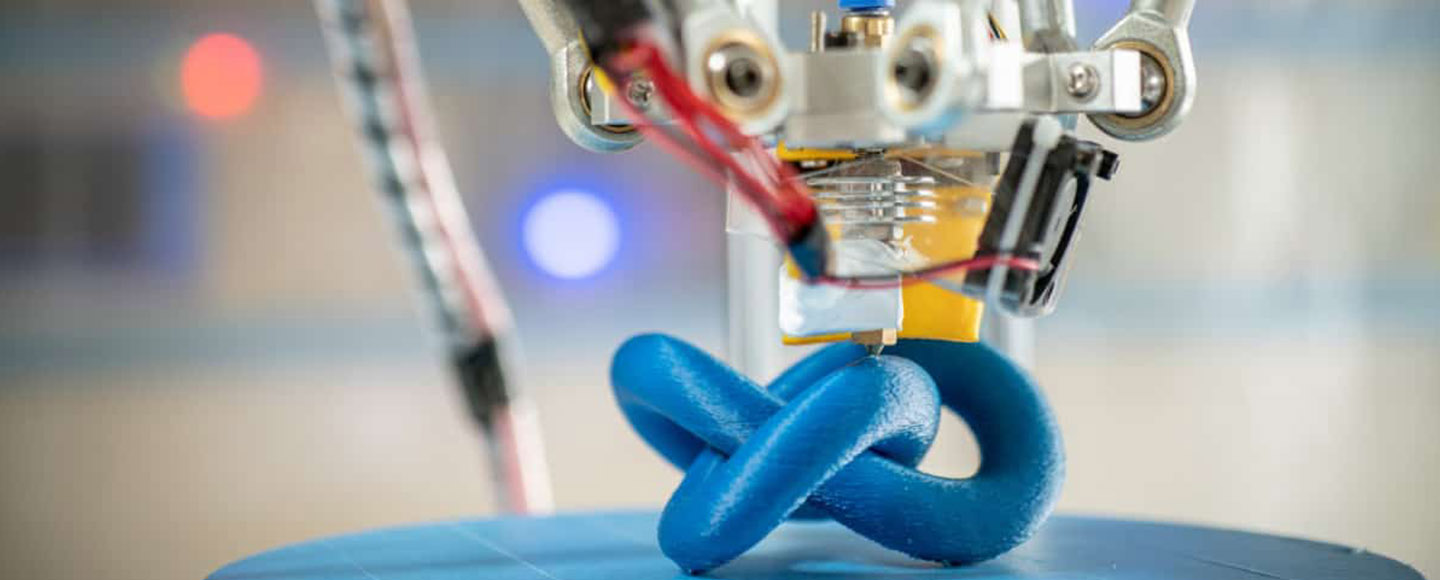
Let’s be real — if you’ve been keeping up with the 3D printing world, you know that CoreXY machines like those from Bambu Lab have taken over the mainstream conversation. And for good reason. They’re fast, polished, and easy to use. But there’s a whole category of machines that didn’t just disappear into the background. Delta 3D printers are still here, and in 2026, they’re more refined than ever.
Delta printers were never meant to be for everyone. Think of them as the sports cars of the 3D printing world — specialized, visually stunning, and breathtakingly fast when pushed to their limits. Where CoreXY machines win on versatility and ecosystem support, Delta 3D printers dominate in three key areas: vertical build height, mechanical elegance, and ultra-smooth curved motion. Watching a delta printer work is genuinely mesmerizing — three arms dancing in perfect synchrony is what some engineers call ‘kinetic engineering in its purest form.’
So who is this article for? Whether you’re a beginner who’s heard about delta printers and wants a safe entry point, a professional who needs industrial-grade reliability, a budget buyer looking for value, or a speed enthusiast who wants to push every millimeter per second — this guide has a clear recommendation for you.
📥 Delta 3D Printing Cheat Sheet
Confused by kinematics? Download our free Delta Calibration & Tuning Guide to get perfect prints every time.
In this article, we’ll cover what makes delta printers unique, honestly compare them against CoreXY and Cartesian machines, and give you detailed breakdowns of the best delta 3D printers available right now. Let’s dive in.
Table of Contents
- What Is a Delta 3D Printer?
- Delta 3D Printer Advantages: Why They Still Matter in 2026
- Are Delta 3D Printers Better? (Comparison)
- How We Selected the Best Delta 3D Printers
- Best Delta 3D Printer Overall: FLSUN S1
- Best Delta 3D Printer for Beginners: FLSUN T1 Pro
- Best Delta 3D Printer for Professionals: WASP 2040 PRO
- Fastest Delta 3D Printers Ranked
- Delta vs CoreXY vs Cartesian: Full Comparison
- Who Should (and Shouldn’t) Buy a Delta 3D Printer?
- Common Delta 3D Printer Problems
- Frequently Asked Questions
What Is a Delta 3D Printer?
If you haven’t used one before, a Delta 3D printer looks quite different from your typical Ender 3 or Bambu Lab machine. Instead of a rectangular frame, you get three vertical towers arranged in a triangle around a circular build platform. A lightweight effector — the part that holds the print head — hangs from three diagonal arms, one connected to each tower.
This setup is called a parallel kinematics system. All three arms move simultaneously to position the effector anywhere in 3D space above the circular bed. The bed itself stays completely fixed — it never moves up or down or side to side. All motion is handled by the three carriages gliding up and down their respective towers.
Why does this matter for performance? Because the effector is incredibly lightweight. You’re not moving a heavy heated bed back and forth (like Cartesian machines do), and you’re not moving the entire gantry (like some older designs). That low moving mass is precisely why delta printers can achieve extreme acceleration without shaking themselves apart. It’s physics working in your favor.
The circular bed is a design constraint worth noting — you can’t use the corners the way you would on a rectangular build plate. But the tradeoff is a tall, vertical print envelope that very few other printer types can match.
Delta 3D Printer Advantages: Why They Still Matter in 2026
Before we get into the individual machines, let’s talk about the core delta 3D printer advantages — because understanding these will help you decide if a delta is right for your needs:
Key Benefits of Delta Kinematics
- Extreme vertical build volume: Delta printers can print incredibly tall objects with a relatively small floor footprint. A machine that takes up the same desk space as a Bambu P1S might print objects three times as tall.
- Faster acceleration than most Cartesian machines: The lightweight effector means less inertia to overcome, which translates to quicker direction changes without ringing artifacts.
- Ultra-smooth curves: Because of how parallel kinematics works, curved and circular paths are rendered with exceptional smoothness — no step-like artifacts on cylindrical surfaces.
- Fixed bed equals less Z wobble: Since the bed never moves, you eliminate an entire category of print quality issues common in bed-slinger style machines.
- Lightweight toolhead means cleaner surface finish at speed: Less mass moving means less vibration, which means better surface quality even at high print speeds.
- Visual appeal and content creation value: If you make YouTube videos or Instagram content about 3D printing, a delta printer in the background (or foreground) is simply stunning to watch.
But here’s the question everyone asks once they see a delta printer in action…
Are Delta 3D Printers Better? (Delta vs CoreXY vs Cartesian)
This is the big question, and the answer is genuinely: it depends on what you’re printing and what you value. Let’s break down the specific areas where deltas win — and where they don’t.
The Z-Height Advantage (Delta Secret #1)
This is where delta printers are simply unmatched. If you regularly print tall, slender objects — think cosplay props like staffs or swords, architectural scale models, decorative vases, busts, or detailed figurines — a delta printer changes the game entirely. A machine like the FLSUN S1 offers a build height of 430mm with a Ø320mm diameter. Try finding a similarly-priced CoreXY machine that comes close to that vertical range.
The fixed bed design also means that tall prints don’t suffer from the subtle wobble and vibration you sometimes see in bed-slinger Cartesian machines where the bed moves back and forth with increasing momentum as mass builds up on the print.
Constant Tension and Mechanical Elegance (Delta Secret #2)
Delta kinematics use shorter belt paths compared to many CoreXY designs. This keeps belt tension more consistent across the entire build volume. The result? Uniform print quality whether you’re printing at the center of the bed or near the edges. The diagonal arm motion also naturally produces smooth curved paths, which is why delta printers have always been a favorite for printing cylindrical and spherical objects.
There’s also something to be said for the mechanical purity of the design. With only three linear axes and a handful of moving components, well-maintained delta printers can be remarkably reliable.
The ‘Cool’ Factor (Delta Secret #3)
This one might sound shallow, but it genuinely matters for a growing segment of the maker community. If you run a 3D printing YouTube channel, a Twitch stream, or even just want a conversation piece in your workshop, a delta printer delivers. The hypnotic three-arm ballet is something that Bambu Lab’s enclosed box simply cannot replicate. Print farms that want to attract attention — at trade shows, in school labs, in maker spaces — consistently gravitate toward deltas for their visual drama.
Where Delta Printers Lose
Honesty matters here. Delta printers have real limitations, and if you’re making a buying decision you should know them upfront:
- Smaller usable footprint: The circular build area means you lose the corners. If you’re printing wide, flat objects — phone cases, trays, panels — you’ll find a rectangular bed more practical.
- Calibration complexity: Historically, delta printers required more patience to calibrate than Cartesian or CoreXY machines. The good news is that modern machines like the FLSUN S1 and T1 have largely solved this with automatic calibration systems.
- Fewer ecosystem options: Bambu Lab has a massive ecosystem — AMS filament systems, a huge user community, tons of accessories. Delta printers, especially outside of FLSUN, don’t have the same breadth of ecosystem support.
Bottom line: Delta printers are not the best choice for everyone. But for vertical height, speed, and mechanical elegance, they remain unmatched in 2026.
How We Selected the Best Delta 3D Printers
We didn’t just look at spec sheets. The machines in this guide were evaluated against a set of criteria that reflect what actually matters to real users:
- Real-world print speed: Advertised speeds vs. what you can actually achieve with good-quality prints
- Automation and calibration: How much manual fiddling does the machine require before your first print?
- Build height and usable volume: Not just the listed diameter, but how much of the build envelope is actually usable
- Ecosystem maturity: Community support, available resources, spare parts, and firmware updates
- Reliability reputation: Long-term owner feedback, not just first impressions from unboxing videos
- Value for money: What does this machine deliver per dollar spent?
- Industrial capability: For the professional-tier options, can this machine handle engineering-grade materials under continuous production conditions?
Best Delta 3D Printer Overall: FLSUN S1
Quick Verdict: The most advanced consumer delta printer ever made. If you want the absolute best delta 3D printer available right now — without stepping into full industrial pricing — the FLSUN S1 is your answer, and it’s not particularly close.
| Specification | Details |
|---|---|
| Max Travel Speed | 1200 mm/s |
| Print Speed | 800–1000 mm/s |
| Build Volume | Ø320 x 430mm |
| Enclosure | Fully Enclosed |
| Camera Monitoring | AI Camera Included |
| Bed Surface | Micro-hole Vacuum Bed |
| Filament Dryer | Built-in |
Why the FLSUN S1 Wins
The FLSUN S1 is essentially FLSUN’s answer to the question: ‘What would a Bambu Lab-style smart printer look like if it were built on a delta platform?’ And the answer is impressive. Where previous delta printers (including earlier FLSUN models) required patience and manual calibration, the S1 brings a level of automation that makes it genuinely approachable for serious hobbyists.
The AI camera monitoring means you can keep tabs on your prints remotely — catching failures early before you waste hours of time and meters of filament. The micro-hole vacuum bed is a clever solution to delta printers’ historically uneven adhesion on circular plates, providing consistent hold across the entire circular surface. And the built-in filament dryer? That’s a feature most printers in this price range make you buy separately.
But the headline number is the speed. 1200mm/s travel speed and 800–1000mm/s real print speed is genuinely in a different league. Even against high-performance CoreXY machines, the S1 holds its own — and it does it with a quieter, more mechanically stable motion system.
The full enclosure also makes this a serious machine for engineering materials. ASA, ABS, PA, and even PC are all on the table — materials that require stable ambient temperatures to print reliably.
Ready to experience the fastest consumer delta on the market?
You can read our comprehensive FLSUN S1 review for a deeper dive into its performance.
Who Should Buy the FLSUN S1?
- Advanced hobbyists who’ve outgrown entry-level machines
- Speed enthusiasts who want the fastest delta 3D printer they can buy
- Serious content creators who want a visually spectacular machine that also delivers results
- Semi-professional production users who need reliable output at volume
If you’re ready to invest in a machine that genuinely pushes what’s possible in a consumer delta printer, the FLSUN S1 is your machine.
Best Delta 3D Printer for Beginners: FLSUN T1 Pro
Quick Verdict: The safest, most approachable entry point into the delta ecosystem. If someone asked me what the best delta 3D printer for beginners is, I’d point them to the FLSUN T1 without hesitation. It strips out some of the S1’s premium features to hit a more accessible price point — but it keeps the things that matter most for someone new to delta printing.
| Specification | Details |
|---|---|
| Max Speed | 1000 mm/s |
| Build Volume | Ø260 x 330mm |
| Auto-Leveling | Auto-Leveling 2.0 |
| Assembly Required | Pre-Assembled |
| Target User | Beginners / Upgraders |
Why the FLSUN T1 Is Perfect for Beginners
The number one frustration for beginners buying delta printers has always been calibration. Traditional delta calibration involves adjusting three end stops and a series of delta parameters — it’s not impossible, but it’s enough to discourage someone who just wants to print. The FLSUN T1’s Auto-Leveling 2.0 system handles all of this automatically. You press a button, the machine does its thing, and you’re ready to print.
The pre-assembled design means there’s no multi-hour build session standing between you and your first print. For someone upgrading from an Ender 3-style machine, the T1 will feel familiar in some ways — it’s a consumer FDM printer that wants to be used — but the delta kinematics will immediately show you a different kind of motion that makes larger, more expensive machines look slow.
At 1000mm/s max speed, this isn’t a slow machine by any stretch. You’re getting genuine delta performance at a price that doesn’t require a second mortgage.
Start your delta journey with a machine that just works.
Check out our full FLSUN T1 Pro review to see why it’s the top pick for newcomers.
Who Should Buy the FLSUN T1?
- First-time delta buyers who want a machine that ‘just works’
- Makers upgrading from a Cartesian machine and ready to try something different
- Budget speed seekers who want fast printing without the premium S1 price
Honestly, even experienced makers who want a second machine that doesn’t require constant attention would be happy with the FLSUN T1. It’s a well-rounded machine that earns its ‘best delta 3D printer for beginners’ title.
Best Delta 3D Printer for Professionals: WASP 2040 PRO / 4070 Series
Quick Verdict: Industrial-grade delta precision from the Italian masters of large-format additive manufacturing. When the conversation shifts from hobbyist to professional, a completely different set of priorities takes over. You’re no longer asking ‘is this fun to use?’ — you’re asking ‘will this machine run reliably for 18 hours a day, three weeks in a row, printing engineering-grade materials without failing?’
That’s where WASP — which stands for World’s Advanced Saving Project — enters the picture.
Why WASP Matters for Professional and Industrial Use
WASP has been building industrial delta printers out of Italy for years, and their reputation in architectural, medical, and industrial design circles is formidable. Their machines aren’t marketed based on millimeters-per-second figures or slick unboxing experiences. They’re marketed on uptime, material versatility, and the ability to handle what professional users actually throw at them.
The WASP 2040 PRO and 4070 series are built with precision-machined components designed for continuous production environments. These aren’t machines that get babied — they’re workhorses.
Professional Edge: What Makes WASP Different
- Technical material compatibility: WASP machines handle advanced engineering materials including carbon fiber composites, high-temperature polymers, and specialty filaments that consumer machines struggle with
- Precision-machined components: The difference in component quality between a WASP machine and a consumer delta is immediately apparent — the mechanical tolerances are tighter, the frames are stiffer
- Ceramic and clay extrusion options: WASP offers unique multi-material capabilities including ceramic and clay extrusion, making their machines highly sought after in art, architecture, and biomedical research
- Large-scale vertical printing: The 4070 series in particular offers a build volume that genuinely can’t be matched by any consumer machine
Need industrial reliability? Get the WASP 2040 PRO from a trusted retailer.
Who Should Buy a WASP Delta Printer?
- Print farms and service bureaus needing machines that run continuously
- Architecture studios producing large-scale concept models
- Ceramic artists and sculptors wanting digital-to-physical fabrication
- Engineering labs requiring precision and material versatility
Think of it this way: FLSUN represents speed innovation — they’re pushing what’s possible in a consumer package. WASP represents industrial precision and legacy engineering — they’re making machines that belong in professional environments and will still be running five years from now.
Fastest Delta 3D Printers Ranked: Speed Kings of 2026
If raw speed is your primary metric, here’s how the current lineup stacks up. One important note first: advertised travel speeds and real-world print speeds are different things. Travel speed is the fastest the machine can move the print head while not extruding. Real print speed is what you achieve while actually laying down filament and maintaining quality. Always check both numbers.
- FLSUN S1 — 1200mm/s travel speed, 800–1000mm/s real print speed. The undisputed speed king of consumer delta printing.
- FLSUN V400 Max — 600mm/s travel speed. A slightly older model but still a serious performer that many users keep in their workflow alongside newer machines.
- WASP Delta 2040 Turbo — 600mm/s. Where WASP’s industrial focus meets a performance-oriented configuration. Speed is secondary to reliability, but it’s still competitive.
Worth noting: achieving the maximum advertised print speed consistently requires well-tuned input shaping / resonance compensation and filament that flows cleanly. The FLSUN S1’s automated systems handle much of this for you. On older or less sophisticated machines, expect to spend time dialing in parameters to get close to the advertised performance.
Want high speed without the top-tier price?
Check Price on Amazon (V400 Max) Visit Official Site (V400 Max)
Read our FLSUN V400 Max review to see why it remains a top contender.
Delta vs CoreXY vs Cartesian: Full Comparison
Here’s a side-by-side view of how these three printer architectures compare across the criteria that matter most to most users:
| Feature | Delta | CoreXY | Cartesian |
|---|---|---|---|
| Max Speed | ⭐⭐⭐⭐⭐ | ⭐⭐⭐⭐ | ⭐⭐ |
| Tall Print Capability | ⭐⭐⭐⭐⭐ | ⭐⭐⭐ | ⭐⭐ |
| Ease of Use | ⭐⭐⭐ | ⭐⭐⭐⭐⭐ | ⭐⭐⭐⭐ |
| Maintenance | Moderate | Low | Low |
| Wide Flat Object Printing | ⭐⭐ | ⭐⭐⭐⭐⭐ | ⭐⭐⭐⭐ |
| Visual Appeal | ⭐⭐⭐⭐⭐ | ⭐⭐ | ⭐ |
| Ecosystem Size | Growing | Large (Bambu) | Largest |
The pattern is clear. If your primary use case involves tall vertical objects, maximum print speed, or visual impact, delta wins. If you want the easiest possible experience with the largest ecosystem, CoreXY (particularly Bambu Lab) is the current gold standard. If you want simplicity and you’re printing mostly flat, wide objects, Cartesian still serves a purpose.
Who Should (and Shouldn’t) Buy a Delta 3D Printer?
Buy a Delta 3D Printer If…
- You regularly print tall, slender objects and keep running up against the Z-height limits of your current machine
- You want extreme acceleration and you’re willing to tune the machine to get there
- You value mechanical beauty and the kinetic elegance of watching all three arms move in coordinated precision
- You create 3D printing content for YouTube, Instagram, or TikTok and want a visually captivating machine
- You’re a professional user who needs industrial-grade delta reliability and material compatibility
Avoid a Delta 3D Printer If…
- You want the simplest possible plug-and-play experience with the largest support community
- You mainly print wide, flat objects where a rectangular bed would serve you better
- You need the biggest possible ecosystem of accessories, multi-material systems, and official support
- You’re not prepared to spend any time learning a slightly different calibration approach (though modern machines like the FLSUN T1 have largely minimized this)
Common Delta 3D Printer Problems (And How Modern Machines Solve Them)
What about the circular bed limits?
You simply cannot use the corners of a delta printer’s build area the way you can on a rectangular machine. If you regularly print objects that are wide and flat, you’ll find the circular footprint frustrating. Modern machines like the FLSUN S1 maximize the usable diameter, but the geometry is what it is.
Is calibration still difficult?
Traditional delta calibration required understanding and manually adjusting delta parameters — things like tower angle offsets and diagonal rod lengths. If any of this sounds unfamiliar, don’t worry: the FLSUN T1 and S1 both feature automatic calibration systems that handle this for you. For older or open-source delta builds, this remains a real consideration.
Are there enough brands and parts available?
If something goes wrong with your Bambu Lab machine, there’s a large community, official support channels, and plentiful spare parts. The delta market is smaller — FLSUN, WASP, and a handful of others. This isn’t a deal-breaker, but it’s worth knowing. For FLSUN machines, parts availability has improved significantly. For WASP industrial machines, parts are available but typically at higher cost and with longer lead times.
The good news: Almost all of the traditional delta printer problems have been significantly reduced or eliminated by the latest generation of machines. The FLSUN S1 in particular addresses calibration, bed adhesion, and material compatibility in ways that simply weren’t available two or three years ago.
Final Verdict: Which Delta 3D Printer Should You Buy?
Here’s the simple version, because you deserve a straight answer after all that:
Best Overall
FLSUN S1. It’s the most technologically advanced consumer delta printer ever made. If you have the budget and want the best — this is it.
Best for Beginners
FLSUN T1. Auto-leveling, pre-assembled, and genuinely beginner-friendly. A delta printer that doesn’t ask you to fight it before your first print.
Best Professional
WASP 2040 PRO or 4070 Series. Industrial-grade reliability, technical material compatibility, and a legacy of engineering excellence.
For the speed enthusiast on a budget, the FLSUN V400 Max remains one of the best value propositions in the category.
If verticality, speed, and mechanical elegance matter more to you than ecosystem size, a delta printer is still unmatched in 2026. These machines occupy a unique niche — and within that niche, they’re genuinely the best tools available.
Frequently Asked Questions
What is the best delta 3D printer in 2026?
The best delta 3D printer in 2026 is the FLSUN S1. It combines a 1200mm/s travel speed, 430mm build height, full enclosure, AI camera monitoring, and a built-in filament dryer into a package that solves the traditional pain points of delta ownership. For beginners, the FLSUN T1 is the safer and more approachable choice.
Are delta 3D printers better than CoreXY?
Delta and CoreXY printers excel in different areas. Delta 3D printers are better for tall vertical prints, smooth curved surfaces, and raw acceleration. CoreXY printers (especially Bambu Lab machines) are better for ease of use, ecosystem support, and wide flat objects. For most general-purpose users, CoreXY is the more practical choice. For specialists focused on height and speed, delta wins.
What are the advantages of delta 3D printers?
The main delta 3D printer advantages include extreme vertical build height, faster acceleration due to the lightweight effector, ultra-smooth curved surface quality, a fixed bed that eliminates Z-wobble issues, and exceptional visual appeal. They’re particularly effective for printing tall objects like statues, cosplay props, and architectural models.
Is a delta printer good for beginners?
Modern delta printers like the FLSUN T1 are absolutely suitable for beginners. Automatic calibration systems have eliminated the manual delta-parameter tuning that historically made these machines challenging. If you’re starting fresh and find a beginner-friendly delta model, there’s no reason to be intimidated by the format.
Why are delta printers so fast?
Delta printers achieve high speed primarily because their effector (the print head assembly) is extremely lightweight. With less mass to accelerate and decelerate, the machine can change direction much faster without causing vibration or print artifacts. All three axes work simultaneously through a parallel kinematics system, which also contributes to efficient motion planning.
What is the fastest delta 3D printer available?
The fastest delta 3D printer currently available to consumers is the FLSUN S1, which achieves a travel speed of 1200mm/s and a real-world print speed of 800–1000mm/s. The FLSUN V400 Max and WASP Delta 2040 Turbo both reach 600mm/s and are strong alternatives in their respective market segments.
Ready to buy?
Choose the machine that fits your needs and start printing tall.
Explore More on 3DTechValley
Looking to compare delta printers against the best in other categories? Check out our best 3D printer overall guide, our in-depth Bambu Lab P1S review, the CoreXY comparison article for a deeper architecture breakdown, our beginner 3D printer guide, and the high-speed printing guide for tuning tips that apply to any fast machine.

