


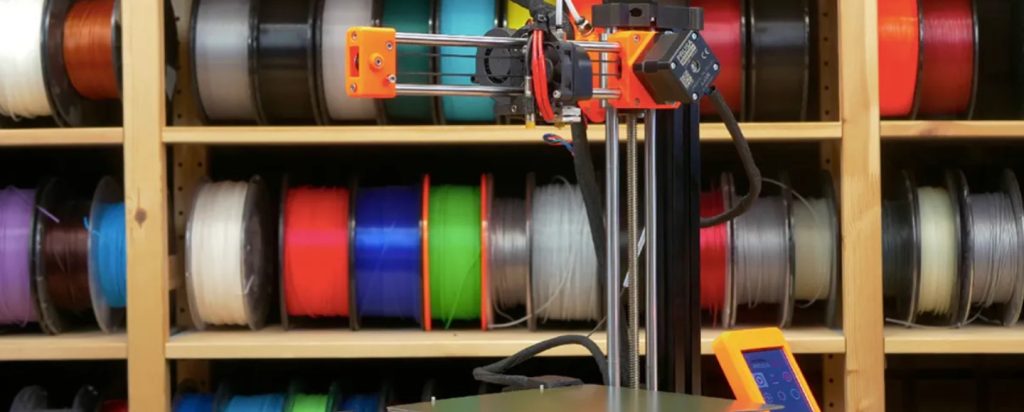
If you’ve been 3D printing for a while, you probably remember the era when ABS was the material everyone wanted to love but secretly dreaded. Warping. Splitting. Fumes that could clear a room. Most people eventually gave up and switched to PLA.
But here’s the thing — ABS is having a genuine comeback in 2026, and this time, it’s actually earned it.


The rise of CoreXY printers pushing 400–600 mm/s, paired with active chamber heating becoming standard on machines like the Bambu Lab P1S and X1C, has completely changed the ABS printing experience. Modern ABS blends are engineered to flow faster, warp less, and produce stronger, cleaner parts than anything we had five years ago.
The problem? Not all ABS filaments are created equal — and the wrong spool can still give you every headache the old reputation warned about. That’s what this guide is for. I’ve broken down the best ABS filament brands and picks for 2026, from the best all-rounder to the best option for vapor smoothing, high-speed printing, and tight budgets.
Let’s get into it.
📖 Quick Navigation
- Quick Answer
- Comparison Table
- Hatchbox ABS — Best Overall
- Creality Hyper ABS — Best High-Speed
- Prusament ABS — Best Premium
- Polymaker PolyLite ABS — Best Functional
- Overture ABS — Best Vapor Smoothing
- MatterHackers PRO — Best Industrial
- Sunlu ABS — Lowest Odor
- Creality Standard ABS — Best Budget
- Why ABS Is Dominating Again
- Best ABS for Specific Use Cases
- Best ABS Settings (2026)
- Troubleshooting Guide
- ABS vs PLA vs PETG
- How to Choose the Best Brand
- Final Verdict
- FAQ
Quick Answer: Best ABS Filament Picks for 2026
| 🏅 Category | 🧵 Pick |
|---|---|
| 🥇 Best Overall | Hatchbox ABS |
| ⚡ Best for High-Speed Printing | Creality Hyper ABS |
| 🏆 Best Premium | Prusament ABS |
| 🔩 Best for Functional Parts | Polymaker PolyLite ABS |
| ✨ Best for Vapor Smoothing | Overture ABS |
| 💰 Best Budget | Creality Standard ABS |
| 🌬️ Lowest Odor | Sunlu ABS |
| 🏭 Best Industrial | MatterHackers PRO Series ABS |
Comparison Table: Best ABS Filament at a Glance
| Filament | High-Speed Ready | Vapor Smoothing | Warp Resistance | Best Use Case | Get It |
|---|---|---|---|---|---|
| Hatchbox ABS | Moderate | Excellent | High | All-rounder | Check Price |
| Creality Hyper ABS | Elite | Good | Moderate | High-speed printing | Check Price |
| Polymaker PolyLite ABS | High | Good | Elite | Functional parts | Check Price |
| Prusament ABS | Moderate | Excellent | High | Precision engineering | Check Price |
| Overture ABS | Moderate | Elite | Moderate | Aesthetic finishing | Check Price |
| Sunlu ABS | Moderate | Good | Moderate | Low-odor printing | Check Price |
| MatterHackers PRO ABS | High | Good | High | Industrial/automotive | Check Price |
| Creality Standard ABS | Moderate | Good | Moderate | Budget printing | Check Price |
🆓 Free ABS Settings Cheat Sheet
Download the exact nozzle temps, bed temps, retraction, and speed settings for all 8 filaments in this guide — pre-calibrated and ready to import into your slicer.
Best ABS Filament Brands: 2026 Expert Picks
1. Hatchbox ABS — Best Overall ABS Filament
If you asked me to hand someone one spool of ABS and tell them “just start here,” it would be Hatchbox every single time.
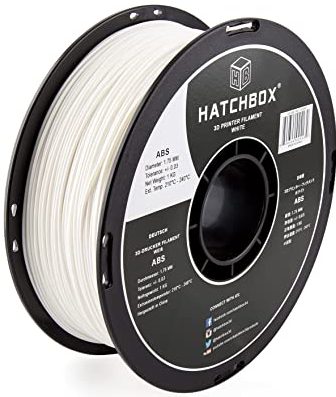

Hatchbox has built a reputation over the years that’s genuinely hard to argue with. Consistent diameter, reliable spool-to-spool performance, and a price point that doesn’t feel like you’re taking a risk every time you order. The Hatchbox ABS filament typically holds to around ±0.03 mm diameter tolerance — not the tightest in the industry, but tight enough that you won’t be fighting clogs or under-extrusion.
What makes it stand out as the best ABS filament overall is the balance it strikes. It’s not the fastest, not the premium-est, not the smoothest for vapor finishing — but it does everything well. Strength is solid, layer adhesion is reliable, and it plays nicely with the widest range of enclosed printers on the market.
Who it’s for:
- People new to ABS who want a reliable starting point
- Anyone who prints a broad variety of parts and needs a dependable daily driver
- Users who don’t want to think too hard about filament and just want consistent results
Best ABS Filament Settings for Hatchbox:
- Nozzle: 235–245°C
- Bed: 100–110°C
- Enclosure: Strongly recommended
- Cooling fans: Off
The one caveat? Like most standard ABS, Hatchbox isn’t optimized for ultra-high-speed CoreXY printing. If you’re running a Bambu Lab at full tilt, you’ll want to look at the Creality Hyper ABS below. But for everything else, Hatchbox is a workhorse that’s hard to beat.
Ready to start printing with the most reliable ABS filament? Hatchbox is the safe bet.
2. Creality Hyper ABS — Best ABS Filament for High-Speed Printing
This is the one that’s generating the most buzz in 2026, and rightfully so.
Creality’s Hyper series was purpose-built for the new generation of high-speed CoreXY printers — machines like the Bambu Lab X1C, K1/K2, and other fast-motion platforms that standard filaments simply weren’t designed for. The Creality Hyper ABS is engineered to handle high volumetric flow rates without sacrificing layer adhesion or introducing artifacts.
Here’s the problem with running regular ABS at 400–600 mm/s: the filament can’t melt fast enough. You get under-extrusion, weak layer bonds, and parts that look rough. Hyper ABS addresses this by using a modified resin formulation that flows more readily at high speeds, effectively keeping pace with the printer’s demands.
💡 2026 Pro Insight
Most standard ABS will under-extrude at high speeds — Hyper ABS is specifically tuned to avoid this. If you’re running a CoreXY printer and you’re not using a high-flow-capable filament, you’re likely printing slower than you should be just to compensate.
Who it’s for:
- Bambu Lab P1S, P2S, and X1C users
- K1 Max and other high-speed CoreXY printer users
- Anyone who values print speed without compromising part quality
Best Settings for High-Speed ABS Printing:
- Nozzle: 240–260°C (higher end for max speed)
- Bed: 100–110°C
- Enclosure: Required
- Flow rate calibration: Run a fresh calibration at your target speed
- Pressure advance / input shaping: Highly recommended
The slight trade-off with Hyper ABS is that it’s not quite as smooth as Hatchbox or Prusament for vapor smoothing — the modified formulation can sometimes react slightly differently to acetone. It still works, but it’s not the first choice for cosmetic finishing. For functional speed-printed parts? There’s nothing better right now.
Printing on a Bambu Lab P1S, K2 Plus, or any fast CoreXY? Hyper ABS is made for your machine.
3. Prusament ABS — Best Premium ABS Filament
If you want the best ABS filament money can buy and precision matters more than price, Prusament ABS is in a class of its own.
Prusa Research manufactures Prusament in-house at their Czech Republic facility, and they publish live spool data — mean diameter, variance, color batch number — tied to a QR code on every spool. That level of traceability is unheard of at this price range, and it reflects an obsessive commitment to consistency.
The diameter tolerance is ±0.02 mm, which is among the tightest in the consumer filament market. For most hobbyist printing, the difference between ±0.02 mm and ±0.05 mm won’t be visible. But for engineering parts, precision assemblies, or any print where dimensional accuracy genuinely matters, Prusament is the filament where you stop guessing and start trusting the output.
It also vapor smooths beautifully. The pure ABS formulation reacts with acetone in a very controlled, even way — producing glossy, high-quality finishes that look almost injection-molded when done properly.
Who it’s for:
- Engineers and product designers
- Anyone printing functional parts where tolerance matters
- Cosplay prop makers who want excellent vapor smoothing results
- Users who want to know exactly what they’re printing with
Prusament ABS Filament Settings:
- Nozzle: 255°C (Prusa’s recommended baseline)
- Bed: 100°C
- Enclosure: Required
- Live Adjust Z: Dial in carefully — the tight tolerance means your first layer calibration matters
The only real downside is price — Prusament ABS costs noticeably more per kilogram than Hatchbox or Creality. But if you’re printing parts that cost time and money to reprint, the consistency is genuinely worth the premium.
When dimensional accuracy is non-negotiable, Prusament is the filament that delivers.
4. Polymaker PolyLite ABS — Best ABS Filament for Functional Parts
Polymaker has been quietly one of the most technically serious filament manufacturers in the market, and PolyLite ABS is a great example of why.


This filament prioritizes mechanical performance — specifically, strong interlayer bonding and a reduced warping formula that makes it significantly easier to print than standard ABS, especially on printers that don’t have the most aggressive enclosure setups. Polymaker achieves this through a modified polymer blend that maintains ABS’s core mechanical properties while managing thermal shrinkage more effectively.
The result is one of the strongest ABS filament options you can buy, particularly when you care about parts that will actually be used. Snap-fit brackets, mechanical housings, load-bearing fixtures — this is where PolyLite ABS earns its reputation.
Mechanical highlights:
- Tensile strength: Strong inter-layer adhesion even at moderate layer heights
- Heat deflection: Maintains ABS’s heat resistance (80–98°C)
- Warp resistance: Noticeably better than generic ABS
🎯 Who it’s for
- Makers building functional enclosures, brackets, or mechanical assemblies
- RC car and drone part printing
- Anyone who’s been burned by layer delamination in standard ABS
PolyLite ABS Settings:
- Nozzle: 240–260°C
- Bed: 95–110°C
- Enclosure: Required
- Print speed: Medium — it’s high-speed capable but optimal at 80–150 mm/s for maximum strength
PolyLite ABS is also an excellent choice for Bambu Lab ABS filament settings — Polymaker has a Bambu Lab profile available in Bambu Studio, which takes the guesswork out of dialing it in on the P1S or X1C.
Need parts that hold up under real mechanical stress? PolyLite ABS is the strongest option on this list.
5. Overture ABS — Best ABS Filament for Acetone and Vapor Smoothing
Here’s where I need to give you a real talk moment that a lot of filament guides skip over.

Not all ABS smooths the same way. ABS+ and eABS blends — which are marketed as easier-to-print alternatives — often contain additives that modify the polymer chain. Those additives make warping less likely and printing easier. But they also make the material resistant to acetone. If vapor smoothing is your goal and you’re using an ABS+ blend, you may get uneven, patchy, or completely ineffective results.
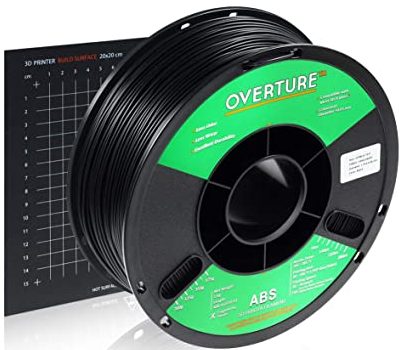
This is why Overture ABS is the best ABS filament for vapor smoothing: it’s a pure ABS formulation. No blends, no impact modifiers that interfere with the acetone reaction. The result is a smooth, controlled, even surface finish that responds to acetone vapor the way the internet tutorials show — a glassy, almost injection-molded surface.
⚠️ Expert Note
If acetone vapor smoothing is your primary goal, always verify you’re buying pure ABS, not ABS+, eABS, or any modified blend. This applies regardless of brand. Overture is a reliable pure ABS choice, but always check the spec sheet.
Overture ABS also prints reliably for standard enclosed printer setups. It’s not the most warp-resistant on the market, so a properly enclosed chamber with a heated bed at 100°C+ is non-negotiable here.
Who it’s for:
- Cosplay armor and prop makers
- Figurine and model printers who want a polished finish
- Anyone who wants that professional, smooth surface look
Want that glassy, injection-molded look? Overture’s pure ABS smooths like a dream.
6. MatterHackers PRO Series ABS — Best Industrial-Strength ABS (Hidden Gem)
MatterHackers doesn’t get enough credit in casual 3D printing circles because their PRO Series is clearly aimed at professional and industrial users — and the PRO Series ABS is genuinely a different category of material.


The key differentiator is the higher heat deflection temperature compared to consumer-grade ABS, making it excellent for parts that will be exposed to heat — under-hood automotive components, industrial jigs, or enclosures near heat sources. Dimensional stability is also exceptional, which matters when you’re printing parts that need to interface precisely with other components.
This is the filament to reach for when “good enough” isn’t good enough — when the part failing isn’t an option.
Ideal applications:
- Automotive prototyping and under-hood fixtures
- Industrial tooling and jigs
- Engineering prototypes where heat resistance and dimensional accuracy are both critical
Settings note: PRO Series ABS typically runs slightly hotter than standard formulations — expect 250–265°C nozzle temperatures for best results.
The price reflects the performance — this is one of the more expensive ABS options available. But if you’re printing for professional or commercial applications, the material cost is usually a small fraction of the total project cost anyway.
When failure isn’t an option — MatterHackers PRO Series ABS delivers industrial-grade performance.
7. Sunlu ABS — Best Low-Odor ABS Filament
Let’s be real: one of the biggest reasons people avoid ABS is the smell. Styrene fumes are unpleasant, potentially harmful in enclosed spaces, and a hard sell when you’re printing in a home office or shared workspace.
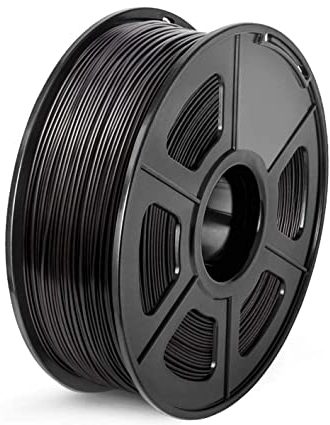

Sunlu ABS in its 2026 formulation has done genuinely meaningful work here. Their reduced VOC (volatile organic compound) formulation produces noticeably less odor during printing — not zero, but a significant step down from what you’d typically expect from ABS. This makes it more practical for users who print in less-than-ideal ventilation environments.
It’s still not something I’d print in an unventilated bedroom without a HEPA + activated carbon filter — that advice stands for all ABS regardless of brand. But for users who have some air filtration in place and want to minimize odor intrusion into their living space, Sunlu ABS is the most practical choice.
Who it’s for:
- Home office or apartment printers
- Users with enclosures that have carbon filter systems
- Anyone who’s been put off by ABS odor in the past
Performance-wise, Sunlu ABS is a solid mid-tier filament — not the most warp-resistant, not the strongest, but reliable and consistent for general-purpose ABS printing.
Printing in a shared space? Sunlu’s reduced-odor formula makes ABS practical at home.
8. Creality Standard ABS — Best Budget ABS Filament
If you want to get into ABS printing without committing serious money, Creality Standard ABS is the honest budget pick.
It’s an affordable entry point that prints well enough in properly enclosed setups. The caveats are real — there’s more batch-to-batch inconsistency than you’ll find in Hatchbox or Prusament, and it doesn’t have the high-flow engineering of the Hyper ABS. But for users who print occasionally, are still learning ABS settings, or just want to run a cost-effective spool for non-critical parts, it gets the job done.
The honest trade-off: You might need to re-tune your settings between spools. Diameter tolerance can vary. But at the price point, it’s still delivering genuine ABS performance in an enclosed printer.
Best use case: Non-critical prints, test runs, practice before committing to premium filament for a serious project.
On a tight budget? Creality Standard ABS gets you printing without breaking the bank.
Why ABS is Dominating Again in 2026
Here’s the context that makes all of this make sense.
Three or four years ago, ABS was genuinely difficult to work with on most consumer printers. Without active enclosure heating, ABS warps. It splits between layers. It smells. PLA was easier, PETG was more forgiving — and ABS quietly became the filament people only used when they absolutely had to.
What changed:
1. CoreXY printers became mainstream. The Bambu Lab P1S, the X1C, the Creality K2 Plus — these machines brought active chamber heating and high-speed motion to the consumer market. A 55–60°C heated chamber changes the ABS printing equation completely.
2. ABS blends improved dramatically. Reduced warping formulations from Polymaker and others made consistent ABS printing achievable on a much wider range of setups.
3. High-speed filament engineering matured. Hyper ABS and similar products mean you’re no longer forced to slow down to make ABS work.
💡 Pro Insight
With a properly heated chamber at 55°C+, even budget ABS can perform at a level that would have required premium filament just a few years ago. The printer matters more than it used to.
The other thing driving ABS’s resurgence is that PLA and PETG have real limitations for functional parts. If your print is going anywhere near heat — inside a car, in a workshop, near electronics — ABS’s higher heat deflection temperature (80–98°C vs PLA’s 50–60°C) is not optional. It’s the right material. If you want to understand the full picture of what ABS plastic actually is and why it performs differently from other filaments, that breakdown covers the science behind these advantages.
🔧 Need the Right Printer for ABS?
We tested and ranked every ABS-capable printer — from budget enclosed models to industrial high-temp machines. Find the perfect match for your workflow.
Best ABS Filament for Specific Use Cases
Best ABS Filament for Bambu Lab P1S, P2S, and X1C
The Bambu Lab ecosystem is arguably the primary reason ABS is back in mainstream conversation. The P1S and X1C both feature active chamber heating and high-speed motion systems that are almost purpose-built for ABS.
Top picks for Bambu Lab:
- Creality Hyper ABS — best for full-speed printing
- Polymaker PolyLite ABS — best for functional parts (has official Bambu Studio profiles)
- eSun eABS — reliable alternative with good warp resistance
📌 AMS Tip
If you’re using the Automatic Material System (AMS) on your Bambu Lab, pay attention to the spool core type. Cardboard-core spools (common with brands like Overture) can sometimes cause feeding issues in the AMS. You may need rim adapters or a few wraps of electrical tape on the inner rim to get reliable feeding. Plastic-core spools generally feed more reliably.
Strongest ABS Filament
If pure mechanical strength and durability are your primary criteria:
- Polymaker PolyLite ABS — best layer-to-layer bonding in the consumer category
- MatterHackers PRO Series ABS — highest heat deflection + best for professional/industrial loads
Both of these exceed standard ABS in real-world strength testing, particularly in inter-layer adhesion — which is usually the weak point in FDM parts. If you want to see how they stack up against other strongest 3D printer filaments across all material types, we’ve done that full comparison too.
Best ABS Filament for Acetone Smoothing
The non-negotiable rule: you must use pure ABS, not ABS+ or modified blends.
Best options for acetone vapor smoothing:
- Overture ABS — purpose-suited, pure formulation
- Hatchbox ABS — also pure ABS, excellent smoothing results
- Prusament ABS — produces the most controlled, even finishes
For best results with vapor smoothing: use a small amount of acetone in a sealed container with your print elevated above the liquid, and watch it closely — over-smoothing happens quickly.
Best ABS Filament Settings (2026 Optimized)
Getting settings right is often the difference between ABS printing that works every time and ABS printing that frustrates you into switching back to PLA. Here’s the full picture.
Baseline Settings (General ABS)
| Parameter | Value |
|---|---|
| Nozzle Temperature | 230–260°C |
| Bed Temperature | 90–110°C |
| Enclosure | Required |
| Cooling Fan | Off (or max 20% for bridging) |
| First Layer Height | Slightly squished |
| Print Speed | 40–80 mm/s (standard printers) |
High-Speed CoreXY Settings (Bambu Lab, K1, etc.)
Running high-speed ABS isn’t just about cranking the speed slider. There are a few calibration steps that matter:
- Flow rate calibration: Run this at your actual print speed — flow rate at 60 mm/s and 300 mm/s are different things
- Pressure advance (PA) / Linear Advance: Tune this per filament, not per material category
- Input shaping / resonance compensation: This is what allows high-speed printing without ghosting artifacts — make sure it’s calibrated for your specific machine
Chamber Temperature: The Most Important Variable
This is the one that changed everything for ABS in 2026.
Target chamber temperature: 50–60°C minimum
At this temperature, the thermal gradient between your printed layer and the ambient air drops dramatically. This eliminates the primary mechanism behind both warping (uneven contraction) and layer splitting (too-rapid cooling between layers).
If your printer doesn’t have active chamber heating, passive enclosure temperature can sometimes reach 40–45°C just from bed and hotend heat — which helps significantly. But the printers with active chamber heating (Bambu Lab P1S, Bambu Lab X1C, some Sovol and Creality enclosed models) produce the most consistent results. If you’re still deciding on a machine, our guide to the best enclosed 3D printers covers which ones have active chamber heating vs. passive enclosures.
Post-Processing
Two techniques worth knowing:
1. Acetone vapor smoothing — only works with pure ABS (not blends). Produces a glassy, smooth surface that eliminates layer lines visually.
2. Controlled cooling / annealing — printing with zero part cooling and letting prints cool slowly in the enclosure (door closed, heaters off gradually) produces parts with less internal stress and better dimensional stability. Effective for larger flat parts prone to warping after removal.
ABS Filament Problems and How to Fix Them
Even in 2026, with better filament and better printers, ABS can still throw problems at you. Here’s the quick troubleshooting guide:
Warping
What it looks like: Corners lifting from the bed, often during printing or after removal.
Fix:
- Ensure your enclosure is fully sealed and warming up before printing (preheat for 10–15 minutes)
- Use a PEI sheet — smooth PEI grips ABS extremely well when hot, releases cleanly when cool
- Glue stick or ABS slurry (ABS dissolved in acetone) applied to the bed surface
- Reduce first layer speed and increase first layer squish slightly
Layer Splitting / Delamination
What it looks like: Horizontal cracks appearing between layers, usually higher up in the print.
Fix:
- Increase enclosure/chamber temperature
- Raise nozzle temperature by 5°C increments
- Reduce cooling fan to zero
- Reduce print speed slightly to give each layer more time to bond
Odor and Fumes
Fix:
- HEPA + activated carbon enclosure filter (Nevermore or similar)
- Print in a space with air exchange to outside
- Sunlu ABS if you want the lowest-odor ABS option
- Never print ABS in an unventilated enclosed room without filtration
Bed Adhesion Issues
Fix:
- Glue stick (works reliably and releases cleanly)
- ABS slurry — a DIY solution of ABS scraps dissolved in acetone, painted onto the bed
- PEI magnetic sheet — the best long-term solution for ABS bed adhesion
- Bed temperature: ensure it’s stable at 100–110°C before the first layer begins
Stringing
ABS is generally less prone to stringing than PETG, but it happens.
Fix:
- Fine-tune retraction (typically 1–3mm for direct drive, 4–6mm for Bowden)
- Increase travel speed
- Dry your filament — moisture in ABS causes both stringing and surface bubbling. If you need guidance on drying, our complete guide to drying 3D printer filament walks you through the process, and our roundup of the best filament dryers covers which machines actually work.
ABS vs PLA vs PETG: Which Should You Choose?
Quick reality check for anyone still deciding:
| Property | ABS | PLA | PETG |
|---|---|---|---|
| Ease of Printing | Moderate (needs enclosure) | Very Easy | Easy |
| Heat Resistance | High (80–98°C) | Low (50–60°C) | Moderate (70–80°C) |
| Strength | High | Moderate | Moderate-High |
| Vapor Smoothing | Yes (acetone) | No | No |
| Odor | Yes (styrene) | Minimal | Minimal |
| Best For | Functional, heat-exposed, cosmetic finishing | Prototypes, decorative, low-stress parts | Mechanical parts, outdoor use |
The short version:
- If your part will sit on a desk, hold no load, and never get warm → PLA
- If your part needs to live outdoors, in a car, or handle mechanical stress → ABS or PETG
- If heat resistance matters OR you want a smooth, professional finish → ABS
ABS is the right material when you need the right material. The extra setup is genuinely worth it for functional applications. For a deeper head-to-head breakdown, our full PLA vs ABS comparison guide covers mechanical testing data, real-world print examples, and when each filament genuinely wins.
How to Choose the Best ABS Filament Brand
Before you hit add to cart, here’s what actually separates good ABS from frustrating ABS:
1. Diameter Tolerance
The tighter, the better. ±0.02–0.03 mm (Prusament, Polymaker) means fewer clogs, consistent extrusion, and less mid-print compensation. ±0.05 mm+ means you may see flow inconsistencies, especially at high speeds.
2. Warping Resistance
Check whether the filament is pure ABS, ABS+, or a proprietary blend. ABS+ and modified blends generally warp less (good for printing ease) but may not acetone smooth as well (bad for finishing). Decide what matters for your use case.
3. High-Flow / High-Speed Capability
In 2026, this matters more than ever. If you’re running a CoreXY printer at 300+ mm/s, standard ABS will under-extrude. Look for filaments explicitly rated or tested for high volumetric flow — Creality Hyper ABS is the clearest example, but Polymaker and eSun also publish flow rate data.
4. Price vs. Performance
Honestly: Hatchbox and Polymaker hit the sweet spot for 90% of users. Prusament is worth the premium if precision matters. MatterHackers PRO Series is worth it for industrial applications. Creality Standard ABS is fine if you’re cost-sensitive and patient with calibration. If you want to see how these compare across all filament types, our best 3D printer filament brands ranking covers the full landscape.
5. Spool Compatibility
If you’re using the Bambu Lab AMS or a multi-material system, verify spool dimensions and core material. Cardboard cores can be problematic in some AMS setups.
Final Verdict: Best ABS Filament in 2026
Let’s make this easy.
Hatchbox ABS
🥇 Best Overall
Reliable, forgiving, well-priced, and has been the community default for good reason. If this is your first time printing ABS or you just want a filament that works without fuss, start here.
Creality Hyper ABS
⚡ Best High-Speed
If you have a high-speed printer (Bambu Lab, K1, CoreXY), your printer is capable of more than standard ABS can handle — use a filament that matches it.
Prusament ABS
🏆 Best Premium
The consistency and traceability are unmatched in the consumer category. For engineering parts or anything dimensional accuracy matters for, this is the standard.
Polymaker PolyLite ABS
🔩 Best Functional
Best layer bonding, best warp resistance, and it has Bambu Lab profiles ready to go. For functional strength, this is the pick.
Overture ABS
✨ Best Vapor Smoothing
Pure ABS formulation, works beautifully with acetone, great for cosmetic finishing. The go-to for cosplay, props, and display pieces.
No single filament is perfect for every situation — but that list covers every serious ABS use case in 2026. Pick the one that matches what you’re actually trying to do, and you’ll get results that would have seemed exceptional just a few years ago.
Still not sure which ABS filament to pick? Hatchbox ABS is the safest choice for 90% of users — grab a spool and start printing.
FAQ: Best ABS Filament (2026)
Is ABS filament stronger than PLA?
Yes, in the ways that matter for functional parts. ABS has significantly higher heat resistance (80–98°C vs PLA’s 50–60°C) and is more impact-resistant. PLA is technically stiffer and can have higher tensile strength in ideal print conditions, but ABS wins on heat resistance, toughness, and post-processing capability.
Does ABS always warp?
Not with modern setups. With an enclosed printer, a heated bed at 100–110°C, and ideally a heated chamber at 50–60°C, warping is manageable and often completely eliminated. Budget ABS on an open-frame printer with a cold room? Yes, it will warp every time. If you’re dealing with warping, upgrading to one of the best enclosed 3D printers is the single biggest improvement you can make.
Can you print ABS without an enclosure?
Technically possible for small, simple parts. Not recommended for anything larger than a few centimeters in any dimension. Without an enclosure, thermal gradients across the print will cause warping and layer splitting almost every time. If you’re serious about ABS, an enclosure is non-negotiable.
What is the best ABS filament brand in 2026?
For most users: Hatchbox. For precision: Prusament. For high-speed printing: Creality Hyper ABS. For functional parts: Polymaker PolyLite ABS. The “best” depends on what you’re printing, but these four cover the full spectrum of serious ABS use cases.
Is ABS safe to print indoors?
With proper precautions, yes. ABS produces styrene fumes during printing — these have a recognizable smell and should not be inhaled in concentration. Print in a space with either external ventilation (air exchange to outside) or an active filtration system (HEPA + activated carbon). An enclosed printer with a Nevermore-style carbon filter is the most practical solution for home printing. Sunlu ABS is the best option if you’re particularly sensitive to fumes.
What’s the difference between ABS and ABS+?
ABS+ is a modified blend that typically includes impact modifiers or other additives to reduce warping and improve layer adhesion. It’s generally easier to print than pure ABS. The trade-off: ABS+ resists acetone smoothing due to those additives. If vapor smoothing is your goal, use pure ABS (Overture, Hatchbox, Prusament). If you just want easier printing and don’t care about smoothing, ABS+ blends are perfectly valid.
Do I need to dry ABS filament?
Yes, more than you might think. ABS absorbs ambient moisture over time, which causes bubbling, stringing, and inconsistent extrusion. If your ABS has been sitting open for more than a few weeks in a humid environment, dry it before printing: 70–80°C in a filament dryer or food dehydrator for 4–6 hours. Store open spools in sealed bags with desiccant.
Still Have Questions About ABS Filament?
We’ve got you covered. Dive deeper into our complete 3D printing resource library — from choosing the right printer to mastering advanced materials.
Looking for more help with your 3D printing setup? Check out our guides on the best 3D printers for ABS printing, how to fix warping with a proper enclosed 3D printer, and our complete PLA vs PETG vs ABS comparison.