


PLA is great for prototypes, but when you need a part that can survive stress, heat, friction, and repeated use, nylon filament is still one of the best materials you can put in a 3D printer.
That statement was true five years ago, and it’s even truer in 2026. What has changed is how you print nylon. Modern nylon blends — reinforced with carbon fiber, glass fiber, or engineered co-polyamide formulations — are stronger, more dimensionally stable, and in many cases, significantly easier to print than old-school PA6. But they also come with new hardware requirements that a lot of people overlook until their first print fails spectacularly.
This guide covers everything you need to know: what nylon actually is, which types exist, what temperatures you need, how to dry it properly, which brands consistently deliver the best results, and which printers can actually handle it. Whether you’re printing functional brackets, RC car components, custom gears, or aerospace-adjacent jigs and fixtures, this is the guide that will help you stop wasting spools and start getting results.
This guide is for:
- Engineers and makers printing functional, load-bearing parts
- RC and drone hobbyists who need lightweight, tough components
- Bambu Lab P1S and X1C users looking for the right nylon settings and filaments
- Anyone printing gears, hinges, bushings, or wear-resistant parts
- Newcomers who want to step up from PLA and PETG
Jump To Section
What Is Nylon Filament?
Nylon is not a single material — it’s a family of synthetic polyamide thermoplastics, each with its own personality. When someone says “nylon filament,” they might mean PA6, PA12, PA66, a co-polyamide blend, or a carbon-fiber-reinforced variant. These materials all share a common chemical backbone, but they behave quite differently on the printer and in the real world.
What they all have in common is a combination of properties that’s hard to match with other consumer-grade 3D printing materials: toughness, fatigue resistance, low friction, and solid heat resistance. That’s why nylon has remained the go-to choice for functional part printing even as newer materials like ASA, PPA, and various high-performance blends have entered the market.
Why Nylon Is Popular for Functional Parts
Ask any experienced maker what material they reach for when a part actually needs to work, and nylon will come up almost immediately. Here’s why:
Toughness: Nylon bends significantly before it breaks. Unlike PLA, which shatters under sudden impact, nylon absorbs energy and deforms. This makes it ideal for parts that experience shock loads or repeated stress.
Fatigue resistance: Parts that flex repeatedly — hinges, snap fits, living hinges — last far longer in nylon than in PLA or even PETG. PLA fatigues and cracks; nylon keeps going.
Low friction and self-lubricating behavior: Nylon’s naturally slippery surface makes it excellent for gears, bushings, and any moving part that contacts another surface. It essentially lubricates itself under load, which dramatically extends part life.
Wear resistance: In a direct comparison, nylon significantly outlasts PLA and PETG in abrasive applications. If your part slides, rotates, or rubs against anything, nylon is the right call.
Heat resistance: Depending on the blend, nylon maintains structural integrity up to 80–120°C. PLA softens around 60°C. If your part lives near a motor, engine bay, or any heat source, nylon is a much safer choice.
Common nylon prints you’ll find in the wild: gears, hinges, drone arms, RC car suspension components, tool holders, bushings, automotive cable clips, jigs, fixtures, and anything that gets handled hard day after day.
Nylon Filament Properties
Before getting into specific types and brands, here’s a high-level comparison of nylon’s core properties — the information you’d want to reference when deciding whether nylon is the right material for your specific part.
| Property | PA6 | PA12 | PA66 | PA-CF | PA-GF |
|---|---|---|---|---|---|
| Tensile Strength | Very High | High | Very High | High–Very High | High |
| Heat Resistance | Good (80–100°C) | Moderate (75–90°C) | Excellent (100–120°C) | Excellent | Very Good |
| Flexibility | High | Medium–High | Medium | Low (stiff) | Low |
| Impact Resistance | Excellent | Very Good | Very Good | Good | Good |
| Wear Resistance | Excellent | Very Good | Excellent | Excellent | Very Good |
| Moisture Absorption | Very High | Low–Medium | High | Low–Medium | Low–Medium |
| Warping Tendency | High | Low–Medium | High | Low | Low |
| Ease of Printing | Moderate | Easy | Difficult | Easy–Moderate | Moderate |
Key Nylon Filament Properties Explained
Strength and Toughness
Nylon is substantially tougher than PLA and PETG. The key difference is in how it fails: nylon bends and deforms under overload, giving you a warning, while PLA typically snaps suddenly without much visible deflection beforehand. If you’ve ever had a printed bracket fail at exactly the wrong moment, you’ll appreciate this distinction.
Carbon fiber nylon trades some of that flexibility for dramatically increased stiffness. PA-CF doesn’t bend — it holds its shape under load better than almost any other consumer filament. This is exactly what you want for a structural bracket or frame component, but it also means PA-CF is more brittle than pure nylon if the part is struck directly.
Heat Resistance
Standard nylon formulations handle roughly 80–100°C before they begin to soften, depending on the blend. PA66 pushes that higher, to around 100–120°C. Compare that to PLA, which starts softening around 60°C, or PETG, which holds up to about 75–80°C, and nylon’s advantage in warm environments becomes clear.
For applications near motors, in vehicle engine bays, around hot-end assemblies, or anywhere exposed to seasonal temperature extremes, nylon is usually the correct answer.
Wear Resistance and Low Friction
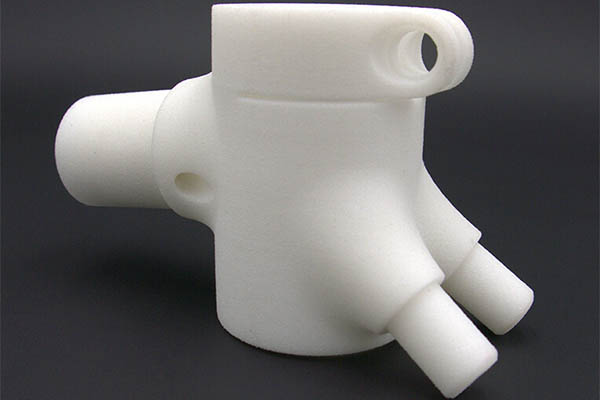
This is the property that makes nylon the default choice for gears, and it’s worth understanding why. Nylon’s polymer structure is inherently slippery. Under load, it partially self-lubricates — the surface wears very slightly, depositing a thin film that actually reduces friction further. This is why nylon gears running against nylon gears or metal gears outlast almost any other printed material by a significant margin.
If you’re printing anything that moves against another surface — a bushing, a cam follower, a thread, a gear tooth — nylon is doing real work that PLA and PETG simply cannot match.
Moisture Absorption — The Most Important Property You Can’t See
Here’s the one property that trips up almost everyone who’s new to nylon: it is extremely hygroscopic. Nylon pulls moisture out of the air continuously, and it does so faster than most other filaments. A freshly opened spool can absorb enough moisture to noticeably degrade print quality within a few hours in a humid environment.
Wet nylon is not a subtle problem. The symptoms are:
- Crackling or popping sounds during printing (water vaporizing in the nozzle)
- Tiny steam wisps at the nozzle
- Fuzzy, rough, or “hairy” surfaces on printed parts
- Excessive stringing between features
- Inconsistent extrusion or visible gaps between layers
- Prints that feel brittle or weak
Critical NoteMany people think their printer is the problem when the real issue is simply wet nylon. Before you start adjusting retraction, temperature, or flow rate, dry your filament first.
Before You Buy: Hardware Requirements for Modern Nylon
This section comes before the breakdown of nylon types intentionally — because if your printer isn’t ready, the filament choice barely matters.
The Hardened Steel Requirement: Why You Cannot Print Most Modern Nylon on a Stock Printer
In 2026, most of the best nylon filaments on the market are carbon-fiber or glass-fiber reinforced. This means they are abrasive — significantly more so than PLA, PETG, or even standard ABS. A brass nozzle, which is the standard on most entry-level and mid-range printers, can be visibly worn down within a single spool of PA-CF. Some experienced users report measurable wear after as little as 200g.
When a nozzle wears, the orifice diameter changes and the nozzle tip geometry degrades. The result is inconsistent extrusion, poor dimensional accuracy, weak layer bonding, and eventually failed prints. You’ll spend more time troubleshooting than printing.
WarningCarbon fiber and glass fiber nylon can destroy a brass nozzle shockingly fast. If your printer still uses a stock brass nozzle, upgrade before printing modern nylon.
Here’s what your hardware needs to look like before you commit to a nylon workflow:
- Hardened steel nozzle — minimum requirement for any fiber-filled filament
- Tungsten carbide nozzle — worth the investment for heavy, regular use
- Hardened extruder gears — fiber filament is tough on drive gears too
- All-metal hotend capable of at least 280–300°C (PTFE-lined hotends are not suitable above ~240°C)
- Enclosed print chamber — strongly recommended for most nylon, essential for PA6
Printers that are not well-suited in stock form include the Bambu Lab A1, the Ender-3 series, and most other open-frame entry-level machines. Even the Bambu Lab A1 — which is an excellent printer for PLA and PETG — requires significant upgrades before it can reliably handle the nylon blends that most functional part makers want to use. It should not be the first recommendation for someone who primarily wants to print nylon.
Nylon Filament Types
Nylon PA6
PA6 is the classic engineering nylon — strong, tough, and excellent in high-stress applications. It has the highest impact resistance of the common nylon types and performs well in applications where parts take regular punishment. The trade-off is that PA6 absorbs moisture more aggressively than any other common nylon, warps significantly without an enclosure, and requires higher print temperatures. It’s the best choice for the most demanding functional parts, but it’s also the most demanding nylon to print successfully.
Nylon PA12
PA12 is the friendlier nylon. It absorbs significantly less moisture than PA6, warps less, and prints at lower temperatures — typically around 240–260°C. Strength is slightly below PA6, but for most functional printing applications, the difference is academic. PA12 is widely considered the best starting point for users who are new to nylon. If you’re not sure which type to start with, PA12 is the sensible answer.
Nylon PA66
PA66 offers the best heat resistance of the standard nylon types, with deflection temperatures around 100–120°C under load. It’s stiffer and more rigid than PA6, which makes it well-suited for structural parts in high-temperature environments. The downside is that it’s one of the hardest nylons to print reliably — high moisture absorption, aggressive warping, and the need for a well-sealed enclosure make PA66 a material for experienced users with the right setup.
Co-Polyamide (PA6/66 Blends and Easy Nylon Formulations)
Many modern consumer nylon filaments use engineered blends of PA6 and PA66, or other co-polyamide formulations, to reduce warping and moisture absorption while retaining useful mechanical properties. Polymaker’s CoPA is the best-known example. These formulations are specifically designed to be printable on enclosed desktop printers without the extreme conditions that pure PA6 or PA66 demand.
Carbon Fiber Nylon (PA-CF)
Carbon fiber nylon is the material that changed the functional printing game. By embedding chopped carbon fiber strands into a PA6 or PA12 matrix, manufacturers created a filament that is significantly stiffer than standard nylon, warps far less during printing, and holds tight tolerances on complex geometries. The result is a material that prints more like a standard filament but performs more like an engineering compound.
The important caveat: PA-CF is abrasive. Every millimeter it travels through your nozzle is doing micro-abrasion. A hardened steel nozzle is mandatory, not optional.
Glass Fiber Nylon (PA-GF)
Glass fiber nylon shares many characteristics with carbon fiber nylon — reduced warping, improved stiffness, better dimensional stability — but with a slightly smoother surface finish. It’s also abrasive and requires a hardened nozzle. PA-GF is a good choice when you want the dimensional stability of a fiber-reinforced nylon with a slightly less aggressive surface texture.
“Easy Nylon” Formulations
These are the filaments that made nylon accessible to a much wider audience:
- Polymaker CoPA — arguably the gold standard for easy nylon
- eSUN ePA-CF — great value, very printable
- Overture Easy Nylon — reliable and beginner-friendly
- Bambu PAHT-CF — engineered specifically for Bambu Lab enclosed printers
Easy nylons warp less, absorb less moisture, and typically print at slightly lower temperatures than traditional PA6. They’re genuinely easier to print — with one important nuance that gets overlooked constantly.
Most “easy nylons” in 2026 are fiber reinforced. This means they are also abrasive. The “easy” refers to printability — the reduced warping, lower moisture sensitivity, better first-layer adhesion. It does not mean they’re safe to run through a brass nozzle. Even the most beginner-friendly PA-CF on the market will wear out a stock nozzle over time. Upgrade your nozzle first, then enjoy how easy these materials are to print.
Nylon 3D Printer Filament Temperature
Getting the temperature right is one of the most important factors in printing nylon successfully. Print too cool and you’ll get poor layer adhesion and weak parts. Print too hot and you’ll get excessive stringing, ooze, and degraded material.
| Nylon Type | Nozzle Temp | Bed Temp | Chamber Temp | Drying Temp |
|---|---|---|---|---|
| Standard PA6 | 260–290°C | 80–100°C | 45–60°C | 80–90°C for 6–12h |
| Standard PA12 | 240–260°C | 70–90°C | 40–55°C | 70–80°C for 6–10h |
| PA66 | 270–300°C | 80–110°C | 55–65°C | 85–95°C for 8–12h |
| Carbon Fiber Nylon (PA-CF) | 260–300°C | 45–80°C | 40–55°C | 70–90°C for 6–12h |
| Glass Fiber Nylon (PA-GF) | 260–290°C | 60–80°C | 40–55°C | 70–85°C for 6–10h |
| Easy Nylon / CoPA | 250–275°C | 60–80°C | 35–50°C | 65–80°C for 6–8h |
Why an Enclosed Printer Helps
Nylon shrinks as it cools, and it does so unevenly. If one part of a print cools significantly faster than another — as happens on any open-frame printer — you get differential shrinkage, which causes warping, layer separation, and parts that lift off the bed mid-print. An enclosure holds ambient temperature steady, which dramatically slows the cooling rate and allows layers to bond before the material contracts.
For PA6, PA66, and larger parts in any nylon type, an enclosure is essentially non-negotiable. For smaller PA12 or easy nylon parts, you may get away without one, but the results are inconsistent.
Printers with enclosures worth considering for nylon:
- Bambu Lab P1S — passively heated enclosure, excellent all-around performance
- Bambu Lab X1 Carbon — similar to P1S with additional sensor capabilities
- Prusa CORE One — well-engineered enclosure, strong community support
- QIDI Plus4 — high-temperature capable, good value for the hardware
- Creality K2 Plus — actively heated chamber up to 60°C
That last point deserves emphasis. The Creality K2 Plus is the only mainstream consumer printer in 2026 with an actively heated chamber — meaning the enclosure itself is warmed to a set temperature, not just passively retaining heat from the hotend and bed. For printing large PA6 or PA66 parts, this makes a substantial difference. Passive enclosures like the P1S hold warmth reasonably well for smaller parts, but for large-footprint or tall prints in difficult nylons, the K2 Plus’s active heating reduces warping and layer separation in ways that passive enclosures simply can’t match.
If your primary goal is printing large, industrial-style nylon parts regularly, the Creality K2 Plus deserves a serious look — even if the Bambu ecosystem is more convenient for general printing.

Do You Need a Filament Dryer for Nylon?
Yes. Absolutely, unequivocally yes.
Nylon is so hygroscopic that even a sealed spool shipped directly from the manufacturer can have measurable moisture content by the time it reaches your printer — especially if it sat in a warehouse, a shipping container, or your own storage for any length of time. In humid climates, a freshly opened spool of PA6 can absorb enough moisture in just two to three hours to meaningfully degrade print quality.
Printing wet nylon is one of the most common reasons people give up on the material and conclude it’s “too hard to print.” It isn’t too hard — it just needs to be dry.
Why Nylon Must Be Dried Before Printing
The moisture in wet nylon doesn’t sit harmlessly in the filament — it vaporizes the instant it reaches the nozzle at 250°C+. That rapid vaporization creates tiny bubbles in the melt, which disrupt flow, weaken layer bonds, and produce the characteristic rough, fuzzy surfaces that wet nylon is known for. It’s essentially the same phenomenon as frying something in oil with water on it — small explosions, everywhere, constantly.
Dry your nylon before every print session. If you’ve been running the same spool for a few hours in a humid environment, assume it needs redriving before the next session too.
Best Nylon Filament Dryer Options in 2026
| Dryer | Max Temp | Capacity | Best For |
|---|---|---|---|
| Sunlu FilaDryer E2 | 110°C | 1 spool | Deep drying PA6 and industrial nylon |
| Polymaker PolyDryer | 70°C | 1 spool | Everyday hobby use |
| Sunlu FilaDryer S4 | 70°C | 4 spools | Multi-spool / AMS users |
| Eibos Cyclopes | 70°C | 1 spool | Compact setups |
| Creality Space Pi Plus | 70°C | 2 spools | Budget users |
| PrintDry Pro3 | 85°C+ | 2 spools | Professional users |
1
Sunlu FilaDryer E2
Best Overall for Nylon
The E2 stands apart from nearly every other consumer dryer because it reaches 110°C — a temperature that most dryers can’t touch. For standard PA12 and easy nylon blends, 70°C is usually sufficient. But for heavily saturated PA6, PA66, or any spool that’s been sitting in humid conditions for weeks, 70°C often isn’t enough to fully restore print quality. The E2’s ability to reach 110°C makes it one of the only consumer dryers that can perform what amounts to a deep dry — extracting moisture that lower-temperature dryers leave behind. It’s also useful for light annealing of printed parts. If you’re serious about nylon, this dryer is worth the premium.
2
Polymaker PolyDryer
Best Everyday Option
Polymaker’s own dryer is well-engineered and pairs naturally with their CoPA and other nylon-compatible filaments. It caps at 70°C, which is fine for most PA12 and easy nylon use cases. The fit-and-finish is excellent, and it works well as a print-and-dry setup — feeding directly to the printer while drying simultaneously.
3
Sunlu FilaDryer S4
Best for Multiple Spools
If you run an AMS or multi-material setup, or simply want to dry several spools at once, the S4 is the go-to. Four spool capacity at 70°C. Ideal for Bambu AMS users who want dry filament across all their loaded materials simultaneously.
4
Eibos Cyclopes
Best Portable Option
Compact and practical for users with limited bench space. 70°C cap, single spool, with a feedthrough port for printing while drying. A solid choice for users who don’t need the higher temperature range.
5
Creality Space Pi Plus
Best Budget Dryer
Two-spool capacity at an accessible price point. At 70°C max, it handles PA12 and easy nylons well. A practical entry point for users who are just getting started with nylon and want to manage costs.
Pro TipDry nylon at 70–90°C for 6–12 hours before printing. For heavily saturated PA6 or PA66, a high-temperature dryer like the Sunlu FilaDryer E2 may be necessary to fully restore print quality. When in doubt, dry longer — over-drying nylon is essentially impossible in a standard dryer, but under-drying will ruin your print every time.
Best Nylon Filaments in 2026
After working through the theory, here’s where it gets practical. These are the nylon filaments that consistently deliver in real-world use — not just in controlled benchmark tests.
1
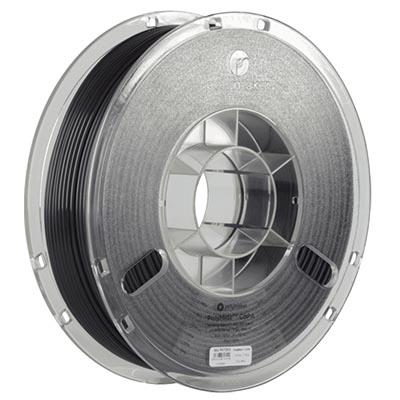
Polymaker CoPA
Best Overall Nylon Filament
If you buy one nylon filament and want it to work reliably without an advanced setup, CoPA is the answer. Polymaker’s co-polyamide blend prints at temperatures accessible to most modern enclosed printers (around 250–265°C), warps minimally compared to PA6, and delivers mechanical properties that are more than adequate for most functional part applications. CoPA absorbs less moisture than PA6, which means it’s more forgiving if your drying routine isn’t perfect. It adheres well to common bed surfaces with appropriate preparation and doesn’t require the extreme enclosure temperatures that PA6 demands. For a first nylon experience, or for users who want a reliable workhorse material they don’t have to wrestle with, CoPA earns the top spot.
2
Bambu PAHT-CF
Best High-Performance Nylon for Bambu Lab Printers
If you’re printing on a Bambu Lab P1S or X1C, PAHT-CF is the filament that was essentially built for those machines. It’s worth clarifying what this material actually is: PAHT-CF is a PPA-based (polyphthalamide) high-temperature nylon, not a standard PA6 or PA12 blend. That distinction matters because PAHT-CF offers substantially higher heat resistance than conventional nylon — it maintains structural integrity at temperatures that would soften standard PA6. The result is a material that combines excellent stiffness and dimensional stability (from the carbon fiber reinforcement), high heat resistance (from the PPA base), and good wear resistance in a package that’s tuned for Bambu Lab’s enclosed print environment. For functional parts that face heat, mechanical load, or repeated wear on a Bambu machine, PAHT-CF is the most capable option in the Bambu ecosystem. Hardened steel nozzle required. No exceptions.
3
Overture Easy Nylon
Best Budget Nylon Filament
Overture has built a strong reputation for delivering solid performance at prices that don’t require a second mortgage, and their Easy Nylon lives up to that pattern. It’s genuinely beginner-friendly — lower warping tendency than traditional nylon, good bed adhesion with appropriate prep, and consistent extrusion that doesn’t demand a dialed-in expert setup. For users who want to experiment with nylon without committing to a premium filament budget, Overture Easy Nylon is an honest, reliable entry point. It won’t outperform CoPA or PAHT-CF in demanding applications, but for light-to-medium functional parts, it does the job.
4
MatterHackers NylonX
Best Carbon Fiber Nylon
NylonX is a well-established PA12-CF filament from MatterHackers that remains one of the best carbon fiber nylon options on the market. It’s extremely stiff — useful for brackets, frames, structural components, and any part where you need rigidity rather than flexibility. Dimensional accuracy is excellent, and print results are consistent across spools. Like all PA-CF materials, NylonX requires a hardened nozzle. But in terms of printability among carbon fiber nylons, it’s on the more accessible end of the spectrum — you don’t need a perfectly optimized setup to get good results with it.

5
Taulman 910
Best Pure Nylon for Strength
Taulman’s 910 is a classic for a reason. It offers some of the highest raw tensile strength of any consumer nylon filament — genuinely impressive numbers for a printed part. It’s an alloy nylon blend that is semi-transparent when printed, tougher than PA6, and less prone to moisture absorption than traditional industrial nylons. There’s a nuance worth knowing: Taulman 910 is one of the few nylon filaments associated with FDA food-contact approval at the raw material level. This sometimes leads users to assume that printed parts are food-safe. They’re not — at least not without very careful consideration. The 3D printing process itself introduces contamination risks: layer lines create micro-channels that harbor bacteria, printing introduces environmental particulates, and most 3D-printed surfaces are essentially impossible to properly sanitize. Raw material approval and printed-part food safety are different things. Be aware of this distinction before using any printed part in food contact applications.
6
eSUN ePA-CF
Best Budget Carbon Fiber Nylon
eSUN’s ePA-CF is one of the most cost-effective carbon fiber nylon options available. Print quality is reliable, mechanical performance is solid for the price point, and availability is excellent. For users who print carbon fiber nylon in volume and want to manage costs, ePA-CF delivers strong value without significant compromises in the results that matter for most functional applications.
7
Fiberon PA12-CF
Best Nylon for Dimensionally Accurate Parts
Fiberon (formerly Fiberlogy) PA12-CF is somewhat underrated in broader 3D printing discussions, but among users who print precision mechanical components, it’s highly regarded. Its distinguishing characteristic is exceptional dimensional accuracy — parts come out very close to spec, which matters enormously when you’re printing gears with specific tooth geometry, fixture plates with located holes, or any mechanical interface that must fit together reliably. If your application involves tight tolerances — holes that need to be 20.00 mm, not 20.3 mm; gears with a specific module and tooth count; bearing housings with real fit requirements — Fiberon PA12-CF is the filament to reach for. This is a material for users who care about precision over everything else.
Nylon Filament Comparison Table
| Filament | Best For | Ease of Printing | Strength | Abrasive |
|---|---|---|---|---|
| Polymaker CoPA | General-purpose functional parts | ★★★★★ | ★★★★☆ | No |
| Bambu PAHT-CF | High-temp parts on Bambu printers | ★★★★☆ | ★★★★★ | Yes |
| Overture Easy Nylon | Budget-friendly beginner nylon | ★★★★★ | ★★★☆☆ | No |
| MatterHackers NylonX | Stiff structural parts | ★★★★☆ | ★★★★★ | Yes |
| Taulman 910 | Maximum raw strength | ★★★☆☆ | ★★★★★ | No |
| eSUN ePA-CF | Budget CF nylon | ★★★★☆ | ★★★★☆ | Yes |
| Fiberon PA12-CF | Precision mechanical parts | ★★★★☆ | ★★★★☆ | Yes |
Best Nylon Filament for Gears
Gears are one of the most demanding functional printing applications — and also one of the areas where nylon absolutely shines. Here’s what makes a good gear filament:
Wear resistance: Gear teeth are in constant sliding contact. A material that wears quickly will change the tooth geometry over time, leading to increasing noise, lost motion, and eventually failure.
Low friction: The lower the friction between meshing teeth, the less heat is generated and the longer the gear lasts. Nylon’s self-lubricating behavior is exactly what you want here.
Dimensional accuracy: Gear geometry is precise by definition. A filament that shrinks unpredictably or doesn’t hold tight tolerances will produce gears that mesh poorly from the moment you install them.
Appropriate stiffness: Smaller gears need enough stiffness to transmit torque without deflecting. Very large gears may benefit from some compliance.
Best choices for 3D printed gears:
- Taulman 910 — High strength, low friction, excellent for small to medium gears under significant load
- PA12 Nylon (general) — Lower moisture absorption, good wear resistance, reliable dimensional accuracy
- Polymaker CoPA — Excellent combination of printability, wear resistance, and dimensional stability
- MatterHackers NylonX — For larger, stiffer gears where rigidity is more important than compliance
One important nuance: pure nylon is usually better for gears than carbon fiber nylon. PA-CF is stiffer and in many ways superior for structural parts, but for gear applications, the slightly more compliant and naturally slippery surface of unfilled nylon tends to outperform CF variants in wear tests. Carbon fiber nylon may be appropriate for very large, rigid gears where stiffness is the priority — but for typical printed gears where sliding contact and longevity matter most, unfilled PA12 or CoPA will usually serve you better over time.
Best Nylon Filament for Bambu Lab Printers
Bambu Lab printers have changed who can successfully print nylon. The P1S and X1 Carbon are genuinely capable nylon printers out of the box — but “out of the box” still means a hardened nozzle swap before you start on anything fiber-reinforced.
Best Nylon Filament for the Bambu Lab P1S
The P1S’s enclosed, passively heated chamber makes it well-suited for most nylon types. Here are the recommended filaments ranked for P1S use:
- Bambu PAHT-CF — Best-in-class performance, tuned for this exact machine
- Polymaker CoPA — Excellent printability, minimal warping, great results in the P1S enclosure
- eSUN ePA-CF — Solid carbon fiber nylon at a budget-friendly price
- Overture Easy Nylon — Good entry point for P1S users new to nylon
For fiber-reinforced materials on the P1S, swap the stock nozzle to hardened steel before your first print. Also strongly recommended: feed directly from a filament dryer rather than loading into the AMS. Nylon sitting in an AMS tube over time will absorb ambient moisture. For dry, clean filament delivery, a dryer-to-printer direct feed is the right approach.
Best Nylon Settings for the P1S and X1C
| Parameter | Easy Nylon / CoPA | PA-CF (PAHT-CF, ePA-CF) |
|---|---|---|
| Nozzle Temperature | 250–265°C | 270–290°C |
| Bed Temperature | 65–80°C | 45–65°C |
| Chamber | Keep closed throughout | Keep closed throughout |
| Fan Speed | 20–40% max | 0–20% max |
| Drying | 70–80°C / 6–8h | 80–90°C / 8–12h |
| Nozzle Type | Hardened steel | Hardened steel — mandatory |
Keep the chamber closed for the entire duration of the print. Opening it mid-print to check on things causes a temperature drop that’s often enough to trigger delamination or warping in a nylon part.
What Is the Best Nylon Filament Brand?
Brand consistency matters more with nylon than with most other filaments, because the consequences of a bad spool — moisture issues, inconsistent diameter, poor layer adhesion — are more severe. These are the brands that earn consistent trust across the community:
1. Polymaker — The benchmark for quality and consistency in consumer nylon. CoPA is their flagship nylon, and it’s excellent. Their quality control is industry-leading, their technical documentation is thorough, and their formulations are well-engineered.
2. Bambu Lab — Bambu’s own filaments are optimized for their ecosystem. If you print on Bambu hardware, their materials — especially PAHT-CF — are tuned specifically for those machines and deliver reliable results.
3. MatterHackers — NylonX remains one of the best-regarded carbon fiber nylon filaments on the market. Consistent, well-characterized, and supported by solid technical guidance.
4. Taulman — The original serious nylon brand for desktop 3D printing. 910 is a classic for good reason. Best for users who want maximum raw strength from a pure nylon formulation.
5. Overture — The best-value entry point. Reliability at accessible prices makes them a natural choice for makers who print a lot and care about cost per spool.
6. eSUN — Broad availability, solid quality control, and competitive pricing. Their ePA-CF is one of the better budget carbon fiber nylons available.
7. Fiberon — Formerly Fiberlogy, and underrated by many. If precision and dimensional accuracy are your priorities, Fiberon deserves more attention than it typically gets.
What 3D Printer Is Best for Nylon Filament?
The material is only half the equation. Here are the printers that handle nylon best:
- Bambu Lab P1S — Enclosed chamber, high-temperature capable, AMS-compatible (use a dry box for nylon), and an excellent all-around choice for most nylon types. The P1S is probably the most popular nylon-capable printer among enthusiasts in 2026.
- Bambu Lab X1 Carbon — Similar to the P1S with additional LiDAR-based first-layer calibration and resonance compensation. Excellent for dialing in difficult materials.
- QIDI Plus4 — High-temperature capable, enclosed, and often praised for its engineering filament performance. Good value for a capable nylon printer.
- Creality K2 Plus — The actively heated chamber is the headline feature. For users who print large nylon parts regularly, this is a meaningful advantage over passive enclosures.
- Prusa CORE One — Well-engineered, strong community, excellent print quality. Prusa’s enclosure solution is solid, and their slicer support for engineering materials is mature.
Essential features to look for in a nylon-capable printer:
- Enclosed print chamber (essential for PA6, strongly recommended for all nylon)
- All-metal hotend capable of at least 280–300°C
- Heated bed reaching at least 80–90°C
- Hardened nozzle capability (most modern printers accept aftermarket nozzles)
- Stable extruder that can handle abrasive materials
Nylon vs PLA vs PETG vs ABS
How does nylon stack up against the other common filaments? Here’s the direct comparison:
| Property | PLA | PETG | ABS | Nylon (PA12) |
|---|---|---|---|---|
| Tensile Strength | Moderate | Moderate–High | High | Very High |
| Flexibility | Brittle | Semi-rigid | Moderate | High |
| Heat Resistance | Low (~60°C) | Moderate (~75°C) | Good (~90°C) | Good (~90°C) |
| Ease of Printing | Very Easy | Easy | Moderate | Moderate–Difficult |
| Moisture Sensitivity | Low | Low | Low | Very High |
| Wear Resistance | Poor | Moderate | Moderate | Excellent |
| Outdoor UV Resistance | Poor | Moderate | Moderate | Poor (ASA is better) |
| Best Use Case | Prototypes, visual models | General functional parts | Enclosures, brackets | Gears, wear parts, load-bearing |
Quick take:
- PLA for easy printing, visual models, and prototypes — great material, wrong choice for stress
- PETG for general-purpose parts that need some strength — the reliable middle ground
- ABS / ASA for outdoor use or parts that need UV resistance — ASA significantly outperforms ABS here
- Nylon for maximum durability, wear resistance, and fatigue life — the right choice when a part actually has to work
Common Nylon Printing Problems and How to Fix Them
Nylon Warping
Warping is the most visible failure mode with nylon, and it’s caused by differential cooling — one area of the part contracting before the rest of the print catches up.
Fixes:
- Print in an enclosure — this is the most important single change you can make
- Keep the enclosure closed for the entire print — even opening briefly can cause a thermal shock
- Use large brims (8–15mm) to increase first-layer adhesion and resist lifting forces
- Raise bed temperature to the upper end of the recommended range
- Reduce fan speed or turn it off entirely for the first several layers
- For large or complex parts in PA6 or PA66, an actively heated chamber like the Creality K2 Plus makes a substantial difference over passive enclosures
Poor Bed Adhesion
Getting nylon to stick to the bed reliably requires the right surface and the right adhesive:
Garolite / G10 — One of the best surfaces for nylon. Nylon naturally bonds to it, and parts release cleanly when the bed cools. If you print nylon regularly, a G10 sheet is worth the investment.
Vision Miner Nano Polymer — One of the most trusted professional nylon adhesives available. Works with a wide range of nylon types on various bed surfaces.
Magigoo PA — The most beginner-friendly dedicated nylon adhesive. Easy to apply, consistent results, and reliable for most PA12 and easy nylon blends. Highly recommended for newcomers to nylon.
PVA glue stick — Still works for some easier nylon blends, particularly PA12 on glass or PEI. No longer the preferred solution for PA6, PA66, or challenging nylon prints, but useful as a starting point or when other options aren’t available.
Stringing and Fuzzy Prints
If your nylon print looks like it grew hair, moisture is almost certainly the cause. Wet filament strings excessively because moisture vaporization disrupts the normal melt flow. Dry the spool — 70–80°C for at least 6–8 hours — and reprint.
Wet Nylon Symptoms Checklist:
- “Pop-rock” or crackling sounds from the nozzle
- Tiny bubbles or steam wisps at the nozzle tip
- Fuzzy, rough, or hairy-looking surfaces
- Excessive stringing between features
- Inconsistent extrusion or visible gaps between layers
- Prints that feel weak or brittle when you flex them
If you’re hearing consistent crackling sounds during a print, stop, dry the filament, and start over. Continuing to print wet nylon will produce a part that feels weak regardless of how well everything else is tuned.
Weak Prints
If you can peel the layers of a printed nylon part apart with your hands without significant effort, the nylon is almost certainly too wet. This is the most reliable field test for wet nylon — good, dry nylon produces interlayer bonds that take real effort to separate. Wet nylon produces parts that delaminate easily.
Other causes of weak prints: under-extrusion (check nozzle wear if using fiber-filled materials), insufficient overlap between perimeters, or printing temperatures that are too low for proper layer fusion.
The New Standard: Why PA-CF and PA12-CF Are Dominating Consumer Engineering Prints in 2026
It’s worth pausing to acknowledge what’s changed in the consumer nylon market over the last few years. Traditional PA6 — once the default choice for anyone serious about functional printing — has largely been displaced by carbon-fiber and glass-fiber reinforced variants in everyday use.
The reason is practical: PA-CF prints more easily than PA6, warps less, holds better tolerances, and still delivers excellent mechanical performance for the vast majority of applications. PAHT-CF and PA12-CF in particular have become the go-to materials for Bambu, QIDI, and Creality users who want engineering-grade results from a relatively straightforward workflow.
Many of these users now print nylon directly from an active filament dryer — feeding the printer continuously during a print rather than loading pre-dried spools that might reabsorb moisture during a long job. It’s a workflow shift that’s reduced moisture-related failures significantly.
One more note for AMS users: the Bambu AMS is a convenient system, but it is not designed to keep nylon dry during storage or printing. Nylon loaded in an AMS buffer will gradually absorb ambient moisture. If you’re using an AMS with nylon, pair it with a dry box or feed directly from a dryer. The AMS works well for PLA and PETG; for nylon, treat it as a convenience system and account for moisture management separately.
Frequently Asked Questions
Is nylon filament stronger than PETG?
In most meaningful measures, yes. Nylon has higher tensile strength, better impact resistance, superior fatigue resistance, and dramatically better wear resistance than PETG. PETG is easier to print and less sensitive to moisture, which makes it the better choice for general functional parts when you don’t need nylon’s specific advantages. But for parts under real mechanical stress, nylon consistently outperforms PETG.
What temperature should nylon filament print at?
It depends on the type. PA12 and easy nylon blends typically print at 240–265°C nozzle temperature with a 70–90°C bed. PA6 usually runs hotter — 260–290°C nozzle. Carbon fiber variants often require 265–300°C. Always consult the specific manufacturer’s recommendations for the filament you’re using, and expect to dial in your exact settings with a temperature tower if you’re working with a new material.
Does nylon need a dryer?
Yes — without exception. Nylon absorbs moisture from the air continuously and rapidly. Even a new, sealed spool can be wet enough to affect print quality depending on how it was stored and shipped. Always dry nylon before printing. For PA12 and easy nylons, 70–80°C for 6–8 hours is a solid baseline. For PA6 and PA66, 80–90°C for 8–12 hours is recommended, and a high-temperature dryer like the Sunlu FilaDryer E2 may be needed for heavily saturated spools.
What is the easiest nylon filament to print?
Polymaker CoPA is widely regarded as the most user-friendly nylon available. It warps less than PA6, absorbs less moisture, prints at accessible temperatures, and delivers solid mechanical properties. Overture Easy Nylon is the best budget option in this category.
Is Overture Nylon Filament good?
Yes, for what it is. Overture Easy Nylon is a reliable, beginner-friendly material that delivers consistent results at a price point that’s significantly below premium alternatives. It won’t match Polymaker CoPA or Bambu PAHT-CF in demanding applications, but for users who want to learn nylon printing without a large filament budget, it’s a solid choice.
Can the Bambu Lab P1S print nylon?
Yes — the P1S handles nylon well for most common applications. Its enclosed chamber makes a meaningful difference compared to open-frame printers. For pure PA12 and easy nylon blends, it works reliably with standard preparation. For carbon fiber variants like PAHT-CF or ePA-CF, swap the nozzle to hardened steel first and feed directly from a filament dryer rather than loading into the AMS. The P1S is one of the better consumer printers for nylon in 2026.
What is the best nylon filament for gears?
For most gear applications, Polymaker CoPA or standard PA12 are the best choices — the natural low-friction, self-lubricating behavior of unfilled nylon outperforms carbon fiber variants in sliding contact applications. Taulman 910 is excellent for gears that need maximum strength. For large, stiff gears where rigidity matters more than compliance, MatterHackers NylonX or another PA-CF option may be appropriate.
Final Thoughts
Nylon filament rewards preparation. Get the hardware right — hardened nozzle, enclosed printer, capable hotend — and dry your filament properly, and nylon becomes one of the most capable and practical engineering materials in desktop 3D printing. Skip those steps and it becomes one of the most frustrating.
The good news is that in 2026, the barrier to printing nylon well is lower than it’s ever been. Easy nylon formulations like CoPA and Overture Easy Nylon have made the material accessible to a much wider audience. Machines like the Bambu Lab P1S and Creality K2 Plus have brought genuinely capable enclosed printers to the consumer market at reasonable prices. And a good filament dryer like the Sunlu FilaDryer E2 solves the moisture problem definitively.
Ready to start printing functional parts that last?
If you’ve been considering nylon but haven’t taken the leap yet, 2026 is probably the easiest year in history to start. Pick a good enclosure, grab a hardened steel nozzle, invest in a proper dryer, start with CoPA or Overture Easy Nylon, and print something that was never going to survive in PLA.
You’ll wonder why you waited.

