

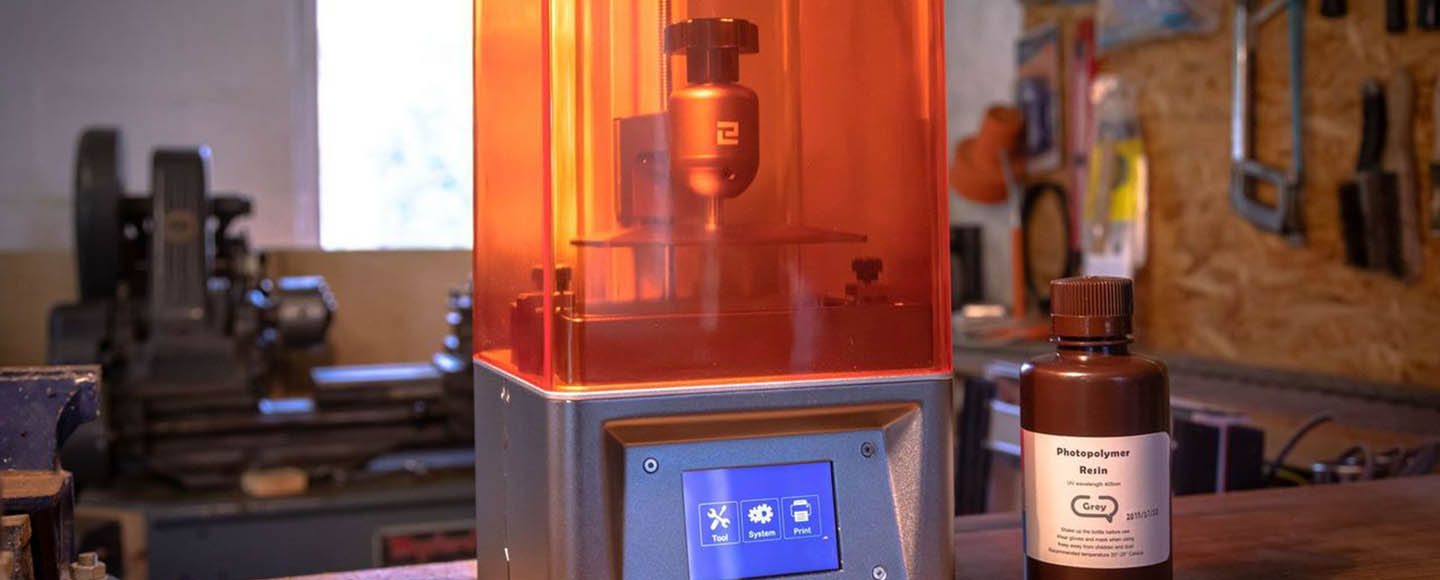
Let’s be honest — the moment you start resin printing, the thought hits you: ‘I wish this was bigger.’ You’ve been there, splitting that one perfect model into four pieces, gluing them together, sanding the seams, and still ending up with something that looks like it survived a small explosion. It’s frustrating, time-consuming, and the results rarely match your original vision.
Here’s the good news: in 2026, the largest resin 3D printers on the market have reached a scale that would have seemed industrial just a few years ago — and many are now accessible to serious hobbyists, small business owners, and professional studios alike.
But here’s what nobody tells you about large-format resin printing: going bigger comes with real trade-offs. More expensive failures. Resin bills that’ll make your eyes water. Post-processing headaches. And the not-so-small question of where you’ll put a machine that might weigh 150 kg.
Whether you’re looking for an extra large resin 3D printer to print full-scale busts and props, a large SLA 3D printer for professional prototyping, or a big resin 3d printer for a production print farm — there’s an option here for you.
📑 Table of Contents
Best Large Resin 3D Printers in 2026 — Quick Picks Table
Here’s a snapshot of the top picks covered in this guide. Scroll down for full hands-on style reviews of each.
| Printer | Build Volume | Screen | Price | Best For |
|---|---|---|---|---|
| Elegoo Saturn 4 Ultra 12K | 219×123×220mm | 10″ 12K | ~$399 | Best Overall Value |
| Phrozen Sonic Mega 8K S Top Pick | 330×185×300mm | 15″ 8K | ~$1,299 | Large Batch Production |
| Formlabs Form 4L | 353×196×350mm | LFD 46µm | ~$9,999 | Pro & Industrial Use |
| Peopoly Phenom XXL V2 | 527×296×550mm | 4K UHD | ~$7,999 | Absolute Maximum Size |
| Elegoo Jupiter SE | 277×156×300mm | 12.8″ 6K | ~$550 | Mid-Tier Large Format |
| Anycubic Photon Mono M7 Max | 298×164×300mm | 13.6″ 7K | ~$849 | Smart Features + Big Prints |
Reliability Winner: Formlabs Form 4L (99% print success rate, enterprise-grade ecosystem)
What Counts as a ‘Large’ Resin 3D Printer in 2026?
The resin printing world loves big numbers — 12K resolution! 15-inch screens! 22x the volume of the competition! — but when it comes to build size, what actually qualifies as large, and what’s just marketing?
Here’s a practical breakdown by build plate size that most experienced users and the 3D printing community agrees on:
For context, the Phrozen Sonic Mega 8K S has a 15-inch screen but a build volume of 330×185×300 mm — enormous by consumer standards. It is a genuinely large resin 3D printer by any real measure.
1. Elegoo Saturn 4 Ultra 12K — Best Overall Large Resin 3D Printer
| Build Volume | 218.88 × 122.88 × 220 mm |
| Screen | 10-inch 12K Monochrome LCD (11520 × 5120 pixels) |
| XY Resolution | 19 × 24 µm |
| Print Speed | Up to 150 mm/h (Tilt-Release Technology) |
| Price | ~$399–$449 USD |
| Technology | MSLA |
| Slicer | ChituBox / Elegoo SatelLite |
Why It Stands Out in 2026
The Elegoo Saturn 4 Ultra is the closest thing to a ‘can’t go wrong’ choice in the large resin printer market. At around $399, you get 12K resolution, AI-powered failure detection, an innovative tilt-release vat mechanism, and a built-in camera for real-time monitoring. These were features reserved for machines costing double or triple the price just two years ago.
Build Volume vs Resolution Reality
At 218.88 × 122.88 × 220 mm, it’s not the absolute largest printer in this guide — but it hits a sweet spot. The 12K LCD delivers 19-micron XY resolution, which is frankly approaching the limits of what the human eye can distinguish without a magnifying glass. If you’re printing miniatures, jewelry masters, or detailed figures, this resolution is extraordinary for a printer in this price range.
Real Use Case
Tabletop miniature painters love it — you can pack 20–30 28mm miniatures or an entire army onto one build plate. Small studios use it for overnight dental model runs and product design prototypes. The ‘no specialty resin required’ approach is a genuine practical advantage: standard 405nm resins work just fine, keeping your ongoing costs low.
✅ PROS
- Exceptional 12K resolution for the price
- Tilt-release reduces failure rate significantly
- AI camera + auto-leveling = near hands-free printing
- Works with standard resins — no premium resin tax
- Strong community + slicer ecosystem (ChituBox/SatelLite)
- WiFi connectivity and time-lapse camera
❌ CONS
- No built-in resin heater (need the 16K for that)
- Build volume modest compared to Phrozen/Anycubic competitors
- No internal air filter (requires external solution)
- Lead screw Z-axis instead of ball screw
Who Should Buy It
Hobbyists upgrading from a smaller printer, small studios needing reliable overnight runs, commission miniature painters, dental technicians, and anyone who values resolution + ease of use over raw build volume. At ~$399, it’s an almost irresponsible amount of printer for the money.
Ready to upgrade your printing game?
2. Phrozen Sonic Mega 8K S — Best Large Resin 3D Printer for Batch Production
| Build Volume | 330 × 185 × 300 mm (~18.3 litres usable) |
| Screen | 15-inch 8K Monochrome LCD (7680 × 4320 pixels) |
| XY Resolution | 43 µm |
| Print Speed | ~400+ layers/hour (high throughput) |
| Price | ~$1,299–$1,499 USD |
| Technology | MSLA |
| Slicer | Chitubox, Lychee Slicer |
Why It Stands Out in 2026
If sheer build plate area is what you’re after, the Phrozen Sonic Mega 8K S is hard to beat in the consumer/prosumer space. That 330 × 185 mm build plate is genuinely massive — Phrozen themselves demonstrate printing 164 ‘Kreigsmen’ miniatures in a single batch. For print farm operators, small businesses, and serious volume producers, this is the printer to beat.
Build Volume vs Resolution Reality
The 43-micron XY resolution is entirely respectable for its class. Yes, it’s not as fine as the Saturn 4 Ultra’s 19 microns — but on a 15-inch screen spread across 330 mm of width, maintaining fine pixel density is a real engineering challenge. For large props, terrain, display models, and batch production, 43 microns delivers clean, detailed prints that look excellent.
Real Use Case
This printer was built for commercial output. Print farms running multiple Mega 8K S units report excellent economics — high throughput, consistent quality, and the pre-calibrated build plate means less setup time per machine. It’s also ideal for prop makers, cosplayers, and sculptors who need to print large-scale pieces in one go.
✅ PROS
- Largest consumer build plate area at this price point
- Pre-calibrated build plate saves setup time
- Purpose-built for high-volume production
- Lift-up lid with drip hanger — practical design
- Optional Pump & Fill for fully automated resin feeding
- Proven reliability in print farm environments
❌ CONS
- Resolution (43µm) coarser than Saturn 4 Ultra
- Higher price than some entry-level large competitors
- Larger screen = more expensive replacement costs
- Heavier and larger footprint — needs dedicated space
Who Should Buy It
Print farm operators, small businesses producing resin parts at volume, prop makers and cosplayers needing large single-piece prints, and serious hobbyists who’ve outgrown medium-format printers and need the widest possible build plate.
Maximize your production output today.
3. Formlabs Form 4L — Best Professional Large SLA 3D Printer
| Build Volume | 353 × 196 × 350 mm |
| Technology | Masked SLA (Low Force Display™ LFD Print Engine) |
| XY Resolution | 46 µm (pre-tuned anti-aliasing for sub-pixel detail) |
| Print Speed | Up to 80 mm/h — most large parts complete in under 6 hours |
| Price | ~$9,999 USD |
| Materials | 23+ Formlabs resins + Open Material Mode for third-party |
| Slicer | PreForm (free, excellent) |
Why It Stands Out in 2026
The Formlabs Form 4L is in a completely different league from the consumer printers above — and it’s priced accordingly. But if your use case demands it, the $9,999 price tag is justified. The Form 4L delivers a 99% print success rate, a massive 353 × 196 × 350 mm build volume, and Formlabs’ renowned reliability ecosystem. For product design teams, medical device companies, and manufacturers, this is the pro tool.
Build Volume vs Resolution Reality
At 353 × 196 × 350 mm, this is the largest build volume in our core prosumer/professional picks — and it’s 4.6 times the size of the standard Form 4. The LFD print engine’s 46-micron pixel size with pre-tuned anti-aliasing delivers surface quality that rivals injection molding. The speed is what truly sets it apart from SLA competitors: most large parts finish in under six hours.
Real Use Case
Microsoft’s architect team uses the Form 4L to create full-size functional prototypes of Xbox hardware. Radio Flyer used it to print a full-scale ride-on toy seat for a vendor meeting — directly from the print. In dental and medical contexts, the Form 4L supports over 23 certified materials including biocompatible options, making it a validated production tool.
✅ PROS
- 99% print success rate — industry-leading reliability
- 353×196×350mm build volume — largest in professional tier
- Prints most large parts in under 6 hours
- 23+ certified materials including biocompatible resins
- PreForm slicer is best-in-class and free
- Full ecosystem: Form Wash L, Form Cure L, dashboard monitoring
- 75,000+ layer lifespan on print engine
❌ CONS
- ~$9,999 is a major investment — not for hobbyists
- Formlabs proprietary resins are expensive per litre ($79–$150)
- Requires the Formlabs ecosystem for best results
- Large footprint — needs dedicated workspace
- Open Material Mode requires a license
Who Should Buy It
Product design teams, medical device companies, dental labs, engineering firms, automotive and aerospace prototyping teams, and manufacturing companies who need certified materials, reliable results, and professional support. If you’re printing parts that go into vendor meetings, clinical environments, or production tooling — the Form 4L pays for itself.
Experience industrial-grade reliability.
4. Peopoly Phenom XXL V2 — The Largest Consumer Resin 3D Printer Available
| Build Volume | 527 × 296 × 550 mm (85.9 litres — 22x the Form 3) |
| Screen | 4K UHD (3840 × 2160) — 16:9 aspect ratio |
| Pixel Pitch | 137 µm |
| UV Power | 340W LED |
| Price | ~$7,999 USD |
| Technology | MSLA |
| Weight | 150 kg (shipping weight: 165 kg) |
Why It Stands Out in 2026
This is the behemoth. The Peopoly Phenom XXL V2 exists in its own category — it’s not just the largest resin 3D printer you can buy for under $10,000, it’s 500% bigger than the standard Phenom and holds a vat volume of 5.8 kg of resin. We’re talking about a machine that can print full torso-sized statues, large-scale architectural models, and whole-body cosplay armor pieces in a single run.
Build Volume vs Resolution Reality
Here’s the honest trade-off: the 137-micron pixel pitch is coarse by modern consumer standards. At this scale, fine detail like facial features and small text will require careful model preparation and orientation. The Phenom XXL V2 is not the right tool for printing intricate jewelry or tiny miniatures — it’s built for large sculptural and structural prints where size matters more than microscopic detail.
Real Use Case
Full-scale life-size busts and props, large-format architectural concept models, production print farms needing maximum output per machine, large costume and display pieces, and industrial prototyping where one-piece construction at human scale is the goal. Supported by ChituBox, Lychee Slicer, and Vlare Slicer for flexible workflow integration.
✅ PROS
- Largest consumer build volume available — 527×296×550mm
- 22x the volume of a Formlabs Form 3
- Supports Lychee, ChituBox, and Vlare slicers
- Powerful 340W UV system for large-area exposure
- Ideal for life-size props, busts, and display pieces
- Print farm workhorse for maximum output
❌ CONS
- 137-micron resolution — coarse for fine detail work
- 150 kg — requires dedicated floor space and installation
- 5.8 kg vat = $200–$400+ per full print in resin costs
- Very high post-processing demands (large wash & cure needed)
- Significant ventilation requirements
- Expensive failed prints at this scale
Who Should Buy It
Studios and production companies printing life-size or oversized pieces, professional prop makers, architectural model builders, large-scale print farms, and industrial prototyping teams. This is not a hobbyist machine — the operating costs alone require a commercial use case to justify.
Need maximum build volume?
5. Elegoo Jupiter SE — Best Mid-Tier Large Format Resin Printer
| Build Volume | 277.8 × 156.3 × 300 mm (~13 litres) |
| Screen | 12.8-inch 6K Monochrome LCD |
| XY Resolution | 51 µm |
| Print Speed | Up to 70 mm/h |
| Price | ~$500–$600 USD |
| Technology | MSLA |
| Slicer | ChituBox, Lychee Slicer |
Why It Stands Out in 2026
The Elegoo Jupiter SE fills a smart gap in the market — a large resin 3D printer that bridges the entry-level Saturn range and the premium Phrozen Mega 8K S. Its 12.8-inch 6K screen and 277 × 156 × 300 mm build volume put it firmly in large-format territory, while the automated resin feed and recycling system add a layer of convenience you usually only find at higher price points.
Build Volume vs Resolution Reality
The 51-micron pixel size is workable for most large-scale applications — terrain, large figures, busts, and functional prototypes all look excellent. For fine jewelry or micro-detail miniatures, you’d look elsewhere, but the Jupiter SE’s strength is its combination of a genuinely large build area and smart workflow features at a competitive price.
Real Use Case
The Jupiter SE’s automated resin feed and recycling system is a practical advantage for longer print runs — when you finish a job, excess resin is automatically cycled back rather than left sitting in the vat to potentially degrade. This is valuable for anyone running overnight prints or batch production where you’re not always present to manage the machine.
✅ PROS
- Automated resin feed AND recycling system
- Large 12.8″ screen at mid-tier pricing
- Stable Z-axis with efficient cooling
- Good price for the build volume offered
- Compatible with standard 405nm resins
❌ CONS
- 51µm resolution — coarser than Saturn range
- Max 70 mm/h — slower than faster competitors
- 4-point manual leveling (no auto-level)
- USB-only connectivity — no WiFi
- Fewer smart features than modern competitors
Who Should Buy It
Mid-tier buyers who want genuine large-format capability with automated resin management but don’t need the fastest speeds or highest resolution. A solid workhorse choice for studios and makers who prefer a budget-friendly Elegoo ecosystem.
Get large-format printing with smart features.
6. Anycubic Photon Mono M7 Max — Best Smart Features in a Large Resin 3D Printer
| Build Volume | 298 × 164 × 300 mm (~14.7 litres) |
| Screen | 13.6-inch 7K Monochrome LCD |
| XY Resolution | 46 µm |
| Print Speed | Up to 4 sec/layer at 0.05mm height |
| Price | ~$849 USD |
| Technology | MSLA |
| Special Features | Dynamic heated vat, auto-fill system, WiFi/USB/LAN connectivity, COB LighTurbo 3.0 |
Why It Stands Out in 2026
The Anycubic Photon Mono M7 Max is the feature-forward choice at large-format scale. It steps up with a dynamic temperature-controlled vat (a genuine upgrade for resin consistency), built-in auto-fill, three connectivity options (USB/WiFi/LAN), and Anycubic’s COB LighTurbo 3.0 for faster and more uniform curing.
Build Volume vs Resolution Reality
The M7 Max delivers a 298 × 164 mm XY build area with a heated dynamic vat that maintains resin at optimal temperature — critical for cold workshop environments and for achieving consistent layer adhesion on large prints. The COB LighTurbo 3.0 light source delivers notably more uniform exposure across that large build area.
Real Use Case
The M7 Max shines for users who want a ‘set it and forget it’ large-format printer — the combination of auto-fill, dynamic heating, and real-time diagnostics means less babysitting for long prints. For tabletop enthusiasts printing armies overnight, or small businesses running shifts, that operational peace of mind has real value.
✅ PROS
- Dynamic heated vat — better resin consistency
- Three connectivity options (USB/WiFi/LAN)
- COB LighTurbo 3.0 for uniform large-area exposure
- App control and smart diagnostics
- Built-in auto-fill system
- Flip-open cover design for easy access
❌ CONS
- ~$849 — premium pricing for features
- Still uses Photon Workshop slicer (use ChituBox instead)
- 46µm resolution — standard for this class
- Build volume similar to competitors at similar prices
- Customer support criticism same as other Anycubic models
Who Should Buy It
Large-format users who specifically need the heated vat (cold environments, specialty resins), those who want the most connectivity options and app control in this size class, and small businesses where the operational conveniences justify the premium.
Experience smart large-format printing.
Large vs Small Resin Printers — The Reality Check
Here’s the thing that most buying guides won’t tell you straight: a larger resin 3D printer doesn’t make you more productive. It makes assembly less necessary.
This is an important distinction. A bigger printer reduces the need to split your models into multiple pieces and join them afterward — saving assembly time, eliminating seam lines, and giving you a structurally sounder finished piece. But it doesn’t reduce your printing time per se, and it comes with real trade-offs.
Key Trade-offs to Consider
The Bottom Line:
Choose large format when you genuinely need single-piece output that exceeds medium-format size. Don’t upsize purely for the spec sheet bragging rights.
Large Resin 3D Printer Price Breakdown — 2026 Reality
Large resin 3D printer pricing in 2026 breaks down into three meaningful tiers. Here’s an honest assessment of what each tier delivers:
$500–$1,200 — Entry Large Format
This is where the Elegoo Jupiter SE (~$550) and Anycubic Photon Mono M7 Max (~$849) live. You’re getting genuine large-format build volumes (13–14+ litres), solid monochrome LCD screens, and basic automated features. These are hobbyist-to-prosumer machines that will exceed the needs of most users.
$1,200–$3,500 — Prosumer
The Phrozen Sonic Mega 8K S (~$1,299) represents this tier best. Here you get production-grade build quality, larger screens, better lighting systems, and workflow automation features designed for commercial use. Print farms and small businesses live in this range.
$5,000–$50,000 — Professional & Industrial
The Formlabs Form 4L ($9,999), the Peopoly Phenom XXL V2 ($7,999), and industrial machines like the Stratasys Neo800+ or Photocentric LC Titan occupy this space. These are full ecosystem investments — the printer is just the start; materials, support, post-processing, and training all factor in.
Consumables & Lifecycle Costs — The Section Most Guides Skip
This is the hidden cost conversation nobody has with you before you buy a large resin printer. Let’s fix that.
| Printer | Screen Cost (est.) | Vat Film Type | Screen Lifespan | Resin Cost/Litre |
|---|---|---|---|---|
| Saturn 4 Ultra 12K | ~$80–$120 | PFA Film | ~2,000hrs+ | ~$30–$60 |
| Phrozen Mega 8K S | ~$200–$300 | FEP/ACF | ~1,500–2,000hrs | ~$30–$80 |
| Formlabs Form 4L | Cartridge-based | LFD tank | 75,000+ layers | ~$79–$150 |
| Peopoly Phenom XXL V2 | ~$400–$600 | FEP | ~1,000–1,500hrs | ~$40–$80 |
| Elegoo Jupiter SE | ~$100–$150 | FEP/nFEP | ~2,000hrs | ~$30–$60 |
| Photon Mono M7 Max | ~$150–$220 | ACF/FEP | ~1,500hrs | ~$25–$60 |
Hidden Costs Explained
Vat film replacement: The release film (FEP, nFEP, ACF, or PFA depending on the printer) sits at the bottom of your resin vat and takes a mechanical beating with every print layer. On a large-format machine, these films are physically bigger and correspondingly more expensive. Typical ACF film for a 15-inch vat costs $30–$60 per sheet. Budget for 2–4 replacements per year under regular use.
Screen replacement: Monochrome LCD screens typically last 2,000+ hours, but on large-format printers, replacement panels are more expensive due to size. A 15-inch 8K panel for the Phrozen Mega 8K S runs $200–$300. The Formlabs Form 4L’s LFD tank design sidesteps this issue with a rated lifespan of 75,000+ layers.
Resin waste factor: Large format means more resin in the vat at any given time — and any resin that degrades from UV exposure before use is waste. For low-volume users, large-format printers can actually be less economical due to resin shelf life in the vat. Drain and store resin when not in active use.
What to Look for in a Large Resin 3D Printer — The Buying Checklist
Light Uniformity: Large LCD screens require more powerful and precisely engineered light sources to maintain uniformity across the build area. The Elegoo Saturn 4 Ultra’s COB + Fresnel lens system achieves 92%+ field uniformity. On budget large-format machines, edge-to-center variation can cause inconsistent cure depth and dimensional inaccuracy.
Z-Axis Stability: Ball screw Z-axes offer better precision than lead screw designs, particularly on tall prints. Dual linear rails are important for eliminating wobble on large, heavy build plates loaded with resin-laden parts.
Software Ecosystem: ChituBox and Lychee Slicer are the gold standards for MSLA machines. If your target printer ships with its own proprietary slicer (like Anycubic’s Photon Workshop), budget the additional time and possibly money for switching. Formlabs’ PreForm is genuinely excellent and free.
Large Resin 3D Printing Use Cases — Where Big Format Actually Makes Sense
Hidden Challenges of Large Resin 3D Printing — What Nobody Tells You
⚠️ Suction Forces
Large, flat cross-sections create enormous suction forces against the FEP film at the base of the vat during layer separation. This is why hollowing large models with proper drain holes is non-negotiable on big machines. Solid flat-bottomed models will fail — or worse, rip the film.
⚠️ Warping
Large flat parts that span most of the build plate are vulnerable to warping due to differential UV exposure and thermal variation across the LCD. Anti-curl supports, proper orientation (avoid large flat sections parallel to the build plate), and resin heaters all help mitigate this.
Ventilation Requirements: More resin volume means more VOC off-gassing. A dedicated space with active ventilation — either via a carbon filter unit or direct exhaust — is not optional when running a large-format machine regularly. This is both a health and safety consideration.
Post-Processing at Scale — The Often-Underestimated Challenge
Printing a 300 mm tall model is the easy part. Washing and curing it is where things get complicated.
Washing large prints: Standard isopropyl alcohol wash stations won’t fit large prints. You need a dedicated large-format wash station — Elegoo’s Mercury XS Bundle, Phrozen’s Cure Mega S, or commercial ultrasonic cleaners. Factor $200–$500+ for a proper wash solution.
Cure size limitations: UV curing stations have maximum dimensions too — most standard curing boxes top out at 200 mm cube. For a 300 mm+ print, you’ll need a Form Cure L equivalent, a dedicated UV enclosure, or a DIY rotating UV setup. Undercured large prints have weak spots and may continue curing (and potentially warping) with ambient light exposure.
For large-format printing, check out dedicated wash and cure systems: the Elegoo Mercury XS Bundle is designed specifically for Saturn-class machines, while Phrozen’s Cure Mega S handles their larger builds. For Formlabs users, the Form Wash L and Form Cure L are purpose-built ecosystem solutions.
Do You Need a Large Resin Printer Enclosure?
When it’s required: For the Peopoly Phenom XXL V2 and any machine running in a shared workspace (home, office, school), a proper enclosure with ventilation is essentially mandatory from a health and safety standpoint. For garage workshops and dedicated print rooms with separate ventilation, an enclosure becomes more of a best practice than a strict requirement.
Large SLA vs MSLA Resin Printers — Which Technology Is Right for You?
Both SLA (laser-based Stereolithography) and MSLA (Masked Stereolithography Apparatus, i.e., LCD-based) are photopolymer resin printing technologies — but they work very differently at large scale.
| Feature | SLA (Laser) | MSLA (LCD-based) |
|---|---|---|
| Technology | Uses a laser point to trace each layer, curing resin with high precision | Cures an entire layer at once using a UV light source masked by an LCD screen |
| Print Speed | Scales with the complexity of a layer | Consistent regardless of layer complexity |
| Resolution | Industrial-grade precision | Limited by pixel pitch (improved dramatically by 2026) |
| Screen Lifespan | N/A | LCD screens typically last 2,000+ hours |
| Cost | Significantly more expensive | More affordable with excellent value |
Cost vs precision reality: For most large resin 3D printing applications in 2026, MSLA is the clear winner on value. The resolution gap has largely closed, print speeds are excellent, and the price advantages are enormous. SLA/laser systems are the right choice for certified materials, extreme dimensional accuracy requirements, and applications where the Formlabs ecosystem’s reliability guarantee is worth the premium.
FAQ — Large Resin 3D Printers in 2026
Final Verdict — Which Large Resin 3D Printer Should You Buy?
After going through all six machines, here’s the summary that actually helps you make a decision:
Best Overall
Elegoo Saturn 4 Ultra 12K
~$399 — The most impressive package for the money in 2026. Excellent 12K resolution, tilt-release technology, AI camera, auto-leveling, and a strong community. If you’re upgrading from a smaller machine and want smart features with a large build volume, start here.
Best for Huge Prints
Phrozen Sonic Mega 8K S
~$1,299 — The widest build plate in the prosumer space. Built for batch production and large single-piece prints. Print farm operators and serious volume users will appreciate its production-focused design.
Best Budget
Elegoo Jupiter SE
~$550 — Unmatched price-per-litre of build volume. The auto-resin feed and recycling system makes it worth considering over smaller competitors. A solid workhorse for budget-conscious makers.
Best Professional
Formlabs Form 4L
~$9,999 — If your use case involves certified materials, production parts, medical or dental applications, or a professional environment where print failures cost real money, the Form 4L’s 99% success rate and ecosystem support justify the investment.
Absolute Max Size
Peopoly Phenom XXL V2
~$7,999 — For studios and production operations that truly need the biggest possible build volume in the consumer space. A commercial-use machine through and through.
The Bottom Line
The right large resin 3D printer isn’t the one with the biggest build plate — it’s the one that fits your workflow, your budget, and what you actually print. Choose based on what you make, not just the size on the spec sheet.
Related Guides You’ll Find Useful
- Best Resin 3D Printers (2026 Complete Guide)
- Resin vs FDM — Which Technology Is Right for You?
- Best Wash and Cure Stations for Resin Printers
- Best Resin for 3D Printing — A Material Guide
- Best 3D Printers Overall (FDM & Resin Combined)
Disclaimer: This article contains affiliate links. If you purchase through our links, we may earn a commission at no additional cost to you. All recommendations are based on independent research and genuine assessment of specifications and user feedback.

