


Bowden vs Direct Drive: Which Extruder Setup Is Better for 3D Printing in 2026?
So you’re trying to figure out the whole Bowden vs direct drive debate. You’ve probably read a few forum posts, watched a YouTube video or two, and now you’re more confused than when you started. Don’t worry — by the end of this guide, you’ll know exactly which extruder setup is right for you, and why it actually matters more than most people think.
Whether you’re buying your first 3D printer or upgrading from an older machine, the extruder system you choose has a direct impact on print quality, filament compatibility, and how much time you’ll spend troubleshooting. Let’s cut through the noise.
Jump to Section
Bowden vs Direct Drive Extruder: At-a-Glance Comparison
Before we go deep, here’s your quick reference table. Bookmark it.
| Feature | Bowden Extruder | Direct Drive | Winner |
|---|---|---|---|
| Print Quality | Good (with tuning) | Excellent | ✅ Direct Drive |
| Speed (2026) | Moderate | 500–600 mm/s capable | ✅ Direct Drive |
| Retraction | 3–6mm needed | <1.5mm needed | ✅ Direct Drive |
| TPU / Flexible | Poor / Unreliable | Excellent | ✅ Direct Drive |
| Maintenance | Frequent tube swap | Set-it-forget-it | ✅ Direct Drive |
| Cost | Budget-friendly | Mid–High range | ✅ Bowden |
| Best Use Case | PLA, budget builds | TPU, PETG, Nylon, speed | Depends on needs |
What Is a Bowden Extruder?
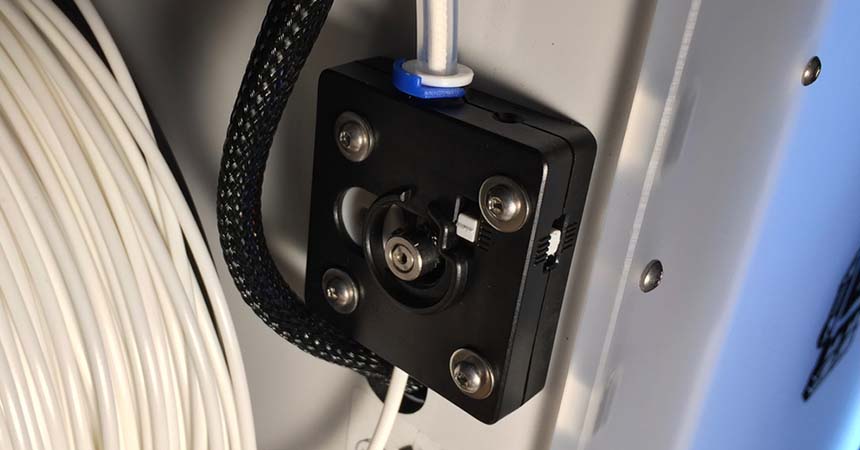
A Bowden extruder is a setup where the motor that drives the filament — the extruder motor — is mounted away from the hotend, usually on the printer’s frame. The filament is pushed through a long PTFE tube (the Bowden tube) to reach the hotend where it melts and gets deposited.


Bowden extruder: the filament is fed externally to the hotend
Think of it like this: the Bowden setup is the remote control car of 3D printing extruders. The “engine” (motor) is far from the “wheels” (nozzle), connected by a long cable (PTFE tube). It works, but there’s inherent lag in the system.
This design became wildly popular during the Ender 3 era and is still found in many budget and legacy machines today.

The Bowden extruder shifts some of the weight to the frame
Bowden Extruder Pros
- Lightweight toolhead: Because the motor stays on the frame, the print head is much lighter. This reduces inertia and, in theory, allows faster movement without vibrations.
- Easier motor access: Since the motor is stationary and on the frame, it’s easier to reach for maintenance or replacement.
- Lower entry cost: Budget printers with Bowden setups are typically cheaper to manufacture and buy.
Bowden Extruder Cons — Updated for 2026
- Pressure lag: This is the big one. Because the filament has to travel through a long PTFE tube before reaching the nozzle, there’s a delay between when the motor pushes and when filament actually flows. This creates inconsistent extrusion — especially at corners, and during retractions.
- PTFE tube wear: High-temperature printing degrades the PTFE tube over time. It requires regular replacement, especially if you push the printer hard or run abrasive materials.
- Poor flexible filament performance: TPU and other flexible materials compress and buckle inside the long PTFE tube. We’ll revisit this in detail — but this is basically a deal-breaker for TPU printing.
What Is a Direct Drive Extruder?
In a Direct Drive extruder setup, the motor is mounted directly on the print head, right next to the hotend. The filament travels only a very short distance — sometimes just a few millimeters — from the drive gears to the melt zone.

Direct extruder: the stepper motor sits directly on the hotend
The result? You get near-instant response when you tell the printer to start or stop extruding. No pressure lag, no tube compromise. The extruder and hotend are essentially one unit.
This is now the standard in modern CoreXY printers and represents the direction the entire industry has moved in. Machines like the Bambu Lab P2S, Prusa CORE One, and QIDI Plus 4 all use direct drive as their foundation.


Example of a basic 3D printer with a direct extruder
Direct Drive Extruder Pros
- Precise extrusion control: Filament response is nearly instant. This translates to sharper corners, cleaner layers, and fewer artifacts.
- Excellent TPU and flexible filament performance: Short feed path means flexible filaments have no room to buckle or compress. TPU printing becomes reliable and consistent.
- Minimal retraction distance: Because there’s no pressure lag to compensate for, you only need 0.5–1.5mm of retraction instead of 3–6mm with Bowden setups.
- Better performance with advanced filaments: Nylon, PETG, PA-CF, and other demanding materials benefit hugely from the consistent pressure control.
Direct Drive Extruder Cons
- Heavier toolhead: More weight on the print head means more inertia. However, in 2026, this has been largely solved through input shaping algorithms and lightweight machined components. It’s much less of an issue than it used to be.
- Slightly more complex assembly: More components on the toolhead means slightly more to manage if you’re building or modifying. Not a big deal for most users.
Ready to experience the benchmark of 2026 direct drive technology?
The 2026 Upgrade: Integrated Toolheads and Servo Extruders
Here’s where things get exciting. Modern direct drive printers aren’t just mounting a motor on the head anymore — they’re integrating everything.
Take the Bambu Lab P2S as the benchmark example. It uses a PMSM (Permanent Magnet Synchronous Motor) servo extruder that delivers 8.5kg of pushing force with real-time torque feedback. That’s a level of precision and consistency no traditional stepper motor Bowden setup can touch.
Bowden vs Direct Drive Extruder — The Differences That Actually Matter
Print Quality: The Real Story
When it comes to Bowden vs direct drive print quality, direct drive wins — but it’s worth understanding why.
The core issue with Bowden is something called pressure lag. When the motor pushes filament, that pressure has to travel down the entire length of the PTFE tube before the nozzle responds. At corners, when the print head changes direction quickly, you can end up with over-extrusion just after the corner and under-extrusion just before it. These tiny inconsistencies accumulate into visible artifacts on your prints.
Direct drive eliminates this. The filament is right there, centimeters from the nozzle. Push the motor, filament moves. Stop the motor, filament stops. Clean, responsive, consistent.
If you’re printing display models, miniatures, or anything where surface quality matters, the difference is visible. On a Bowden printer, you’ll spend more time calibrating pressure advance and tweaking retraction settings. On a direct drive printer, a lot of that just… works out of the box.
Speed: The 2026 Reality Check
Old myth: Bowden setups are faster because the lighter toolhead can move quicker.
Modern reality: Direct drive printers like the Bambu Lab P2S and Creality K2 Plus are hitting 500–600 mm/s on real prints. The “Bowden is faster” argument is essentially dead.
Here’s the thing most people miss: in 2026, the real speed bottleneck isn’t your extruder type. It’s your volumetric flow rate — how much melted plastic your hotend can push through the nozzle per second (measured in mm³/s). A slow hotend will bottleneck your printer long before the extruder weight becomes an issue.
Input shaping (resonance compensation) has also neutralized the inertia argument. Modern printers with ADXL345 accelerometers automatically tune away the ringing artifacts that came from heavier toolheads — making the weight advantage of Bowden setups largely irrelevant.
Retraction and Stringing
This is one of the clearest practical differences between Bowden vs direct drive setups:
Bowden retraction: Typically requires 3–6mm of retraction to pull the filament back far enough to stop oozing. Getting this wrong means either stringing (too little) or clogs and grinding (too much).
Direct drive retraction: Only needs 0.5–1.5mm. Much easier to dial in, much less wear on your filament.
In practice, Bowden printers require more patience to tune. They’re not impossible — plenty of people run beautiful Bowden prints — but you’re always fighting the physics of that long tube. With a direct drive 3D printer, the tuning window is much wider and forgiving.
TPU and Flexible Filaments: No Contest
If you’ve ever tried printing TPU on a Bowden extruder 3D printer, you already know the pain. The filament compresses inside the long PTFE tube, buckles, and creates a jam that’ll ruin your print and your afternoon.
On a direct drive 3D printer, TPU printing is genuinely straightforward. The short feed path means there’s almost no room for the flexible material to misbehave. Drop the speed a bit, dial in your retraction, and you’re printing phone cases, gaskets, and flexible parts with confidence.
Bottom line: TPU printing = direct drive only. This is not negotiable.
Maintenance and Reliability
This one surprises people, but it’s important for long-term ownership.
Bowden maintenance reality: Yes, the motor is easy to access. But the PTFE tube and its fittings wear out. They need periodic inspection and replacement. With aggressive printing (high temps, abrasive filaments, frequent use), you might be replacing tubes every few months. The fittings — those little collet clips — are notorious failure points.
Direct drive reliability: More components on the toolhead, yes. But modern integrated toolheads are engineered to be robust. Once set up properly, they’re genuinely set-it-and-forget-it. The Bambu Lab ecosystem, for example, is designed around minimal maintenance intervention.
Reverse Bowden vs Direct Drive: An Important Clarification
You’ll often see reverse Bowden mentioned alongside direct drive, and it confuses a lot of people. Let’s clear this up.
Reverse Bowden is not an alternative to direct drive. It’s a filament routing tube that runs from a spool holder or buffer to the direct drive extruder on the toolhead. Its job is to reduce drag and prevent tangles — not to push filament.
In multi-material systems like the Bambu Lab AMS (Automatic Material System) or the Creality CFS, reverse Bowden tubes connect the filament hub to the toolhead extruder. The actual extrusion force is still handled by the direct drive extruder.
Bowden vs Direct Drive for High-Speed Printing in 2026
This deserves its own section because it’s where a lot of outdated information is still circulating online.
Modern high-speed printing relies on three things working together: input shaping, pressure advance, and adequate volumetric flow rate. Let’s break each one down in the context of the Bowden vs direct drive debate.
Input Shaping
Input shaping (also called resonance compensation) uses an accelerometer to measure your printer’s vibration characteristics, then applies real-time frequency filtering to eliminate ringing artifacts. This directly compensates for toolhead inertia — which was the main argument for keeping toolheads light with Bowden setups. With input shaping, a slightly heavier direct drive toolhead performs just as smoothly as a light Bowden head.
Pressure Advance
Pressure advance is a firmware feature that pre-compensates for the delay between extruder movement and actual filament flow. It works better on direct drive printers because the system is more predictable. On Bowden setups, the long tube introduces variable compliance that makes pressure advance harder to tune precisely.
The Flow Rate Wall
Here’s what nobody tells beginners: you can have the best extruder in the world, but if your hotend can’t melt filament fast enough, you hit the “flow rate wall.” At high speeds, the limiting factor is how many cubic millimeters of plastic your hotend can process per second.
Standard hotends top out around 15–20 mm³/s. High-flow hotends (Dragon HF, Rapido, Bambu’s hardened nozzle system) can push 25–40 mm³/s or more. If you’re serious about fast, quality printing, upgrading your hotend matters more than debating extruder type.
Bowden or Direct Drive — Which Should You Choose?
Alright, let’s make this practical. Here’s the decision framework:
Best 3D Printers in 2026: Direct Drive vs Bowden Picks
Now let’s talk actual machines. Whether you’re going direct drive (smart choice) or Bowden (budget play), here are the printers worth your money in 2026.
Best Direct Drive 3D Printers — The Modern Standard
Bambu Lab P2S
Industry Benchmark
If you want to understand where direct drive extruder technology is in 2026, look at the Bambu Lab P2S. It ships with a PMSM servo extruder delivering 8.5kg of pushing force with real-time torque feedback — the most sophisticated consumer extruder system available. Print speeds up to 500mm/s, multi-material support, automatic calibration, and a fully enclosed build chamber for ABS and ASA. This is the machine that redefined what a 3D printer could be.
Creality K2 Plus
Large Format Powerhouse
Want big prints with multi-color capability? The Creality K2 Plus delivers a 350x350x350mm build volume with an active heated chamber, direct drive extruder, and native multi-color support. If you’re printing large functional parts or want room to grow into multi-material printing, the K2 Plus is the machine to beat at its price point.
QIDI Plus 4
Best Value for Engineering Filaments
The QIDI Plus 4 is a serious machine for serious filaments. A 370°C capable hotend, actively heated build chamber, and direct drive extruder make it one of the best values for printing PA-CF, PC, and other demanding engineering materials. If your applications go beyond PLA and PETG, this is where you should be looking.
Prusa CORE One
Reliable Open Ecosystem Choice
Prusa has been synonymous with reliability and openness since the beginning, and the CORE One continues that tradition. CoreXY motion system, direct drive extruder, full Klipper/OrcaSlicer compatibility, and Prusa’s legendary documentation and community support. If you value an open ecosystem where you’re never locked into proprietary systems, the CORE One is your machine.
Best Bowden 3D Printers — Budget and Niche Picks
Note: Bowden printers occupy the budget and legacy space in 2026. They’re not bad machines — they’re just positioned for specific use cases.
Anycubic Kobra 3 Max
Budget Large Format
If you need a large build volume and have a tight budget, the Kobra 3 Max delivers big print capability with a Bowden extruder at a price that’s hard to argue with. Accept the limitations — PLA and PETG only really, more tuning required — and it’s a capable workhorse for the price.
Creality Ender 3 V3 SE
The Classic Entry Point
The Ender 3 legacy lives on in the V3 SE. For absolute beginners who want to learn 3D printing on a budget, the V3 SE is a known quantity with a massive community and a mountain of tutorials. Just know going in that you’re getting Bowden-era print quality, and manage expectations accordingly.
Voron V0 / Legacy DIY Builds
For the Tinkerers
The Voron V0 is a tiny, open-source CoreXY printer that uses a Bowden setup specifically because the miniature toolhead space demands it. If you’re into DIY builds, community-driven development, and you understand the tradeoffs, the V0 is a joy to build and run. Just don’t expect Bambu Lab-level convenience.
Can You Convert a Bowden Printer to Direct Drive?
Yes — and this is one of the most popular upgrade paths in the 3D printing community, particularly for Ender 3 owners.
Converting a Bowden extruder 3D printer to direct drive typically involves mounting a lightweight extruder assembly (like the Sprite extruder or a Hemera kit) directly onto the X-axis carriage, connecting it directly to the hotend, and updating your firmware settings.
Looking to Convert Your Bowden Printer?
Upgrading to a direct drive extruder like the Creality Sprite Pro or the e3D Revo Hemera XS is one of the most popular and impactful modifications you can make to drastically improve TPU printing and retraction control.
Benefits of Converting
- Better extrusion control — all the advantages of direct drive on a familiar machine.
- TPU capability — suddenly your Ender 3 can reliably print flexible filaments.
- Reduced retraction — less stringing, fewer failures.
What You Need to Know Before Converting
- Firmware recalibration is required — you’ll need to update E-steps, retraction settings, and re-run pressure advance calibration. This isn’t hard, but it’s mandatory.
- Weight increase — the added toolhead weight means you’ll need to re-run input shaping if your printer supports it, or reduce print speeds slightly.
- Cost vs new printer: Before spending $60–120 on a conversion kit, compare it against entry-level direct drive printers. Sometimes a fresh start on a purpose-built machine makes more sense.
Frequently Asked Questions
Final Verdict: Bowden vs Direct Drive in 2026
Let’s call it.
Direct drive is the clear winner in 2026. It’s the standard in modern printers for good reason: better print quality, reliable flexible filament printing, easier calibration, and competitive speed thanks to input shaping and improved motion systems. The old arguments for Bowden — lighter toolhead, faster speeds — have been addressed by firmware and engineering improvements.
Bowden still has a place — at the budget end, for users who primarily print PLA and don’t need the added capability, and in legacy or DIY machines where the design specifically benefits from a remote extruder. But if you’re buying a printer today with a proper budget and long-term plans, choose direct drive without hesitation.
The question isn’t really “Bowden or direct drive?” anymore. It’s “which direct drive printer is right for me?”
Find the Best Direct Drive 3D Printer for You →
Whether you end up with a Bambu Lab P2S, a QIDI Plus 4, or you decide to convert your existing Bowden machine — you now have the knowledge to make a real, informed decision. Print quality, filament flexibility, and long-term reliability all point in the same direction. Trust the engineering, trust the data, and enjoy the prints.